The Sleeve Band: A Deconstructive Paradigm for SS26
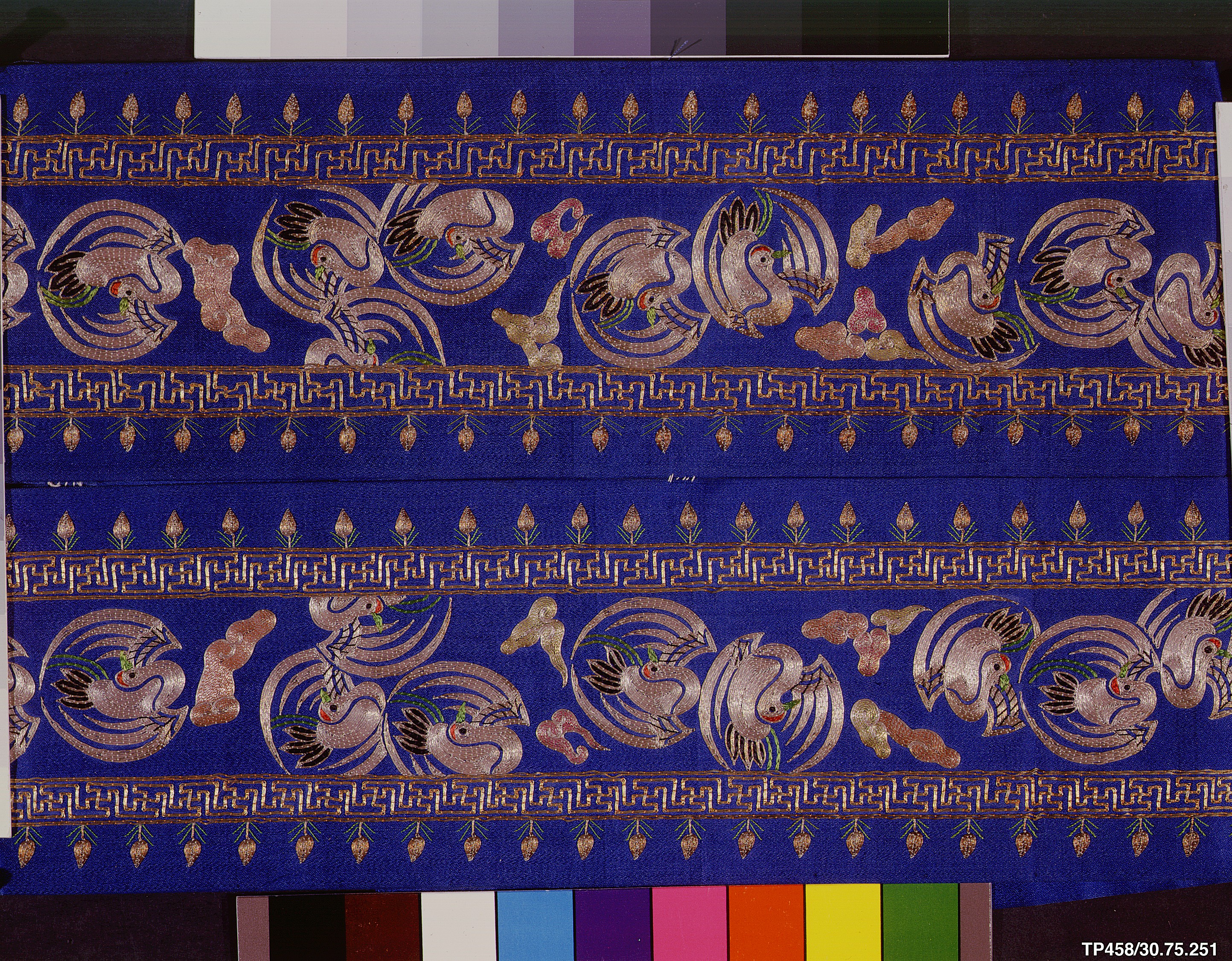
In the relentless pursuit of redefining the human form, the avant-garde designer must look beyond the garment as a mere covering and embrace it as an architectural extension of the body. For Zoey Fashion Laboratory’s SS26 collection, the Sleeve Band—a deceptively simple component of Chinese origin, crafted from silk and metallic thread on a silk base—emerges as a radical, standalone study in structural innovation. This is not an accessory; it is a manifesto. By isolating the sleeve band from its traditional context, we unlock a futuristic silhouette that challenges the very notion of draping, movement, and spatial occupation.
Deconstructing the Origin: From Restraint to Release
The sleeve band, historically a functional element in Chinese garment construction—used to cinch, protect, or adorn the wrist—is here reimagined as a self-contained architectural node. The choice of materials is deliberate: silk, with its liquid, almost ethereal drape, is juxtaposed against metallic thread, which introduces a rigid, almost cybernetic tension. This duality is the foundation of the deconstructive aesthetic. The band is no longer a passive strip of fabric; it becomes a load-bearing element, a structural joint that can articulate the sleeve’s volume, compress it into a blade-like edge, or expand it into a hyper-dimensional crescent.
For SS26, the sleeve band is liberated from the arm. It is recontextualized as a standalone silhouette generator. Imagine a band suspended from the shoulder, its metallic thread forming a tensegrity matrix that supports a cascade of silk. The band does not encircle; it projects. It becomes a cantilever, a rib, a exoskeletal fragment that redefines the wearer’s spatial presence. This is not about the past; it is about a future where garments are built from modular, intelligent components.
Futuristic Silhouettes: The Band as a Morphing Structure
The core innovation lies in the sleeve band’s ability to morph between states. In its passive form, the band is a flat, almost two-dimensional strip—a digital line on a physical body. But when tension is applied via hidden drawcords or magnetic closures embedded in the metallic thread, the band folds, twists, and expands into a three-dimensional volume. This creates a silhouette that is neither fixed nor organic, but algorithmic—a shape that changes with the wearer’s gesture.
Consider a prototype: a single sleeve band, 40 cm in length, attached to a micro-silk base at the bicep. When relaxed, it hangs as a narrow, almost invisible line. When activated, the metallic thread contracts, causing the band to bloom into a spiral that extends 30 cm outward. The resulting silhouette is a futuristic, asymmetrical wing—a blade of silk and light that cuts through space. This is not a sleeve; it is a statement of kinetic architecture. The band becomes a dynamic counterweight, balancing the body’s mass with an ethereal, almost levitating volume.
Structural Innovation: The Metallic Thread as an Active Skeleton
The metallic thread is the silent revolutionary in this study. Unlike traditional metallic threads used for embellishment, this variant is high-tensile, shape-memory alloy (a proprietary Zoey Laboratory development). When woven into the silk, it creates a self-supporting lattice that can be programmed to hold a specific curve or angle. This transforms the sleeve band from a textile into a structural composite. The band can be pre-set to form a perfect 90-degree angle, creating a sharp, architectural shoulder line that hovers above the body. Or it can be heat-activated to curl into a spiral, evoking the tendrils of a futuristic vine.
The result is a garment that builds its own silhouette without the need for boning, padding, or heavy interfacing. The band acts as a micro-arch, transferring load from the shoulder to the wrist, allowing the silk to float, twist, or drape in ways previously impossible. For SS26, we propose a collection where the sleeve band is the primary structural element—a series of bands that interconnect to form a lattice, creating a second skin that is both armor and air.
Contextualizing the Standalone Study: The Band as a Future Artifact
To fully appreciate this study, one must view the sleeve band as an isolated object—a prototype for a future where garments are assembled from intelligent components. In a gallery setting, the band is displayed on a minimalist armature, its metallic thread glowing under directed light. The audience observes the band’s morphing geometry: from a flat strip to a helical coil, then to a rigid, angular frame. This is not a fashion show; it is a demonstration of material logic.
The band’s Chinese origin is honored not through replication but through deconstruction. The traditional silk-weaving techniques are preserved, but the metallic thread introduces a futuristic, almost cybernetic element. This is a dialogue between heritage and hyper-modernity. The band becomes a time capsule—a fragment of the past re-engineered for the next century’s wardrobe.
Conclusion: The Sleeve Band as a Silhouette Revolution
For Zoey Fashion Laboratory, the sleeve band is not a detail; it is a paradigm shift. By isolating this component, we unlock a new language for the SS26 silhouette: one that is modular, kinetic, and structurally self-sufficient. The silk provides the poetry; the metallic thread provides the logic. Together, they create a future where garments are not worn but inhabited—where a single band can transform the body into an evolving sculpture. This is the definitive avant-garde study: a small element, a vast horizon.