Deconstructing the Avant-Garde: The Powder Flask as a Zoey Fashion Lab DNA Strand
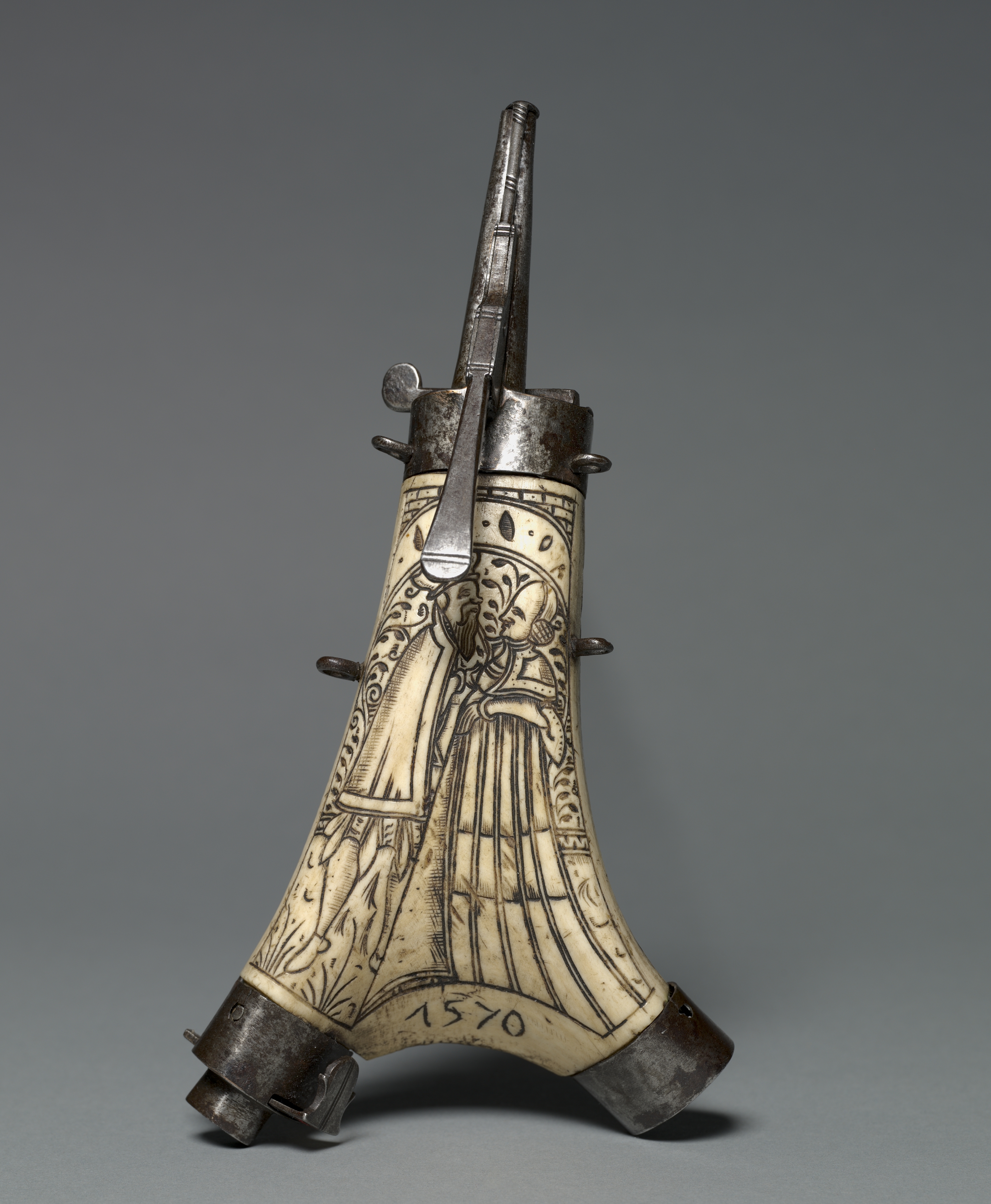
At Zoey Fashion Lab, we do not merely observe artifacts; we deconstruct their material and symbolic DNA to extract the genetic code for future fashion. The subject of this analysis—a German powder flask from the 16th or 17th century, crafted from elk horn with steel mounts and adorned with standing figures of a man and a woman—presents a remarkably fertile specimen. On the surface, it is a functional object for hunting or military use. However, within the framework of our New DNA Strand methodology, this flask reveals itself as a proto-avant-garde artifact: a fusion of organic and industrial materials, a narrative of duality, and a structural paradox that directly informs our design philosophy.
Material Deconstruction: The Organic-Industrial Dichotomy
The flask’s technical composition—elk horn and steel—is not a mere choice of durability but a deliberate dialogue between two opposing material philosophies. Elk horn is a living, renewable, and inherently sculptural medium. It carries the memory of growth, the texture of the wild, and the warmth of organic matter. Steel, conversely, is forged, rigid, and cold. It represents human mastery over nature, precision, and permanence. In the Zoey Fashion Lab context, this pairing is the avant-garde’s foundational tension.
We translate this into fabric and form. The elk horn becomes a metaphor for bio-mimetic textiles: leathers that retain the grain of animal hide, woven plant fibers with irregular, hand-harvested textures, or even lab-grown materials that mimic the organic growth patterns of antler velvet. The steel mounts translate into structural exoskeletons: metallic boning, laser-cut steel mesh inserts, or articulated metal joints that serve as both support and ornament. The flask teaches us that avant-garde fashion does not choose between nature and industry; it forces them into a dynamic, often uncomfortable, coexistence. A Zoey Fashion Lab garment might feature a bodice of hand-stitched, undyed elk leather, rigidified by a steel cage that echoes the flask’s mounts, creating a silhouette that is both primal and cybernetic.
Narrative and Symbolism: The Standing Figures as Dual Archetypes
The carved figures of a man and a woman are not decorative afterthoughts. They are the flask’s narrative core, representing a duality that is central to the New DNA Strand: the masculine and feminine as co-existing, interdependent forces. In the context of a powder flask—an object designed for combustion and power—these figures suggest a ritualistic or allegorical union. The man and woman stand as sentinels, perhaps representing the hunter and the hunted, the creator and the muse, or the active and the receptive.
For Zoey Fashion Lab, this duality is not about gender binary but about dynamic polarity. Our avant-garde collections explore how opposing forces—hard and soft, static and kinetic, historical and futuristic—create tension and movement. The man and woman on the flask are not static; their posture implies a moment before action. We translate this into asymmetrical silhouettes and modular design. A jacket might have one structured, armored shoulder (the masculine steel) and one flowing, draped sleeve (the feminine horn). A dress might feature a high, rigid collar on one side and a cascading, soft train on the other. The figures remind us that avant-garde fashion is a narrative of two halves, always in dialogue, never fully resolved.
Structural Paradox: Form, Function, and the Avant-Garde Ethos
The powder flask’s primary function is to contain and dispense gunpowder—a substance of explosive potential. Yet its form is elaborately carved, suggesting a ritual or ceremonial purpose beyond utility. This is the avant-garde paradox: the object is both tool and talisman, both practical and art. In fashion, this translates to garments that blur the line between wearability and sculpture. A Zoey Fashion Lab piece inspired by this flask would not merely clothe the body; it would redefine the body’s relationship to space and movement.
The elk horn’s natural curvature dictates the flask’s ergonomics. It fits the hand, the hip, or the saddle. Similarly, our garments must respect the body’s architecture while challenging it. We might create a coat that is asymmetrically weighted, like the flask’s horn side, requiring the wearer to adjust their posture. A skirt might be constructed from overlapping horn-like scales, each piece individually carved and mounted on a steel frame, creating a protective yet fluid carapace. The steel mounts, often functional as hinges or closures, become visible fastenings and articulated joints in our designs—exposed zippers, locking clasps, or rotating cuffs that celebrate the mechanics of dress.
The New DNA Strand: A Blueprint for Avant-Garde Fashion
Applying the New DNA Strand concept, we isolate three genetic markers from this powder flask:
1. Material Hybridity: The flask’s DNA is a double helix of organic horn and industrial steel. Our fashion strand must weave together natural fibers (linen, wool, leather) with technical materials (carbon fiber, recycled metals, smart textiles). The result is a fabric that breathes like skin but protects like armor.
2. Narrative Duality: The standing figures are not just decoration; they are a story of balance. Our garments must tell stories through silhouette, texture, and structure. A single piece can embody both vulnerability and strength, tradition and rebellion, the past and the future.
3. Functional Sculpture: The flask is both a tool and an art object. Our fashion must be equally dual: a garment that functions as wearable art, a piece that is as much about the act of dressing as it is about the final form. Pockets become structural elements, seams become decorative lines, and closures become focal points.
Conclusion: From Artifact to Avant-Garde
The German powder flask with elk horn and steel mounts is not a historical relic to be replicated; it is a catalyst for innovation. At Zoey Fashion Lab, we see in its form a blueprint for an avant-garde that respects craftsmanship while embracing disruption. The standing figures of a man and a woman remind us that fashion is always a dialogue between the wearer and the world, between the material and the immaterial. By deconstructing this artifact, we extract its essential DNA—its tension, its narrative, its paradox—and inject it into a new strand of fashion that is both timeless and radically contemporary. This is not about making clothes that look like a powder flask. It is about making clothes that feel like one: powerful, dual, and ready to ignite.