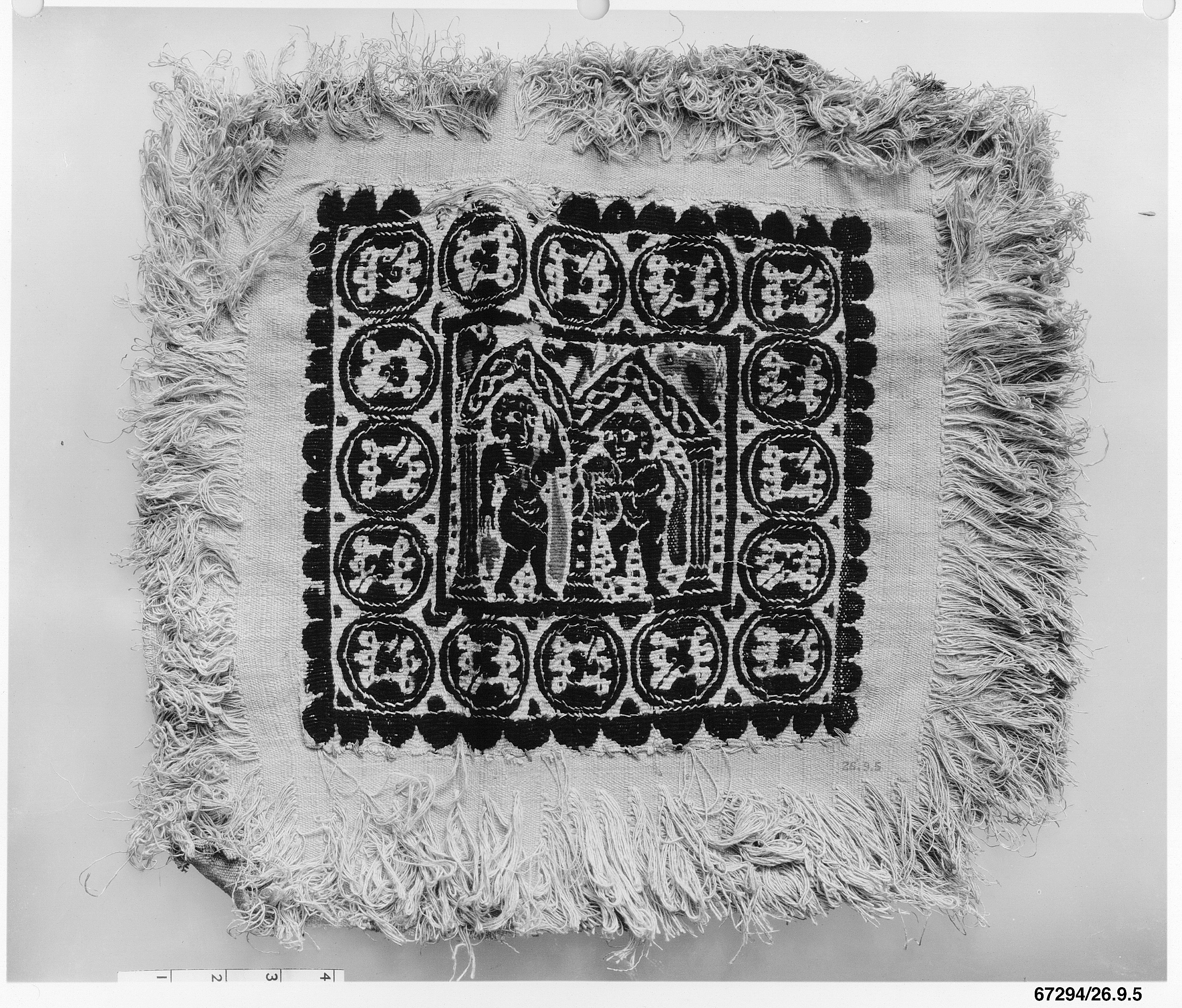
The Rectilinear Horizon: Deconstructing the Square for SS26
In the ephemeral landscape of avant-garde couture, the square is often dismissed as a primitive geometric constraint—a relic of Euclidean rigidity. Yet for SS26, Zoey Fashion Laboratory repositions the square not as a limitation, but as a radical architectural manifesto. This standalone study, drawn from the Global Frontier, interrogates the dialectic between stasis and motion, structure and fluidity, through the primal lens of the square. Using only linen and wool—materials imbued with tactile honesty and structural memory—we engineer silhouettes that defy gravity, challenge proportion, and redefine the very notion of garment as inhabitable space. This is not mere fashion; it is a cartography of the future, mapped in right angles and parallel planes.
The Square as Structural Syntax
The square, in our SS26 lexicon, is not a shape but a system of tension. We reject the soft, draping curves of conventional couture in favor of crisp, geometric junctions that create volumetric paradoxes. Linen, with its inherent stiffness and organic grain, becomes the primary medium for this exploration. Through a process of precision cutting and modular assembly, we transform flat squares into three-dimensional architectural forms—shoulders that extend into cantilevered platforms, sleeves that bifurcate into orthogonal planes, and torsos that appear as living, breathing cubes. The linen’s natural creasing is not a flaw but a deliberate textural signature, recording the body’s interaction with the garment’s rigid geometry.
Wool, conversely, introduces a counterpoint of compressed softness. Where linen provides the skeleton, wool offers the skin—a felted, malleable surface that can be folded, pleated, and bonded into hybrid structures. Consider a jacket where the back panel is a single, unbroken square of wool, laser-cut with a grid of perforations that allow it to collapse into a tessellated fan when the wearer moves. This is not decoration; it is kinetic engineering. The square becomes a living hinge, a joint that articulates the body’s architecture without compromising its geometric purity.
Futuristic Silhouettes: The Body as Urban Grid
The SS26 silhouettes are extraterrestrial in their proportions, yet grounded in the Global Frontier’s ethos of sustainable futurism. We envision the body as an urban grid—a network of intersecting squares that expand and contract in response to movement. The signature piece is the “Quadrant Cocoon”: a floor-length coat constructed from twelve interlocking linen squares, each measuring 80 cm per side. These squares are not sewn together but joined via magnetic seams, allowing the garment to be disassembled and reconfigured into a portable shelter or a sculptural installation. The cocoon’s silhouette is a floating trapezoid, with the shoulders projecting outward at a 45-degree angle, creating a negative space that frames the wearer as a living artifact.
For the lower body, we introduce the “Pixelated Culotte”: a pair of trousers composed of wool panels that are pleated into a series of stacked squares. Each square is slightly offset from the one above, creating a dynamic, staggered silhouette that mimics the pixelation of a digital image. The effect is both retro-futuristic and deeply architectural—a garment that references the blocky aesthetics of early computer graphics while embodying the tactile warmth of natural fiber. The waistband is a rigid square frame of bonded linen, which holds the structure in place without elastic or drawstrings, forcing the wearer to move with deliberate, robotic grace.
Structural Innovation: The Square as Joint and Void
Our most radical innovation for SS26 is the “Void Stitch”—a technique that uses the square as a negative space generator. Instead of sewing fabric edges together, we create open squares within the garment that act as portals, revealing layers of contrasting texture. For example, a linen bodice might feature a 15 cm square cutout at the sternum, framed by a wool border that is bonded with a thermoplastic film. This void is not filled but left as an architectural aperture, through which the wearer’s skin or a secondary garment can be glimpsed. The result is a layered transparency that challenges the binary of covered and uncovered, public and private.
Another breakthrough is the “Fold-Lock” system: a series of pre-scored linen squares that can be folded along diagonal axes to create self-supporting volumes. A skirt, for instance, might begin as a flat, rectangular piece of linen. By folding its lower edge upward at a 90-degree angle and locking it into place with a hidden wool tab, the fabric transforms into a cantilevered shelf that extends outward from the hip. This shelf can hold small objects—a phone, a sketchbook—effectively turning the garment into a wearable utility module. The fold-lock is not permanent; it can be released and refolded in endless configurations, making each garment a customizable system rather than a fixed object.
Material Alchemy: Linen and Wool in Dialogue
The choice of linen and wool is deliberate, rooted in the Global Frontier’s commitment to biodegradable luxury. But beyond sustainability, these materials possess inherent structural properties that align with the square’s geometry. Linen’s long, strong fibers allow for crisp, clean edges that resist fraying, making it ideal for the sharp lines of our deconstructive aesthetic. We use a double-weave linen that is both lightweight and rigid, allowing it to hold its shape even when unsupported. The wool, sourced from regenerative farms in the highlands, is felted to a thickness of 3 mm, giving it the density of a building material while retaining its soft, insulating properties.
We also experiment with thermal bonding to fuse layers of linen and wool without stitching. A square of wool is placed atop a linen base, then subjected to heat and pressure, creating a composite panel that is both flexible and rigid. This panel can be cut into geometric tiles that are then assembled into a garment using magnetic clasps. The result is a modular couture that can be reconfigured by the wearer, allowing for infinite permutations of silhouette and volume.
Conclusion: The Square as Future Architecture
In SS26, Zoey Fashion Laboratory does not simply use the square; we inhabit it. The square becomes a philosophical framework for reimagining the relationship between body, garment, and space. Our silhouettes are not meant to be worn passively but to be activated through movement—each fold, each void, each magnetic seam a testament to the transformative power of geometry. As the Global Frontier continues to blur boundaries between the organic and the synthetic, the square offers a universal language—a grid upon which we can map the future of couture. This is not a collection; it is a manifesto in fabric, a declaration that the most radical innovation often lies in the simplest of forms. The square, once a symbol of stasis, is now a portal to infinite possibility.