The Fragment as Future: Deconstructing Couture Through Bobbin Lace for SS26
In the lexicon of avant-garde fashion, the fragment is not a sign of incompletion but a deliberate act of architectural defiance. For Zoey Fashion Laboratory’s SS26 collection, the fragment transcends its conventional association with decay or nostalgia. Instead, it emerges as a generative principle—a method to interrogate the boundaries of silhouette, materiality, and temporal logic. This standalone study examines how bobbin lace, a technique historically rooted in meticulous, whole-form construction, is subverted into a medium for futuristic fragmentation. The result is a collection that redefines structural innovation, where absence becomes presence, and the incomplete becomes the definitive.
Deconstructive Aesthetics: The Fragment as Structural Language
The fragment in avant-garde couture operates as a dialectical tool. It challenges the hegemony of the seamless garment, proposing instead that beauty lies in the rupture, the gap, the suspended line. For SS26, Zoey Fashion Laboratory deploys the fragment not as a stylistic gimmick but as a rigorous formal language. Each garment begins with a conceptual whole—a traditional bodice, a skirt, a sleeve—only to be systematically dismantled. Yet, this is not destruction for its own sake. The fragment is recontextualized as a load-bearing element, where negative space carries visual weight and structural tension.
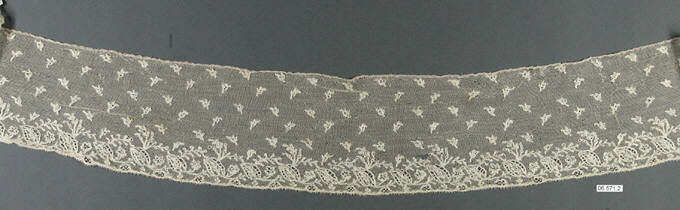
Consider the bobbin lace jacket. Traditionally, bobbin lace is a continuous, delicate web of threads, forming intricate floral or geometric patterns. In this collection, the lace is severed into discrete panels, each acting as an independent architectural module. These fragments are then suspended from a carbon-fiber armature, creating a silhouette that is simultaneously ethereal and rigid. The lace’s fragility is juxtaposed against the industrial strength of the frame, generating a dialogue between the organic and the synthetic. The fragment, here, becomes a structural paradox: it is both the ornament and the skeleton.
Bobbin Lace Reimagined: Materiality and Technological Intervention
Bobbin lace, with its origins in 16th-century European craftsmanship, is often perceived as an artifact of the past. However, for this avant-garde study, Zoey Fashion Laboratory reimagines the material through a futuristic lens. The lace is not handcrafted in the traditional sense but digitally generated using algorithmic patterning, then laser-cut into precise fragments. This process allows for a level of geometric complexity unattainable by hand, enabling the lace to adopt asymmetrical, non-repeating forms that mimic the chaos of digital glitch art.
The material itself is treated with a nano-coating of liquid crystal polymers, giving it a chameleonic sheen that shifts color under different light conditions. This transforms the bobbin lace from a static textile into a dynamic surface, where fragments appear to dissolve and reconfigure as the wearer moves. The result is a garment that lives in a state of perpetual becoming—a fragmentary whole that never settles into a fixed identity. This aligns with the collection’s overarching theme: the fragment as a metaphor for the fluid, non-linear nature of contemporary identity.
Futuristic Silhouettes: The Architecture of Absence
The silhouette for SS26 is defined by what is missing as much as what is present. Zoey Fashion Laboratory abandons the conventional hourglass or A-line in favor of asymmetrical, cantilevered forms. The bobbin lace fragments are arranged in a manner that suggests a garment caught mid-deconstruction, as if the fabric is being peeled away by an invisible force. Shoulder pads are replaced by sharp, angular extensions of lace that jut outward like fractured glass. Hemlines are jagged, with individual lace tendrils trailing downward, creating a sense of gravitational pull.
One standout piece is a floor-length gown constructed entirely from overlapping lace fragments, each attached at a single point to a central spine of polished titanium. The fragments flutter independently, creating a silhouette that is both voluminous and transparent. The body beneath is partially visible, but only in disjointed glimpses—a shoulder here, a hip there. This fragmented visibility challenges the voyeuristic gaze of traditional couture, where the body is often presented as a complete, objectified form. Here, the fragment becomes a tool of concealment and revelation, allowing the wearer to control the narrative of their own exposure.
Structural Innovation: Tension and Release
The structural innovation of this collection lies in its manipulation of tension. Bobbin lace, by its nature, is a textile of taut threads. Zoey Fashion Laboratory exploits this by integrating tension cables and micro-ratchets into the garment’s construction. These elements allow the wearer to adjust the degree of fragmentation in real-time. A pull of a cord can tighten the lace panels, drawing them together into a more cohesive silhouette, or release them, expanding the garment into a cloud of drifting fragments. This interactive dimension transforms the garment from a static object into a performance tool, where the wearer becomes the choreographer of their own deconstruction.
The use of 3D-printed connectors further enhances this structural play. Each lace fragment is fitted with a custom-designed joint that allows for rotation and articulation. The garment thus behaves like a kinetic sculpture, capable of shifting its silhouette with every movement. This is not merely a technical feat but a philosophical statement: the fragment is not a fixed state but a dynamic condition. In a world of constant flux, the avant-garde garment must be equally mutable.
Contextualizing the Fragment: Global Frontier and Temporal Dissonance
The “Global Frontier” origin of this collection is not a geographical location but a conceptual space—a borderland between past and future, craft and technology, East and West. Bobbin lace, with its European heritage, is recontextualized through a global lens. The fragments are inspired by the broken pottery of ancient civilizations, the shattered mosaics of Byzantine art, and the pixelated imagery of digital screens. This temporal dissonance creates a garment that exists outside linear history. It is a fragment of a future that has not yet arrived, constructed from the debris of multiple pasts.
In this context, the fragment becomes a symbol of resilience. It is not a sign of loss but of potential. Each broken piece carries the memory of the whole, yet also the promise of new configurations. For the avant-garde wearer, this is a powerful statement: identity is not a fixed narrative but a collection of fragments, constantly reassembled. Zoey Fashion Laboratory’s SS26 collection offers not just clothing but a philosophy of being—a way to inhabit the world as a work in progress, forever incomplete, forever becoming.
Conclusion: The Fragment as Avant-Garde Imperative
This standalone study confirms that the fragment is not a relic of deconstruction but a forward-looking imperative. Through the innovative use of bobbin lace, futuristic silhouettes, and structural interactivity, Zoey Fashion Laboratory has crafted a collection that redefines the boundaries of couture. The fragment is no longer a symptom of decay; it is a blueprint for the future. In the hands of the avant-garde, the broken becomes the building block, and the incomplete becomes the ultimate expression of wholeness. For SS26, the fragment is not a question—it is the answer.