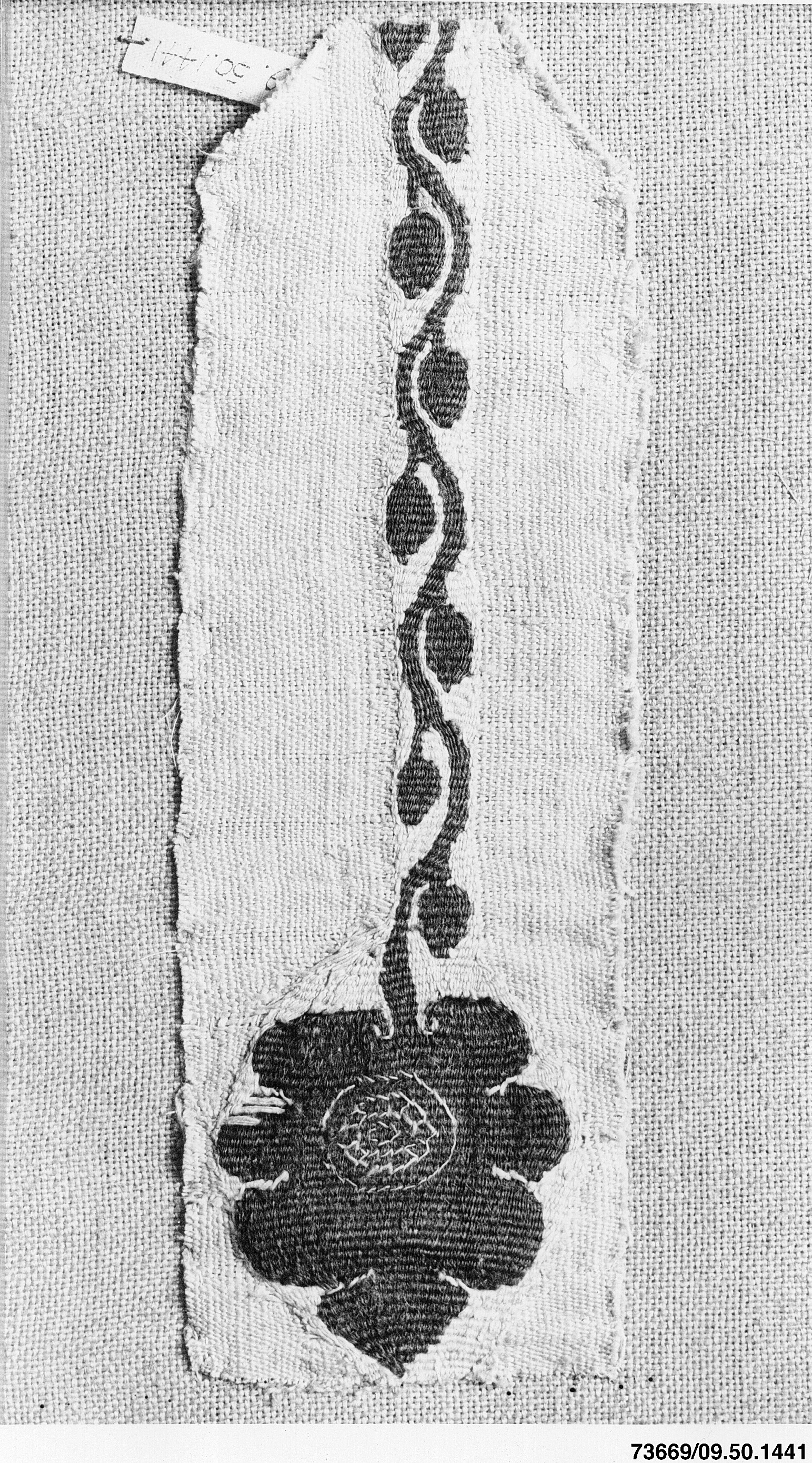
Deconstructing the Band: A Tapestry of Structural Anarchy for SS26
The band, in its most primitive form, is a linear constraint. It binds, it defines, it demarcates. For Zoey Fashion Laboratory’s SS26 avant-garde study, we have obliterated this notion. The band is no longer a passive strip of fabric; it is an active agent of architectural rebellion, a dynamic nexus where linen and wool collide in a tapestry weave that defies both gravity and tradition. This analysis deconstructs the band as a structural innovation, reimagining it as a futuristic silhouette that breathes, twists, and redefines the human form. We are not designing garments; we are engineering landscapes of tension and release, where the band becomes the primary load-bearing element of a new sartorial order.
The Tapestry Weave as a Lattice of Resistance
The choice of linen and wool in a tapestry weave is not arbitrary; it is a deliberate act of material dialectic. Linen, with its rigid, almost brittle strength, provides the warp of our structure—the unyielding lines of force. Wool, conversely, offers a weft of pliable warmth, a counterpoint of organic softness. When woven together in a tapestry structure, they create a fabric that is simultaneously a membrane and a scaffold. The tapestry weave itself, with its discontinuous wefts, allows for zonal differentiation. One can engineer areas of sheer, open lattice where the band breathes, juxtaposed against dense, impenetrable blocks of woven mass that act as structural anchors. This is not a flat textile; it is a three-dimensional relief map of tension, compression, and release. The band, when cut from this fabric, inherits this internal conflict. It is a living strip, capable of holding a fold or a flare with the same conviction as a steel beam, yet remaining pliable enough to contour the body’s most extreme angles.
Futuristic Silhouettes: The Band as Exoskeletal Joint
For SS26, we abandon the band as a mere waist-cinching or hem-defining device. Instead, we deploy it as an exoskeletal joint that rearticulates the human anatomy. Imagine a jacket where the sleeve is not attached by a seam, but by a series of interlocking, woven bands that form a dynamic hinge at the shoulder. These bands, cut on the bias from the tapestry weave, allow for a range of motion that is both constrained and liberated. The silhouette is not a soft drape; it is a series of hard, angular planes connected by these tensile bands. The band becomes the fulcrum around which the entire garment rotates. A skirt, for instance, is no longer a cone or a cylinder. It is a collection of rigid, woven panels that are suspended from a single, broad band at the hip. This band, woven with a higher density of wool for structural integrity, acts as a cantilever. The panels hang from it, not as a continuous flow, but as a fragmented, geometric cascade. The result is a silhouette that is both ancient—recalling the armor of a forgotten warrior—and utterly futuristic, like a digital rendering of a form that has not yet been built.
Structural Innovation: Tension, Release, and the Non-Linear Edge
The true innovation lies in how we manipulate the band’s internal structure. By varying the weft density within a single band, we can program its behavior. A band that is densely woven at its core and looser at its edges will naturally curl and cup, creating a three-dimensional leaf or petal shape. This is not a decorative ruffle; it is a structural element that can channel airflow, cast a shadow, or create a pocket of negative space. We use this to build self-supporting collars that rise from the neckline without any internal wiring, or cuffs that flare into sculptural, wing-like forms. The band is no longer a line; it is a non-linear edge that defines the boundary between the garment and the void. Consider a dress where the hem is not a straight cut, but a series of interlocking, woven bands that extend and retract based on the wearer’s movement. These bands, woven with a memory of their own curvature, create a kinetic hemline that is in constant flux. This is not about tailoring to the body; it is about negotiating space with the body, where the band acts as a negotiator, a mediator between the static fabric and the dynamic human form.
The Global Frontier: A Tapestry of Cultural Transgression
This study is rooted in the Global Frontier—a conceptual space where traditional craft meets hypermodern engineering. The tapestry weave itself is a global artifact, found in Andean textiles, medieval European tapestries, and West African strip-weaves. By stripping it of its representational imagery and using it purely as a structural lattice, we perform an act of cultural transgression. The band becomes a vessel for this transgression, a strip of woven history that is now deployed in the service of a future that has no precedent. The linen and wool, sourced from disparate geographies, are woven together not to tell a story of place, but to create a new material logic. The band is the syntax of this new language. It is a line that can be drawn, erased, and redrawn at will. In the context of SS26, this is a declaration of independence from seasonal trends. The band, in its tapestry incarnation, is a permanent, structural statement. It is a refusal of the ephemeral, a commitment to the architectural. The wearer of a Zoey Fashion Laboratory garment is not adorned; they are encased in a woven argument, a debate between the softness of wool, the rigidity of linen, and the absolute will of the band to define, to constrain, and to liberate. This is the definitive avant-garde: not a style, but a system of structural thought, where every band is a hypothesis, and every silhouette is a proven theorem.