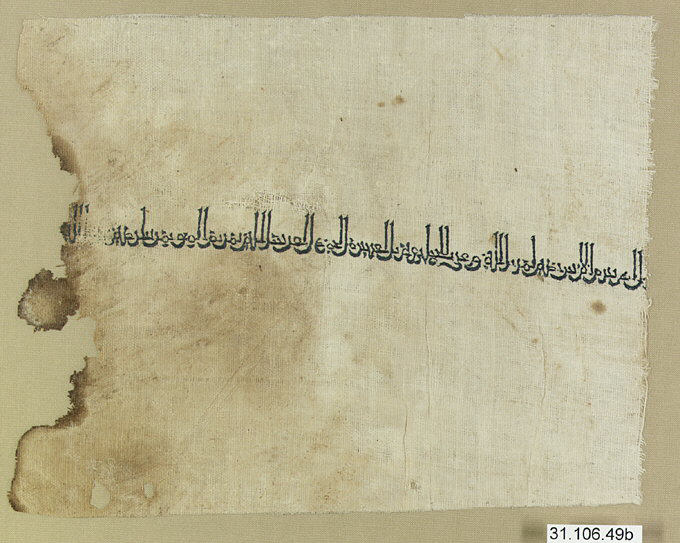
Deconstructing the Future: A Textile Fragment Analysis for SS26
The avant-garde couture landscape is perpetually in flux, a dynamic terrain where the past is not merely referenced but disassembled and reassembled into a lexicon of tomorrow. At Zoey Fashion Laboratory, our SS26 collection—tentatively titled “Fragments of the Unseen”—begins not with a full garment, but with a singular, potent artifact: a linen fragment, embroidered with silk. This is not a remnant of a bygone era, but a prototype for a new structural language. This analysis deconstructs this Textile Fragment, originating from what we term the Global Frontier—a conceptual space where cultural heritage, technological precision, and ecological imperatives converge. We will dissect its materiality, its architectural potential, and its capacity to redefine futuristic silhouettes for the upcoming season.
Material Dialectics: Linen and Silk on the Global Frontier
The choice of linen as the foundational substrate is a deliberate act of subversion. In an era dominated by synthetic stretch and high-tech laminates, linen represents a return to a primal, unyielding honesty. Its natural irregularities—the slubs, the subtle variations in weave—are not flaws but narrative markers. For SS26, we are not seeking perfect uniformity; we are seeking a dialogue with imperfection. The linen fragment, sourced from the Global Frontier, embodies a tension between the organic and the engineered. Its fiber structure, when subjected to our proprietary deconstructive treatments, reveals a latent rigidity. This is not a fabric that drapes passively; it resists, it holds memory, it demands a structural response.
Enter the silk embroidery. This is not decorative embellishment in the traditional sense. Instead, the silk thread—fine, luminous, and tensile—is applied as a structural intervention. Each stitch is a calculated line of tension, a micro-architectural beam that stiffens, curves, or suspends the linen. The embroidery pattern is algorithmic, inspired by the fractal geometries of organic growth and digital mesh. The silk, with its high tensile strength, acts as a counterpoint to linen’s inherent stiffness. Together, they create a composite material that is both brittle and resilient, opaque and translucent. This dialectic between the raw (linen) and the refined (silk) mirrors the broader SS26 theme: a future that is not sterile but textured, not synthetic but symbiotic.
Structural Innovation: From Fragment to Silhouette
The fragment is not a garment; it is a generative unit. Our design methodology for SS26 rejects the traditional pattern-cutting paradigm. Instead, we treat this textile fragment as a three-dimensional pixel, a building block for futuristic silhouettes. The linen-silk composite is laser-cut into precise, interlocking geometric shapes—hexagons, triangles, and irregular polygons. These are then reassembled not through seams, but through a system of tensioned silk threads and micro-magnetic fasteners. The result is a garment that is modular, adjustable, and capable of shifting its silhouette through the wearer’s movement.
Consider a shoulder piece constructed from these fragments. The linen provides a rigid base, while the silk embroidery creates a network of stress points. When the wearer raises an arm, the fragments pivot along these silk hinges, creating a dynamic exoskeletal form. The silhouette is not fixed; it is a living architecture. This challenges the static nature of traditional couture, where a garment’s shape is predetermined. Here, the silhouette is a performance, a negotiation between the body and the material. For SS26, we envision a collection where the torso is encased in a lattice of these fragments, creating a silhouette that is simultaneously armored and ethereal—a futuristic carapace that breathes and flexes.
Futuristic Silhouettes: The Architecture of Absence
The Global Frontier origin of this fragment informs a new aesthetic: “The Architecture of Absence.” This is a silhouette defined by negative space, by the gaps between the fragments. The linen-silk units are not contiguous; they are spaced apart, connected only by the silk threads and magnetic nodes. This creates a visual and physical porosity. Light passes through the gaps, casting shifting shadows on the body. The silhouette is therefore not a solid mass but a sculptural void. For SS26, we are exploring silhouettes that are asymmetrical, cantilevered, and suspended. A jacket, for example, might have one shoulder built from a dense cluster of fragments, while the other is a near-transparent web of silk lines, the linen fragments floating like islands in a textile galaxy.
This approach directly challenges the ergonomic norms of Western tailoring. The body is not draped or fitted; it is framed. The fragments create a secondary skeleton, a prosthetic exoskeleton that extends the natural form. The waist is not cinched but implied through a horizontal line of silk tension. The hip is not padded but articulated through a cascade of interlocking hexagons. This is a silhouette that belongs to the frontier—a place where boundaries are fluid, where the known and the unknown intersect. It is a silhouette for the post-human figure, one that exists in a state of constant becoming.
Ecological and Ethical Imperatives
The Global Frontier is not a romanticized notion; it is a site of ecological urgency. Linen, as a bast fiber, is one of the most sustainable textiles, requiring minimal water and no pesticides. Silk, while more resource-intensive, is biodegradable and, when sourced from ethical sericulture, supports biodiversity. By using these materials as the foundation for structural innovation, we are making a statement: that avant-garde couture can be regenerative. The fragment’s modularity also addresses waste reduction. Each fragment can be detached and reconfigured into a new garment, extending the lifecycle of the material. In SS26, we are not just designing clothes; we are designing systems for material reuse.
Conclusion: The Fragment as a Manifesto
This Textile Fragment from the Global Frontier is more than a starting point; it is a manifesto. It declares that the future of couture lies not in the whole, but in the fragmentary—in the deconstruction of the familiar to reveal the potential of the new. The linen-silk composite, with its dialectical materiality, allows us to engineer silhouettes that are structural, dynamic, and porous. For SS26, Zoey Fashion Laboratory will present a collection where garments are not worn but inhabited, where each fragment is a node in a larger, ever-shifting architecture. This is the avant-garde imperative: to look at a fragment and see a universe. The future is not seamless; it is stitched together from the pieces we dare to reimagine.