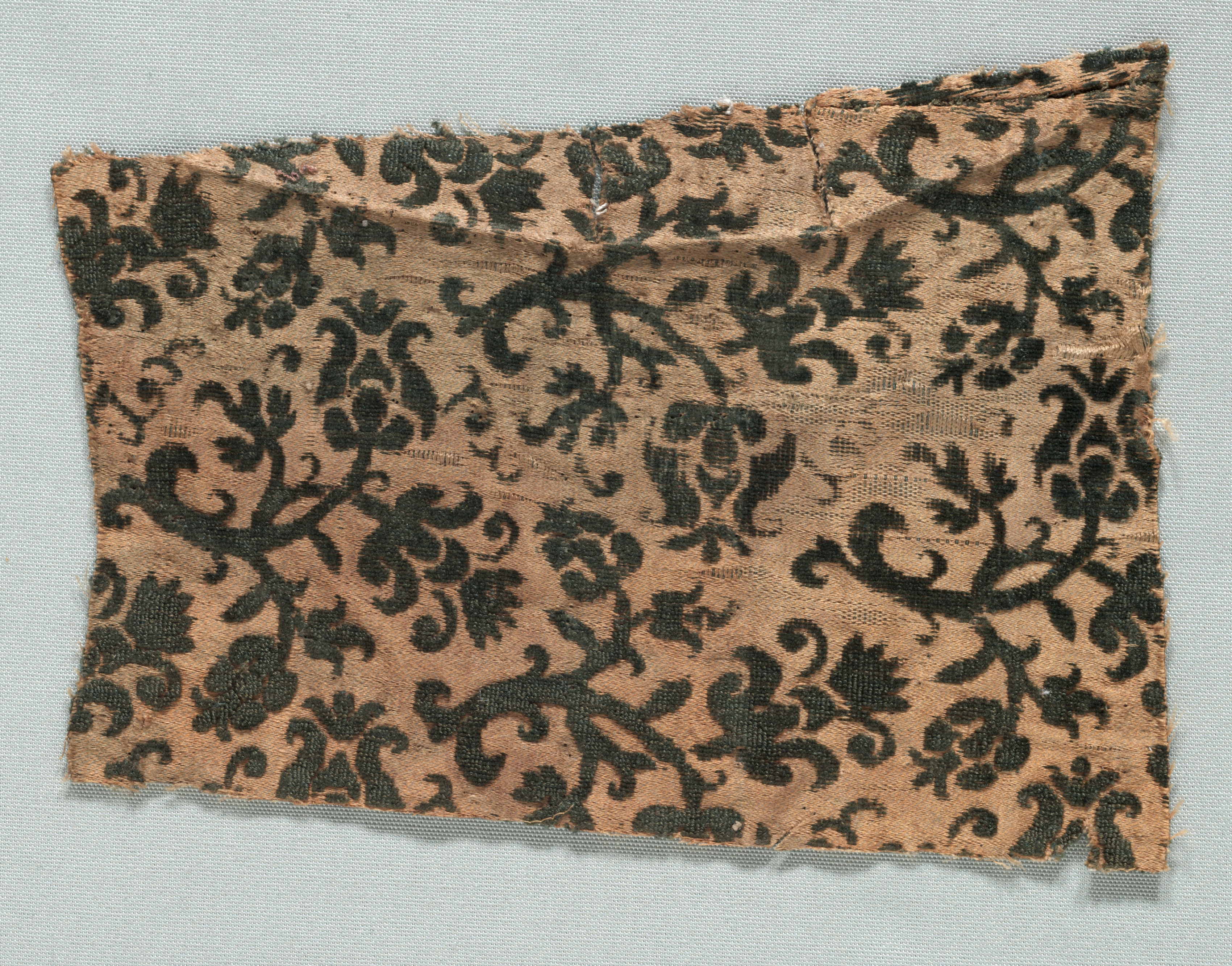
Deconstructing the Velvet Fragment: A Technical and Aesthetic Analysis for Zoey Fashion Lab
This analysis presents a comprehensive deconstruction of a 17th-century Italian velvet fragment, designated as a New DNA Strand for Zoey Fashion Lab. The fragment, a remnant of Baroque-era opulence, is examined not merely as a historical artifact but as a living, mutable genetic code for avant-garde design. By dissecting its materiality, construction, and cultural resonance, we identify key principles that can be re-engineered into contemporary fashion that challenges convention.
Material Provenance and Historical Context
The fragment originates from 17th-century Italy, a period when velvet was a symbol of aristocratic power and ecclesiastical grandeur. Italian cities like Venice, Genoa, and Florence were epicenters of velvet production, utilizing silk from the Orient and locally developed weaving techniques. This specific fragment, likely from a ceremonial garment or altar cloth, embodies the height of Baroque aesthetic: a fascination with texture, light, and dramatic contrast. The velvet’s pile—the cut loops of silk—creates a surface that absorbs and reflects light in a way that shifts with movement, a quality that was both a technical achievement and a metaphor for the transient nature of earthly splendor.
For Zoey Fashion Lab, this historical weight is not a burden but a catalyst. The fragment’s origin in a society obsessed with surface and spectacle offers a direct parallel to contemporary fashion’s preoccupation with image. However, our deconstruction will subvert this heritage, stripping away the velvet’s traditional associations with luxury to reveal its raw, structural potential.
Technical Analysis: The Velvet Construction
Velvet is a complex woven textile characterized by its dense, soft pile, created by weaving two layers of fabric simultaneously and then cutting them apart. The 17th-century Italian version typically used a silk warp and weft, with an additional pile warp that was looped over wires and then cut to create the plush surface. This fragment exhibits a classic voided velvet technique, where the pile is selectively cut to create patterns against a flat ground. The pattern, likely a floral or geometric motif, is rendered in a deep, almost black crimson, achieved through natural dyes derived from kermes or cochineal insects.
Key technical observations include:
- Pile Density: Approximately 120-150 pile ends per centimeter, indicating a high-quality, labor-intensive weave.
- Ground Weave: A plain weave foundation, providing structural integrity while allowing the pile to dominate.
- Wear Patterns: Areas of crushed pile and fading suggest historical use, revealing the fabric’s interaction with the human body and time.
These technical details are not just historical data; they are instructions for avant-garde manipulation. The pile density suggests a material capable of extreme textural variation, while the ground weave offers a stable base for deconstruction. The wear patterns, in particular, are a map of the fabric’s life—a narrative that can be replicated or exaggerated in a New DNA Strand.
The New DNA Strand: Avant-Garde Re-engineering
Zoey Fashion Lab’s approach to this velvet fragment is not preservation but genetic mutation. The term “New DNA Strand” implies a biological metaphor: the fragment’s properties are extracted, sequenced, and recombined to create a new textile organism. This process involves three key phases: extraction, mutation, and expression.
Extraction: The fragment’s core attributes are isolated: its tactile density, its light-reactive pile, its historical weight. These are not copied but treated as pure data. For example, the pile’s ability to trap air and create thermal insulation is extracted as a functional property, while the dye’s deep crimson is analyzed for its spectral signature.
Mutation: The extracted data is then deliberately altered. The pile density is exaggerated to create a hyper-velvet with a pile height of 10mm, rendering the fabric almost fur-like. The ground weave is replaced with a transparent monofilament, creating a floating, ethereal effect. The historical wear patterns are replicated through laser etching, but in a randomized, digital pattern that suggests future decay rather than past use.
Expression: The resulting textile is a paradox: it retains the velvet’s sensory appeal but rejects its historical context. It is decontextualized luxury, a material that feels opulent but is structurally alien. This new fabric can be used in garments that challenge silhouette and movement—for example, a coat that appears solid but is partially transparent, or a dress that shifts from dense pile to voided transparency in a single seam.
Design Principles for Avant-Garde Application
From this analysis, Zoey Fashion Lab can derive several design principles for incorporating the New DNA Strand into avant-garde collections:
1. Tactile Subversion: The velvet’s traditional softness is a point of entry, but it must be subverted. Combine the hyper-velvet with hard, industrial elements like metal grommets or plastic zippers. The contrast between the plush and the rigid creates visual and haptic dissonance, forcing the wearer and observer to reconsider the fabric’s identity.
2. Light as Material: The velvet’s light-reactive pile can be enhanced with metallic threads or photochromic dyes. A garment might appear black in low light but reveal a crimson pattern in sunlight, mimicking the original fragment’s play of light but with a technological twist. This turns the garment into a living surface that responds to environment.
3. Deconstruction of Form: The fragment’s cut pile can be reinterpreted as a design tool. Instead of cutting the pile to create patterns, use laser cutting to excavate layers from the fabric, creating three-dimensional textures that resemble topographical maps. This technique can be applied to shoulders, sleeves, or hems, adding architectural volume without weight.
4. Historical Narration through Wear: The original fragment’s wear patterns are a form of storytelling. In the New DNA Strand, these patterns can be programmed into the weave using digital jacquard looms. A garment might have areas of deliberate crushing or fading, creating a narrative of use before the garment is even worn. This challenges the idea of fashion as a pristine, unchanging object.
Conclusion: The Fragment as Future
The 17th-century Italian velvet fragment is not a relic but a blueprint for rebellion. By deconstructing its technical and aesthetic DNA, Zoey Fashion Lab can create textiles that honor the past while dismantling its hierarchies. The New DNA Strand is a velvet that has forgotten its aristocratic origins and embraced a future of mutable, interactive, and subversive design. In the hands of an avant-garde practitioner, this fragment becomes a tool for questioning what luxury, texture, and history mean in a contemporary context. The velvet’s pile is no longer a sign of wealth but a surface for experimentation, its historical weight a springboard for innovation. This analysis provides the foundation for a collection that is as intellectually rigorous as it is visually arresting, proving that the oldest fabrics can yield the most radical new forms.