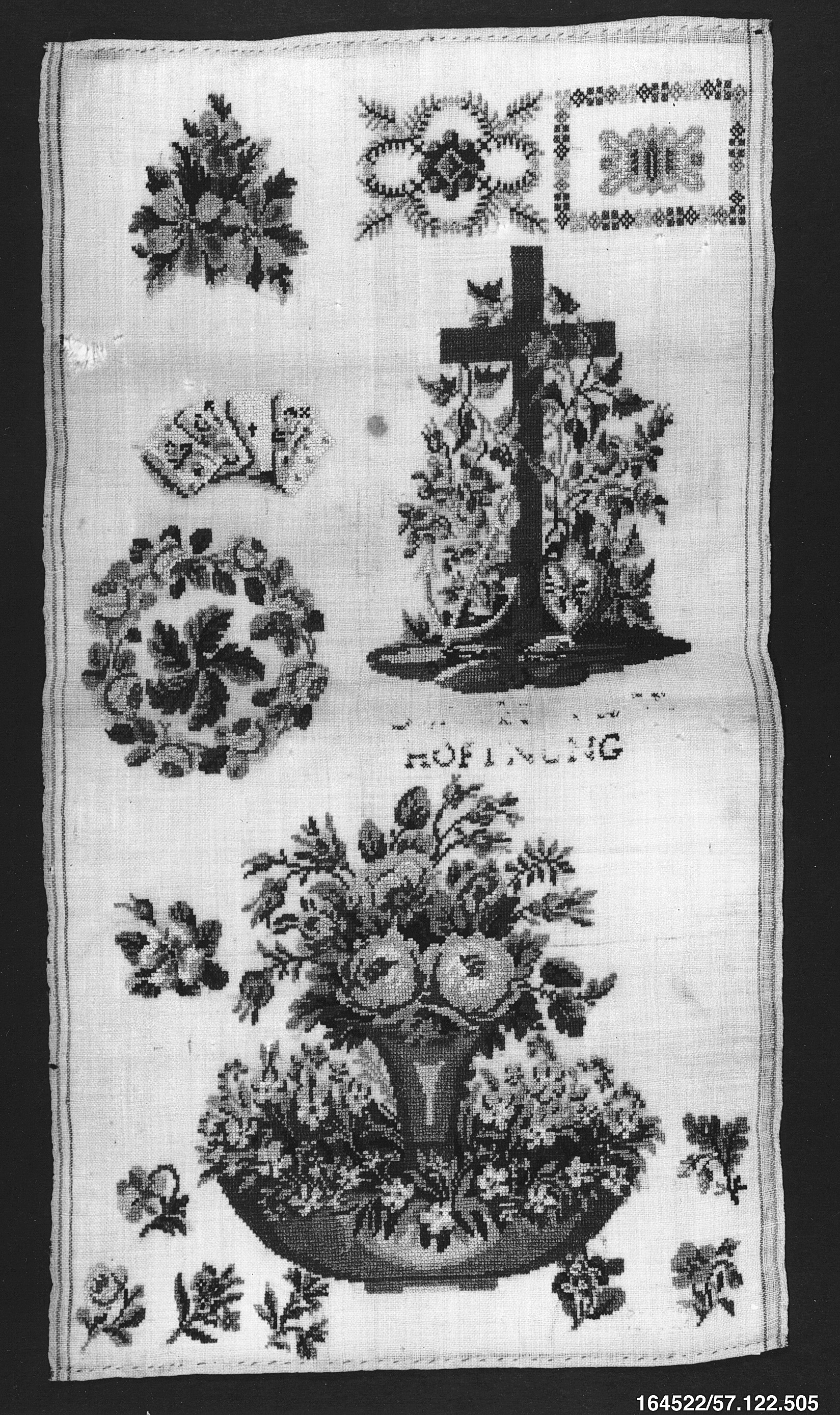
The Sampler Deconstructed: A Prelude to SS26 Structural Ontology
In the rarefied echelons of avant-garde couture, the Sampler is no mere preliminary swatch. It is a manifesto in microcosm—a compressed universe of technique, tension, and transformative potential. For the SS26 season, Zoey Fashion Laboratory presents a study from the Global Frontier that redefines the sampler as a standalone architectural artifact. This analysis dissects the piece through the lens of futuristic silhouettes and structural innovation, revealing how a seemingly modest composite of silk on wool canvas becomes a polemic against the static, the predictable, and the ornamental.
Material Dialectics: Silk and Wool Canvas as Structural Counterpoints
The choice of materials is neither arbitrary nor purely aesthetic. Silk—a filament of extreme tensile strength, fluidity, and luminosity—is juxtaposed against the dense, felted resilience of wool canvas. This is not a marriage of convenience but a deliberate tensile dialectic. The wool canvas serves as the compressive anchor, a rigid ground that resists deformation, while the silk overlay introduces dynamic counter-tension. In the context of SS26, this pairing anticipates a season where garments are not draped but engineered. The silk is not simply laid upon the wool; it is tensioned across it, creating a series of micro-arches and catenary curves that mimic the stress lines of a suspension bridge. The result is a surface that appears both soft and unyielding, a paradox that defines the frontier of futuristic silhouette.
Furthermore, the materiality speaks to a post-industrial craft logic. The silk’s organic, irregular sheen—a product of its natural filament—is deliberately left un-calendered, while the wool canvas retains a hand-loomed, almost tectonic texture. This is a rejection of seamless, hyper-synthetic finishes. Instead, the sampler celebrates material honesty as a form of avant-garde polemic. The friction between the two substrates generates a visual and tactile interference pattern, a moiré of intention and accident that is central to the Global Frontier’s ethos of controlled chaos.
Futuristic Silhouettes: The Sampler as a Blueprint for Deconstructive Volume
Traditional samplers are two-dimensional; this one is volumetric in intent. The silk-on-wool construction is not flat but pleated and gathered into a series of asymmetrical, cantilevered forms that suggest a garment in a state of perpetual becoming. The silhouette here is not a final shape but a spatial proposition. The sampler’s edges are raw, frayed, and deliberately unfinished, implying that the final garment will be a modular system of attachable and detachable elements. This aligns with SS26’s broader trend toward adaptive architecture in fashion—garments that can be reconfigured by the wearer, responding to movement, environment, and even mood.
Key to this futuristic silhouette is the asymmetric weight distribution. One quadrant of the sampler is heavily layered with silk, creating a cascading, almost liquid volume that contrasts with the stark, planar wool canvas on the opposite side. This is not mere asymmetry for effect; it is a structural necessity for a garment designed to defy gravity. The heavy silk section acts as a counterweight, while the wool canvas provides the rigid armature. The resulting form—part drape, part cantilever—is a direct precursor to the SS26 “zero-gravity” gown that Zoey Fashion Laboratory is developing, where fabric is held aloft by internal tension structures rather than traditional boning or padding.
Structural Innovation: The Tensile Grid and the Algorithmic Fold
The true innovation of this sampler lies in its internal structural logic. The silk is not simply stitched to the wool; it is woven through a series of laser-cut perforations in the canvas, creating a tensile grid. This technique, which the Laboratory calls “filament anchoring,” allows the silk to be tensioned from multiple points, generating complex three-dimensional curves that are mathematically precise yet organically fluid. The perforations are not random; they follow an algorithmic pattern derived from the Fibonacci sequence, ensuring that the stress distribution is optimized for both movement and visual harmony.
This grid also enables negative-space construction. Gaps between the silk filaments are left intentionally void, revealing the wool canvas beneath. These voids are not flaws but structural windows that allow for breathability, light play, and a sense of depth. In a full garment, these voids would be functional apertures—armholes, necklines, or even integrated pockets—that are simultaneously decorative and load-bearing. This is a radical departure from traditional garment construction, where seams and openings are afterthoughts. Here, they are primary structural elements, designed from the outset.
Additionally, the sampler employs a reversible tension system. On one side, the silk is pulled taut, creating a smooth, almost reflective surface. On the reverse, the same silk is gathered into a series of compressed folds, forming a dense, sculptural relief. This duality allows for a single garment to present two distinct silhouettes—one sleek and architectural, the other textured and organic. The wearer can invert the garment, changing its entire structural and visual character. This is the essence of futuristic adaptability: a garment that is not a fixed object but a kinetic system.
Contextualizing the Sampler within the SS26 Avant-Garde Landscape
The Global Frontier is not a geographic location but a conceptual territory where traditional boundaries of material, form, and function dissolve. This sampler is a cartographic tool for navigating that territory. It rejects the comfort of historical references—no Victorian draping, no 20th-century minimalism. Instead, it looks to biomimetic engineering (the tensile grid mimics spider silk and plant cell walls) and digital fabrication (the perforations are designed using parametric software). The result is a hybrid object that is both handcrafted and data-driven, a testament to the Laboratory’s commitment to transdisciplinary innovation.
For SS26, this sampler signals a broader shift toward wearable infrastructure. Garments will no longer simply cover the body; they will redefine its spatial relationship to the environment. The silk-on-wool canvas construction is a prototype for self-supporting forms that can stand away from the body, creating pockets of air and shadow. This is not fashion as drapery but fashion as habitable sculpture—a direct response to a world where personal space is increasingly precious.
Conclusion: The Sampler as a Future Artifact
Zoey Fashion Laboratory’s sampler is a definitive statement of intent for SS26. It is not a sketch or a sample; it is a fully realized architectural fragment that contains within it the DNA of an entire collection. The silk-on-wool canvas construction, with its tensile grid, asymmetric volumes, and reversible tension system, is a masterclass in structural innovation. It challenges the very notion of what a garment can be—not a passive covering but an active, adaptive system. For the avant-garde curator, this sampler is a Rosetta Stone for the season ahead, decoding a future where fashion is not worn but inhabited.