Deconstructing the Heraldic Code: From Ecclesiastical Vestment to Exoskeletal Architecture
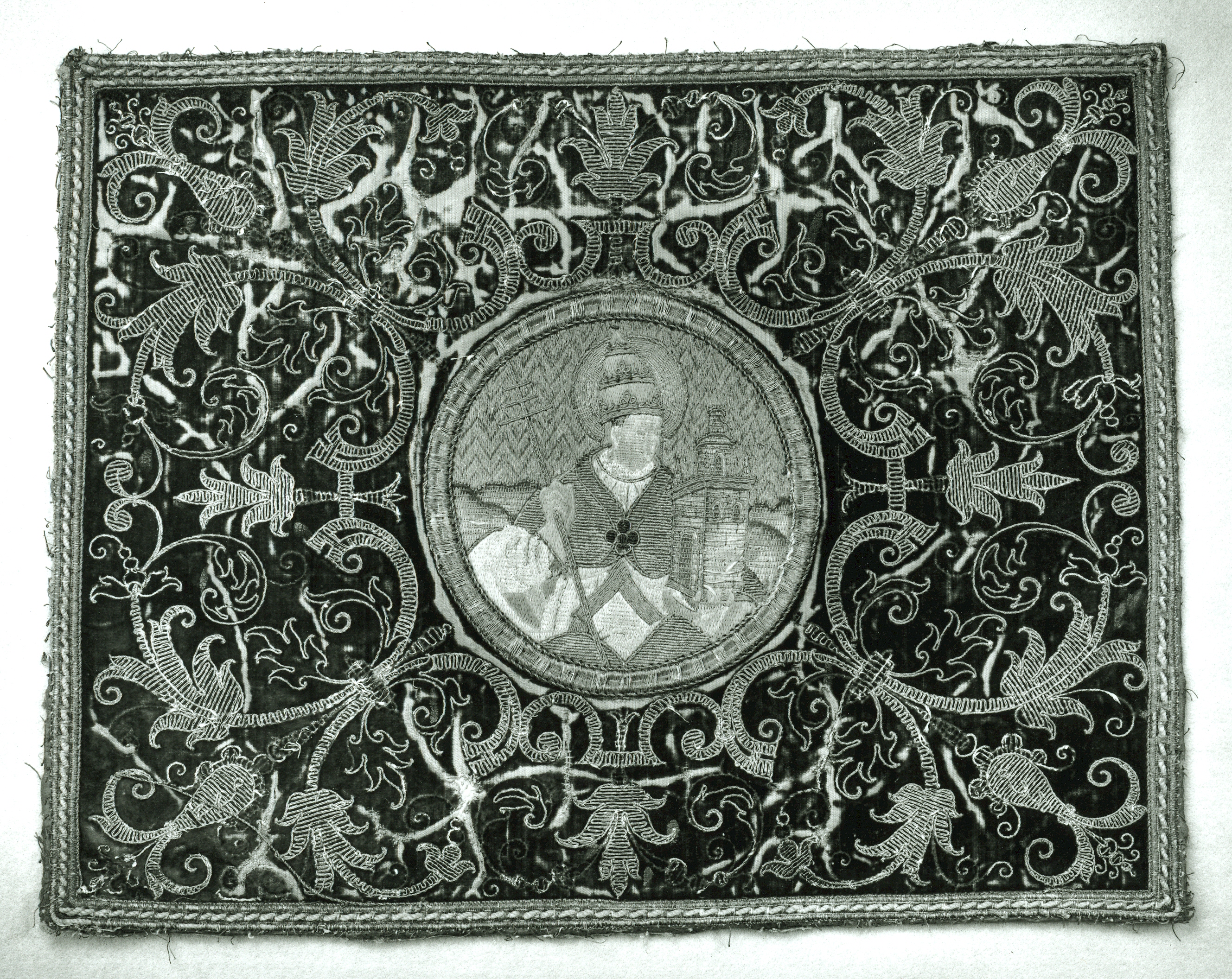
The provided artifact—a roundel appliquéd to a rectangular panel, of probable Southern European origin, crafted from linen, silk, and gilt metal thread upon a silk cut velvet ground—is not merely a textile fragment. It is a compacted data packet of power, hierarchy, and symbolic communication. For Zoey Fashion Laboratory’s SS26, this is our core cipher. The mission is not one of historical reenactment, but of radical translation: to extrapolate its embedded protocols into a lexicon of futuristic silhouette and structural innovation. The roundel, a closed system of authority, meets the rectangle, a field of potential. This collision is our starting point for a collection that interrogates containment, emission, and the exoskeletal frameworks of identity in a digital-physical continuum.
Structural Innovation: The Padded Couching as Bio-Mechanical Blueprint
The technique of padded couching and the couching of gilt metal strips is the most critical technical DNA for our structural exploration. Historically, this created a low-relief, emphasizing iconography through tactile dimension. We re-engineer this principle as a method for biomorphic structural integrity. Imagine not padded silk, but padded, thermo-formed biopolymers or inflated silicone channels couched onto a base fabric of technical mesh or laser-sintered lace. The "gilt metal strips" transform into conductive metallic yarns or flexible alloy filaments, couched in pathways that serve a dual purpose: aesthetic linear drawing and functional circuitry for embedded low-voltage illumination or responsive sensor networks.
The artifact’s multi-layered stratification—ground, embroidery, appliqué—informs a new approach to garment architecture. We propose a tripartite system: a primary, close-to-skin layer of moisture-wicking linen-modelled technical fabric; a secondary, structural exoskeleton layer where the "padded couching" is executed with architectural rigidity, creating form-defining ribs and corselets; and a tertiary, dynamic appliqué layer where the "roundels" manifest as kinetic, rotating or detachable panels. The rectangle is the garment’s foundational shell; the roundel becomes a mobile, interactive element that can be positioned by the wearer, challenging the fixed symbolism of the original.
Futuristic Silhouette: The Rectangular Field and the Orbital Disruption
The silhouette philosophy for SS26 emerges from the tension between the rectangular panel and the circular appliqué. We move beyond the organic, fluid futurism of past seasons into a realm of controlled geometric articulation.
The Rectangular Construct: The panel is interpreted as the foundational block for garments that emphasize sharp, clean lines—not as flat planes, but as folded, origami-like volumes. Envision a tailored coat where the entire back is a single, engineered rectangle of silk-cut-velvet-inspired jacquard, but segmented with ultrasonic welding to allow for parabolic curve deployment when in motion. Trousers feature rectangular pods at the thigh or calf, housing technical components or simply creating bold, graphic disruptions of the limb’s line. Dresses are built from interlocking rectangular panels with strategic gaps, creating a lattice-body relationship reminiscent of architectural cladding.
The Orbital Intervention: The roundel appliqué breaks these rectilinear forms. It manifests as: Rotational Shoulder Capes—circular panels attached at a single pivot point on the shoulder, allowing them to swivel from front to back; Thoracic Orbs—spherical, padded couching-inspired breastplates that hover away from the torso via clear tensile straps; and Gilt-Traced Aural Halos—headpieces of minimal metal frames, tracing the circumference of the head with couched light-emitting filaments. The silhouette is thus a dialogue between the structured, the modular, and the orbital—a wearable solar system of personal adornment.
Material Alchemy: Linen, Silk, and Gilt in the Laboratory
The material palette is subjected to rigorous laboratory alchemy. Linen is not merely a rustic fiber; we engineer it into a translucent, paper-thin laminate bonded to carbon fiber threads for a ghostly, yet rigid, textile. Silk cut velvet, with its play of light and shadow, is replicated through laser-cutting and etching on recycled acetate and thermoplastic polyurethane, creating velvety textures with holographic or chromatic shift properties. The true evolution lies in the gilt metal thread. This becomes our conduit to the future: metallized microbial cellulose grown in lab patterns; vacuum-deposited aluminum on silk organza creating impossibly light, mirrored surfaces; and shape-memory alloy wires couched into seams, allowing garment edges to curl or flatten in response to body heat.
The SS26 collection, born from this single artifact, posits a future where couture is wearable architecture and personal interface. The roundel is a lens, a port, a beacon. The rectangle is a screen, a shell, a canvas. Together, under the avant-garde ethos of Zoey Fashion Laboratory, they forge a new sartorial syntax where history’s most ornate codes are disassembled and reassembled into a provocative, intelligent, and breathtakingly structured vision for what comes next. This is not fashion as narrative; this is fashion as operating system.