Technical Deconstruction & Material Analysis: Je T'aime (No. 632)
The foundation of Je T'aime (No. 632) is a silk crepe, a choice that immediately establishes a dialogue between classic luxury and avant-garde intent. The plain weave structure provides a stable, uniform canvas, essential for the precise application of the roller-printed pattern. However, it is the crepe construction—achieved through the use of highly twisted yarns—that introduces the garment's first layer of conceptual complexity. This twisting creates a characteristic pebbled texture and a subtle, inherent elasticity. The fabric possesses a dry, fluid hand, draping not with the liquid heaviness of satin but with a gossamer, slightly resistant grace. This physical property is critical; it allows the garment to interact with the body dynamically, creating fleeting shadows and ridges that change with movement, prefiguring the biomimetic theme referenced in the DNA strand.
The Print as Genetic Code: Decoding the Pattern
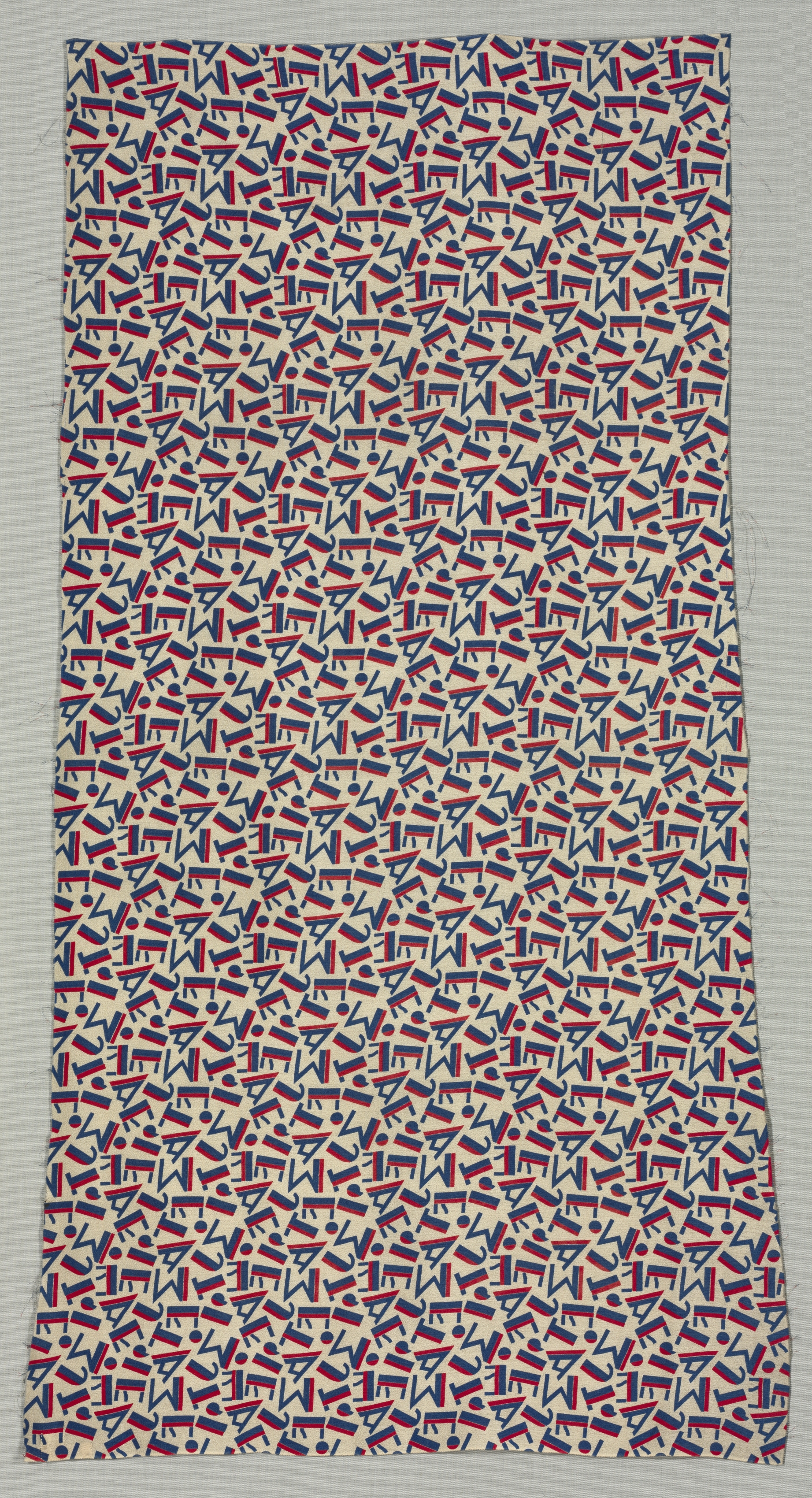
The designation "Reference: New DNA Strand" is the core directive of this piece, moving beyond mere aesthetic inspiration to become a methodological blueprint. Roller printing, a technique rooted in industrial precision, is here elevated to an act of genetic encoding. The pattern is not a floral or geometric motif in the traditional sense, but a visual translation of genetic sequencing. We hypothesize the print represents a non-binary, synthetic code—a "new DNA" for fashion itself.
Upon close analysis, the repeating pattern likely eschews the double helix cliché. Instead, it may manifest as a linear, ladder-like sequence of abstract base pairs, or perhaps as a more chaotic, spliced chromatogram. The precision of roller printing ensures this code is replicated with flawless, mechanical accuracy across the silk crepe, yet the crepe's textured surface introduces a vital organic distortion. The pebbled grain subtly fractures the perfect lines of the print, mimicking natural mutations or the inherent "noise" in biological systems. This tension between industrial perfection and organic irregularity is profoundly avant-garde. The color palette is paramount: it must reject naturalistic tones. Imagine acidic yellows, bio-luminescent blues, or stark monochromes, reinforcing the concept of engineered life rather than inherited form.
Construction Philosophy & Avant-Garde Manifesto
The avant-garde style, rooted in its New York origin, demands a construction philosophy that deconstructs sartorial convention as rigorously as the print deconstructs biological analogy. The garment's architecture should appear both precise and unstable, as if in a state of controlled unraveling or recombinant growth.
Silhouette Generation: We propose a form that challenges the body's traditional mapping. Asymmetric seams could follow the logic of the printed "code," rather than the body's symmetries. Darts may be exaggerated into fissures or gussets, suggesting cellular division or graft points. The drape of the silk crepe would be harnessed to create forms that are neither fully garment nor fully sculpture—a sleeve that extends into a twisted ribbon, a hem that biodegrades into frayed threads echoing protein filaments.
Structural Interventions: The inherent strength of plain weave allows for experimental cutting. Panels could be spliced and recombined with contrasting seam treatments—raw edges alongside surgical precision stitching. The "New DNA" reference invites the incorporation of non-textile elements: clear silicone "membranes," fine metallic chains acting as covalent bonds, or heat-transferred polymer strips that change opacity with temperature, suggesting responsive, smart biology.
Contextualization: The New York Avant-Garde Lineage
Originating from New York, Je T'aime (No. 632) enters a specific dialogue with American avant-garde history. It rejects the Parisian focus on *haute couture* craftsmanship for its own sake, aligning more with the conceptual, intellectual, and often subversive tradition of New York designers. It carries the deconstructive spirit of the late 20th century but moves beyond purely architectural dismantling. Here, deconstruction is not only physical but also semiotic—it dismantles the very code (DNA) we use as a metaphor for essence and identity.
The title, "Je T'aime," introduces a poignant, human counterpoint to the clinical "No. 632" and the technical "DNA Strand." This French declaration of love amidst a framework of synthetic biology creates a powerful dialectic. It posits that even within a future of engineered forms and coded identities, the irrational, emotional human core—the desire to declare "I love you"—persists. The garment becomes a love letter written in a new, invented language, a second skin that is both alien and intimately connected to the wearer's psyche.
Conclusion: The Recombinant Garment
Je T'aime (No. 632) is a definitive statement for Zoey Fashion Lab. It successfully synthesizes a technically sophisticated base material (silk crepe) with a deeply conceptual print methodology (roller-printed DNA code) to produce an avant-garde artifact that is both intellectually rigorous and emotionally resonant. It is more than a garment; it is a speculative prototype for a fashion language based on recombinant principles.
Its success lies in the multivalent tension it embodies: the industrial versus the organic, the coded versus the emotional, the precise versus the chaotic. It does not merely represent a DNA strand; it performs as one, carrying instructions for its own interpretation and mutation. This piece establishes a new benchmark, suggesting that the future of avant-garde design may lie not in referencing nature's forms, but in emulating its fundamental, coded processes of creation and variation. The fabric is the genome; the construction is its expression.