Deconstructing the Avant-Garde: A Technical and Aesthetic Analysis of a 17th-Century Italian Velvet Fragment
Introduction: The Fragment as a New DNA Strand
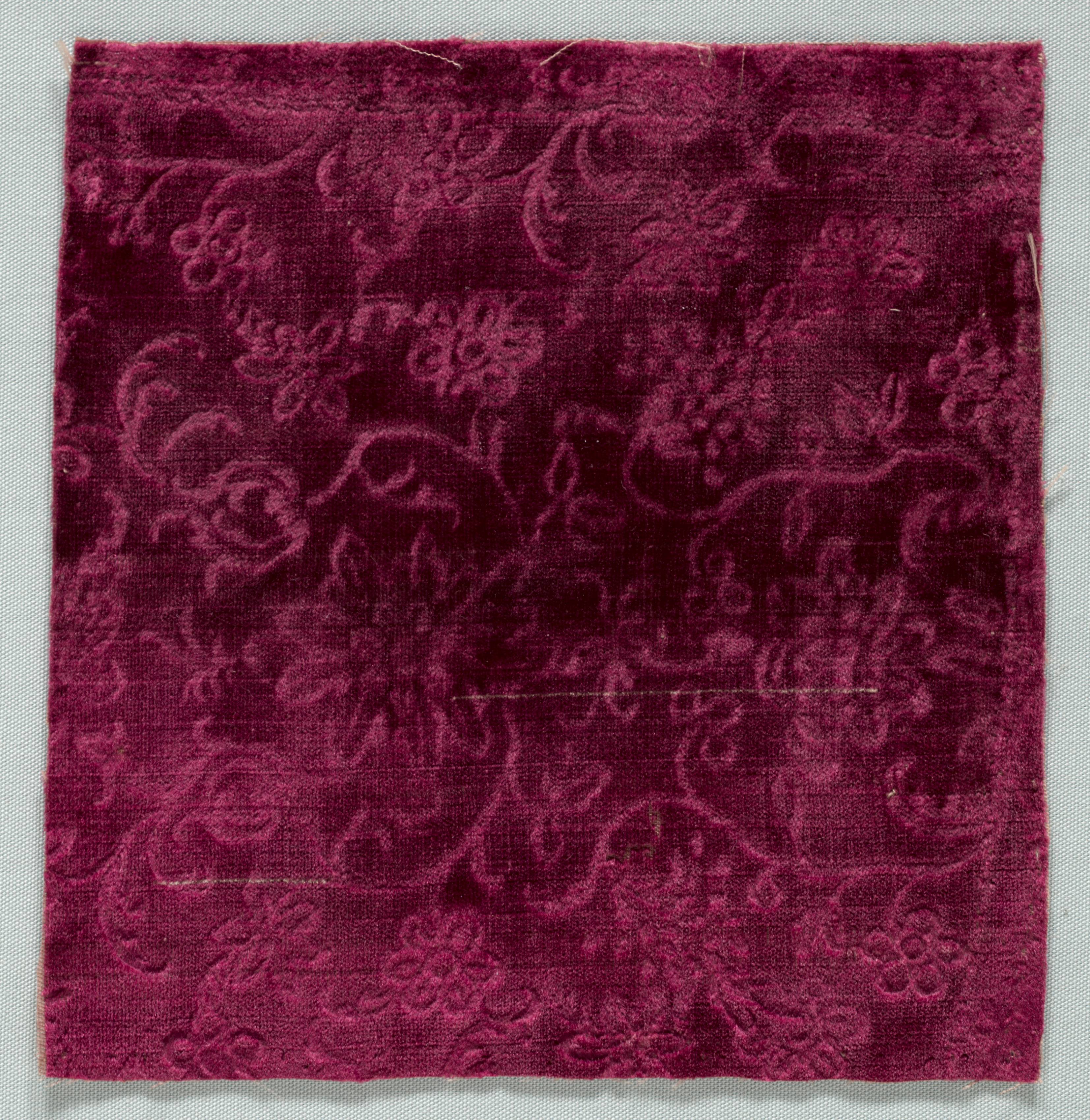
In the pursuit of avant-garde fashion, the past is not a relic but a living, mutable code. At Zoey Fashion Lab, we approach historical textiles not as artifacts to be preserved under glass, but as new DNA strands—genetic blueprints that can be spliced, mutated, and re-expressed into radical, future-facing designs. This analysis deconstructs a velvet fragment originating from late 17th-century Italy, a period of opulent Baroque excess and meticulous craftsmanship. Our objective is to extract its core technical and aesthetic principles, translating them into a lexicon for contemporary, experimental garment construction.
Material Memory: The Technical DNA of 17th-Century Italian Velvet
The fragment in question is a cut velvet, likely produced in Genoa or Venice, centers renowned for their sophisticated silk weaving. Its technical DNA is defined by three key characteristics: pile height, ground weave, and metallic thread integration. The velvet’s pile, standing approximately 2-3 millimeters high, was created using a complex system of loops cut during weaving. This process, executed on a drawloom, required immense skill and produced a fabric of extraordinary density and luster. The ground weave, typically a silk satin or twill, provides a smooth, reflective backdrop that contrasts with the soft, matte pile.
Critically, many 17th-century Italian velvets incorporate gold or silver gilt thread—thin strips of metal wrapped around a silk core—woven into the pattern. This metallic element is not merely decorative; it alters the fabric’s structural behavior. The metal adds weight, stiffness, and a unique thermal conductivity, creating a material that is both luxurious and physically demanding. For the avant-garde designer, this suggests a potential for sculptural rigidity and thermal responsiveness—qualities that can be reinterpreted through modern materials like coated yarns or conductive fibers.
Pattern and Motif: Baroque Geometry as a Generative System
The fragment’s pattern, likely a pomegranate or artichoke motif rendered in a symmetrical, stylized form, is emblematic of the late Baroque. These motifs are not arbitrary; they are generative systems built on repeating, scaled geometries. The pomegranate, a symbol of fertility and resurrection, is rendered through a series of concentric curves and pointed leaves, creating a dynamic interplay of positive and negative space. In the velvet, the pile defines the motif, while the ground weave forms the background, resulting in a tactile duality—a surface that invites touch while maintaining visual hierarchy.
For Zoey Fashion Lab, this pattern is a code for modularity. The Baroque motif’s inherent symmetry and repetition can be deconstructed into discrete, interlocking units. Imagine a garment where the pomegranate shape is not printed but physically constructed from laser-cut velvet panels, each with a different pile direction or metallic content. The fragment’s pattern becomes a parametric blueprint, allowing for infinite variations in scale, rotation, and material density. This approach transforms a historical design into a contemporary, algorithmic tool for creating non-repeating, organic forms.
Surface and Texture: The Velvet Paradox
Velvet’s defining characteristic is its paradoxical surface: it is simultaneously soft and structured, absorbent and reflective. The 17th-century fragment exploits this through the interplay of cut and uncut loops, creating areas of matte and sheen. The metallic threads add a third dimension of specular reflection, catching light in unpredictable ways. This creates a visual and tactile experience that changes with movement and angle—a quality that resonates deeply with avant-garde fashion’s emphasis on transformative wearability.
Deconstructing this paradox, we identify three key textural variables: pile density, metal content, and weave tension. In the fragment, high-density pile areas feel plush and absorbent, while low-density or metallic areas are slick and cool. This gradient of tactile sensations can be replicated and exaggerated using modern techniques. For example, a garment might combine traditional silk velvet with 3D-printed thermoplastic polyurethane (TPU) in a similar pile structure, creating a hybrid that is both plush and rigid. Alternatively, conductive metallic yarns could be woven into the ground weave, enabling the fabric to respond to touch or temperature—a literal reinterpretation of the Baroque velvet’s thermal properties.
From Fragment to Form: Avant-Garde Applications
The 17th-century Italian velvet fragment is not a template for reproduction but a catalyst for deviation. At Zoey Fashion Lab, we propose three avant-garde applications based on this analysis:
1. Deconstructed Silhouette: The fragment’s dense pile and metallic threads suggest a fabric capable of holding its shape. We envision a garment where the velvet is cut into asymmetrical, sculptural panels, sewn together with exposed seams. The Baroque motif is fragmented—some panels retain the original pattern, while others are replaced with solid velvet or sheer mesh. This creates a visual and structural dissonance, echoing the fragment’s own history as a broken piece of a larger whole.
2. Responsive Surface: Using the velvet’s thermal and tactile properties as a model, we can create a garment with embedded shape-memory alloys or thermochromic dyes. The metallic threads are replaced with conductive fibers that heat or cool in response to the wearer’s body temperature, causing the velvet’s pile to rise or flatten. The pattern becomes alive, shifting between matte and sheen as the wearer moves through different environments.
3. Modular Construction: The fragment’s repeating pattern is translated into a system of interlocking tiles, each made from a different material—silk velvet, metallic mesh, laser-cut leather. These tiles are connected via magnetic or snap fasteners, allowing the wearer to reconfigure the garment’s silhouette and pattern in real time. This approach honors the Baroque love for ornamentation while embracing contemporary concepts of customization and sustainability.
Conclusion: The Fragment as a Living Archive
The 17th-century Italian velvet fragment is far more than a historical curiosity. It is a new DNA strand—a set of technical and aesthetic instructions that can be decoded, mutated, and re-expressed in ways its original weavers could never have imagined. By deconstructing its pile, pattern, and surface, we unlock a vocabulary of sculptural form, responsive texture, and modular design. At Zoey Fashion Lab, we do not preserve the past; we recompose it, using the fragment as a seed for garments that are both timeless and radically new. The velvet’s DNA is now part of our own design genome, ready to be spliced into the future of fashion.