Deconstructing the Frontier: The 'Sampler' as Avant-Garde Cartography
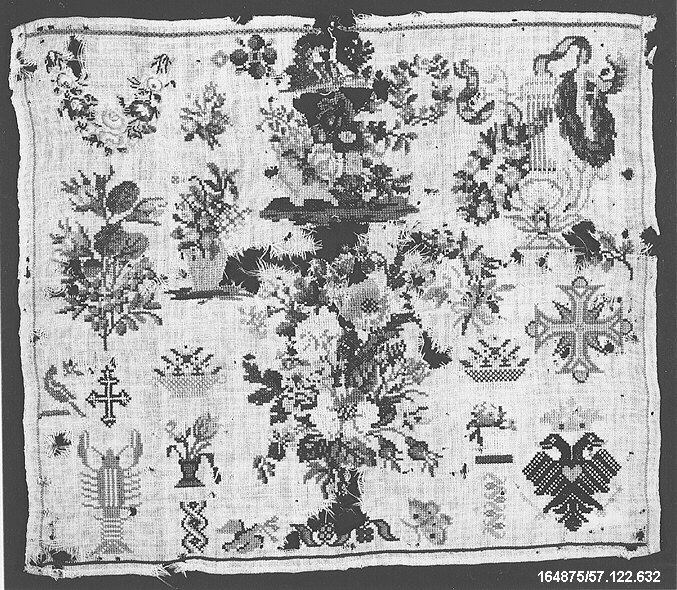
In the lexicon of Zoey Fashion Laboratory, a 'Sampler' is never a mere reference; it is a tectonic proposition. For SS26, the 'Sampler' originating from the conceptual Global Frontier represents a radical cartography of the body, charting a territory where memory and prophecy collide. This standalone study transcends seasonal narrative to interrogate the very methodology of construction. Utilizing the foundational tension of silk on wool canvas, the piece operates as a manifesto on contrast: the ephemeral versus the eternal, the fluid versus the fixed, the hand-stitched trace versus the algorithmic cut. It is not a garment to be worn in a traditional sense, but an architecture to be inhabited, a speculative blueprint for the corporeal experience of SS26 and beyond.
Structural Innovation: The Dialectic of Canvas and Filament
The material specification is the first and most critical cipher. Wool canvas, historically the armature of classical tailoring and maritime endurance, provides the structural memory. It is the map's parchment, rigid with history and expectation. Upon this, silk—the ultimate signifier of luxury and impermanence—is applied not as a lining or overlay, but as a deconstructive filament. This silk is engineered into tensile cords, translucent patches, and riotous, eruptive blooms that defy the canvas's planar logic. The innovation lies in their interaction: the silk is not sewn but surgically grafted and tensioned, creating dynamic stress points that cause the canvas to warp, pucker, and articulate in unforeseen dimensions. This is a study in controlled collapse, where the supple actively re-sculpts the stout. Darts are replaced by vectorial tensions; pleats are born from material antagonism rather than decorative intent. The silhouette is therefore not imposed from a pattern, but emerges from the material dialogue itself, a true testament to a deconstructive ethos.
Futuristic Silhouette: The Non-Binary Silhouette and Kinetic Volume
The SS26 silhouette proposed by 'Sampler' is a direct consequence of its structural warfare. We move decisively beyond the binary of fitted versus oversized into the realm of the kinetically contingent. The silhouette exists in multiple states: compressed and geometric when at rest, expansively organic with the micro-movements of the inhabiting body. It proposes a parabolic back, where tensioned silk cords pull the canvas into a semi-rigid, wing-like curve—a modern carapace that suggests both protection and launch. Asymmetry is not stylistic but systemic, with one shoulder constrained by a web of silk, forcing the opposite side of the canvas to billow into a voluminous, architecturally hollow sleeve-pod.
This is a silhouette of calculated voids and occupied negative space. The wool canvas forms exoskeletal strappings that map onto the body's ergonomic points, while the liberated silk creates interstitial zones of air and light. The result is a garment that appears both anchored and fluid, defining the body not by contouring but by creating a dynamic, shifting perimeter. It rejects the static, runway-ready pose, instead demanding a silhouette that is performative and time-based, evolving with movement. For SS26, this establishes a new paradigm: the silhouette as an event, not an object.
Conceptual Architecture: From Garment to Habitable Interface
'Sampler' ultimately functions as a speculative interface between the individual and the nebulous 'Global Frontier.' The wool canvas, with its connotations of exploration (tents, sails, maps) and tradition (tailoring's backbone), represents the inherited structures—social, sartorial, and spatial—of the known world. The silk, in its myriad applied forms, acts as data, emotion, and digital bleed-through—the overwhelming flow of the new frontier. The garment's architecture is where these forces negotiate.
Patches of raw canvas are left exposed, treated with bio-reactive coatings that hint at future functionality, while areas of densely layered silk mimic topographical data or signal interference. Fastenings are absent; closure is achieved through magnetic seals and tension-lock points derived from aerospace engineering, suggesting a garment that can be reconfigured by its wearer. This is high-concept architecture that questions fashion's permanence, proposing instead a modular, responsive system. It is a standalone study that posits the future of couture not in spectacle alone, but in wearable, intelligent morphology.
The SS26 Proposition: A New Material Syntax
As a harbinger for Zoey Fashion Laboratory's SS26 direction, 'Sampler' is profoundly definitive. It declares that innovation will be rooted not in novelty for its own sake, but in the deep material and philosophical dialectic. The futuristic silhouette is born from physics, not fantasy. The structural innovation serves a conceptual cartography. By mastering the dialogue between the archaic resilience of wool canvas and the hyper-modern applications of engineered silk, the laboratory crafts a new syntax. This syntax allows for garments that are both archive and algorithm, containing the memory of the hand and the promise of the digital frontier. 'Sampler' is not a finished product; it is a provocative question posed in cloth and tension: If a garment is a map, what new bodies does it dare to chart? For SS26, the answer lies in embracing the beautiful, rigorous conflict inherent in that very question.