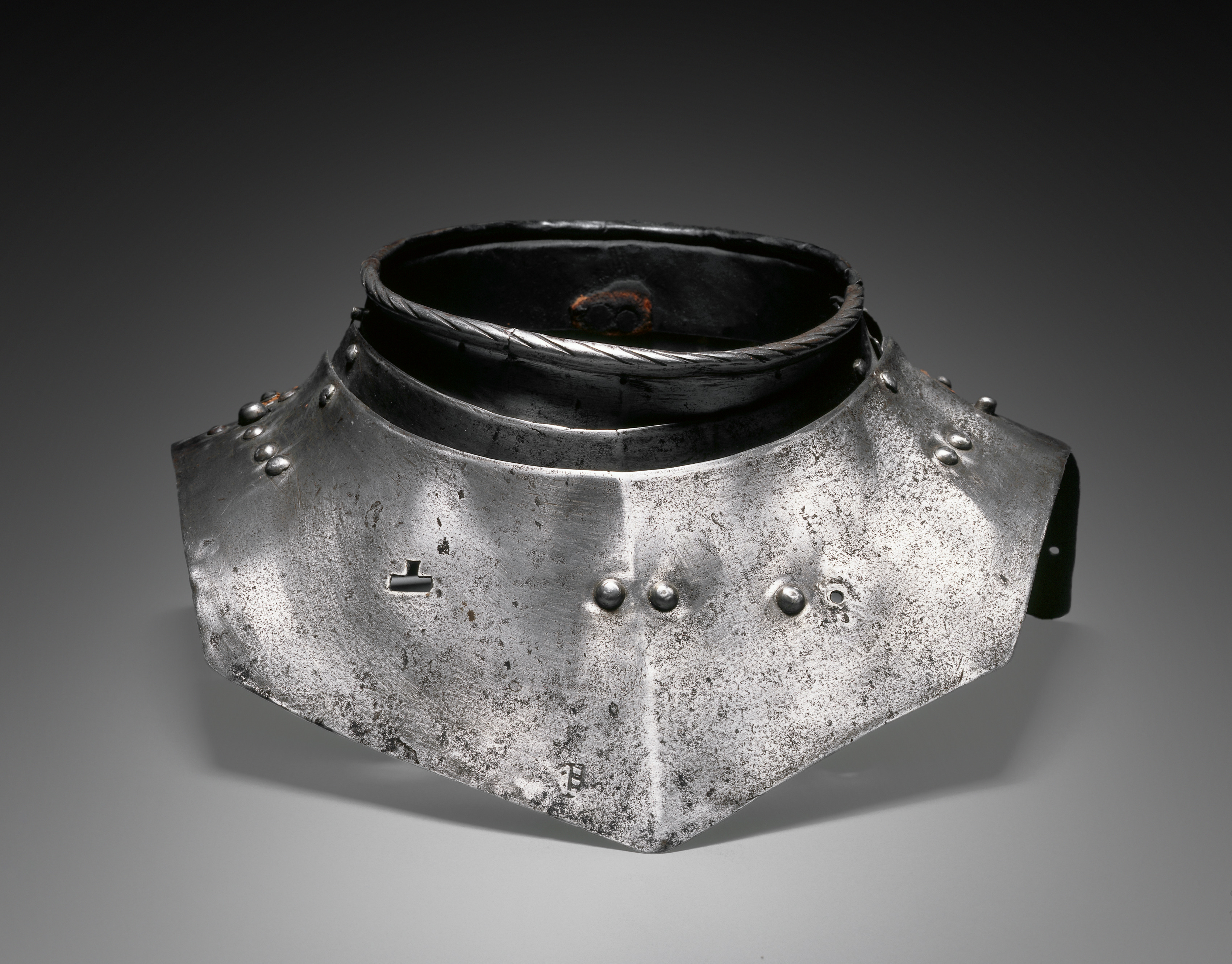
Deconstructing the Gorget: A Technical and Avant-Garde Analysis for Zoey Fashion Lab
In the ever-evolving landscape of high fashion, the intersection of historical armor and futuristic design presents a fertile ground for innovation. At Zoey Fashion Lab, we specialize in reimagining traditional garment components through a lens of radical deconstruction and material science. The subject of this analysis—the German steel gorget—offers a unique case study. By applying our signature methodology, we can transform this rigid, historical piece of neck armor into a dynamic, avant-garde element that references the New DNA Strand concept: a continuous, mutable, and structurally intelligent form.
Historical and Technical Context: The German Steel Gorget
The gorget, originating in 15th-century Germany as part of a knight's full plate armor, was designed for one primary purpose: protection. Crafted from high-carbon steel, it shielded the throat and upper chest from blade strikes and projectiles. Its construction is inherently rigid, typically consisting of two or three overlapping plates that articulate at the neck and shoulders. The technical challenge for Zoey Fashion Lab lies not in replicating this protective function, but in recontextualizing its material properties—the weight, the coldness, the reflective surface—into a wearable, expressive statement.
The steel itself is a marvel of metallurgy. German steel from this period was often forged using techniques like folded steel or pattern welding, creating a material that is both durable and surprisingly responsive to heat and pressure. For our avant-garde interpretation, we will not treat the steel as a static shell. Instead, we view it as a raw material for transformation. The gorget’s historical silhouette—a crescent or half-moon shape that frames the neck—provides the foundational geometry, but our deconstruction will challenge its inherent symmetry and solidity.
Deconstructing the Form: From Armor to Organic Architecture
The first step in our analysis is to break down the gorget into its core components: the neck plate, the shoulder plates, and the articulation points. In traditional armor, these elements are locked together with rivets and leather straps, creating a closed system. For Zoey Fashion Lab, we propose a radical departure: eliminate the fasteners and introduce controlled fragmentation.
Imagine the steel gorget not as a single piece, but as a series of segmented, laser-cut scales that mimic the structure of a DNA strand. Each scale would be individually shaped, with organic, flowing edges rather than sharp, militaristic lines. These scales would be interconnected via micro-hinges or magnetic couplings, allowing the piece to breathe and move with the wearer. The result is a gorget that is no longer a cage but a living exoskeleton—a second skin of steel that references the genetic code’s helical, twisting nature.
Material Innovation: Steel as a Fluid Medium
To achieve the New DNA Strand reference, we must push the steel beyond its conventional limits. Instead of using solid, uniform plates, we will employ chemical etching and heat treatment to create patterns that resemble cellular structures or chromosomal bands. The surface of the steel can be selectively oxidized to produce a gradient of colors—from deep gunmetal to iridescent blues and purples—evoking the luminescence of genetic material under a microscope.
Furthermore, we can integrate flexible steel mesh at the articulation points, allowing the gorget to collapse and expand like a vertebrate spine. This mesh, woven from ultra-thin steel filaments, would provide the necessary flexibility while maintaining the visual weight of armor. The contrast between the rigid, etched plates and the fluid, woven sections creates a dialogue between the static and the dynamic, mirroring the constant mutation and replication of DNA.
Avant-Garde Styling: The Gorget as a Narrative Device
In the context of Zoey Fashion Lab’s avant-garde aesthetic, the deconstructed gorget is not merely a collar—it is a statement of transformation. It can be worn as a standalone piece, hovering above the collarbone like a suspended helix, or integrated into a larger garment that descends into a steel ribcage or spine-like corset. The reference to the New DNA Strand allows us to treat the gorget as a cellular node from which other elements can branch.
Consider a design where the gorget’s scales are asymmetrically arranged, with one side extending into a shoulder mantle of steel tendrils that wrap around the arm, while the other side remains close to the neck. This asymmetry challenges the historical gorget’s symmetry, introducing a sense of organic growth. The steel can be further manipulated through hammering and annealing to create wrinkled, skin-like textures, blurring the line between metal and flesh.
Wearability and Performance: The Future of Armor
While the avant-garde aesthetic is paramount, Zoey Fashion Lab prioritizes wearability. The deconstructed steel gorget must be lightweight and ergonomic. To achieve this, we will use titanium-infused steel alloys that are stronger yet lighter than traditional carbon steel. The interior of the piece will be lined with memory foam and breathable mesh, ensuring comfort against the skin. The magnetic couplings allow for quick assembly and disassembly, making the piece versatile for both runway and editorial shoots.
Performance-wise, the gorget should respond to movement. The segmented scales can be designed to flutter or fan out with the wearer’s gestures, creating a visual effect reminiscent of DNA unzipping during replication. This kinetic quality transforms the garment from a static object into a living organism, constantly in flux.
Conclusion: A New Genetic Code for Fashion
The German steel gorget, when deconstructed through Zoey Fashion Lab’s methodology, becomes a powerful symbol of metamorphosis. By referencing the New DNA Strand, we imbue this historical artifact with a futuristic, biological intelligence. The result is a piece that honors its origins—the strength and precision of German metallurgy—while breaking free into a realm of organic architecture and wearable science. This is not merely armor; it is the blueprint for a new kind of fashion, where steel is not a cage but a code, waiting to be rewritten.