Deconstructing the Global Frontier: An Avant-Garde Analysis of the SS26 Ensemble
Introduction: The Paradigm of Structural Dissolution
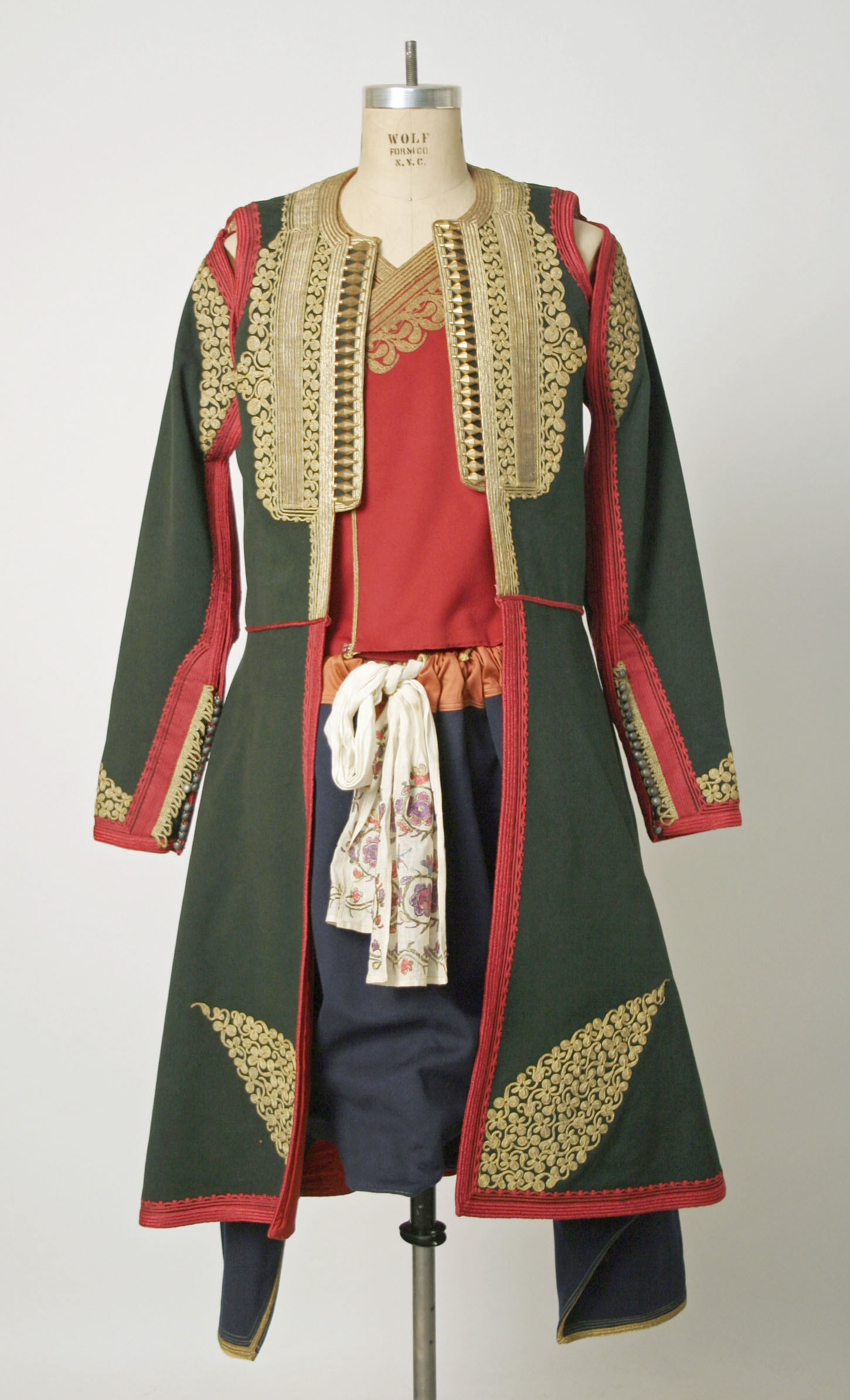
The SS26 ensemble from Zoey Fashion Laboratory represents a definitive break from conventional garment logic, operating within a framework of architectural deconstruction that redefines the relationship between body, material, and space. In the context of the "Global Frontier" origin, this piece is not merely a garment but a manifesto—a response to the dissolution of geographical and cultural boundaries through the lens of high-concept couture. The ensemble’s futuristic silhouette eschews static form in favor of a dynamic, almost kinetic presence, achieved through the meticulous interplay of four distinct yet harmonized materials: wool, silk, metallic embroidery, and linen. This analysis dissects the structural innovations and aesthetic philosophy that position this work as a seminal statement for the SS26 season.
Material Dialectics: Wool, Silk, Metallic Embroidery, and Linen
The material palette of this ensemble functions as a dialectical system, where each component challenges and complements the others. The wool base is not the typical heavy, felted variety but a superfine, almost translucent merino, engineered to provide a rigid yet breathable substructure. This wool is the anchor of the silhouette, providing the necessary stiffness to support the garment’s sharp, angular lines while allowing for subtle draping that mimics geological erosion. The silk, in contrast, is used as a liquid counterpoint—a sheer, raw-silk charmeuse that flows in unpredictable cascades from the structural seams. This silk is not merely decorative; it is a functional element that introduces a sense of weightlessness, creating a visual tension between the wool’s solidity and silk’s fluidity.
The metallic embroidery is the ensemble’s nervous system, a complex network of silver and gunmetal threads that trace the garment’s structural seams and internal architecture. This is not superficial embellishment but a load-bearing element; the embroidery is densely applied at stress points—shoulders, hips, and the waist—to reinforce the silhouette while simultaneously creating a shimmering, almost cybernetic surface that catches light in unpredictable ways. The linen, finally, serves as the grounding agent, a coarse, unbleached fabric used for internal linings and hidden pockets. Its raw texture contrasts with the refinement of the silk and wool, introducing a tactile dissonance that speaks to the Global Frontier’s theme of raw, unmediated experience. Together, these materials form a hierarchical system where each layer is visible and integral, rejecting the traditional couture practice of hiding construction in favor of exposing the garment’s generative logic.
Futuristic Silhouette: The Asymmetrical Origami Construct
The silhouette of this ensemble is best described as an asymmetrical origami construct, a term that captures its geometric precision and dynamic imbalance. The garment’s primary form is a single-sleeve, off-shoulder jacket that extends into a dramatic, floor-sweeping train on the left side, while the right side is cropped sharply at the waist. This asymmetry is not arbitrary but is mathematically calibrated to create a visual spiral that draws the eye around the body in a continuous, circular motion. The jacket’s lapels are replaced by folded, origami-like pleats that rise from the collar in a series of sharp, angular peaks, reminiscent of futuristic architectural facades. These pleats are reinforced by the metallic embroidery, which traces their edges like structural scaffolding.
The lower half of the ensemble consists of high-waisted, wide-leg trousers that are cut with a severe, almost military precision. However, the trousers are deconstructed at the knees, where the fabric is cut and re-stitched with silk panels that allow for a controlled, billowing effect. This creates a volumetric paradox: the trousers appear rigid from the front, but from the side, they reveal a fluid, almost ethereal quality. The overall silhouette is futuristic in its rejection of natural body lines, instead proposing a new anatomical geometry where the human form is merely a scaffold for the garment’s own architectural logic. The ensemble does not follow the body; it redefines the body’s boundaries, extending outward into space with each fold and pleat.
Structural Innovation: The Internal Exoskeleton and Invisible Seaming
The most radical innovation of this ensemble lies in its internal exoskeleton, a hidden framework of boning and flexible metallic mesh that is sewn between the wool and linen layers. This exoskeleton is not designed to conform to the body but to stand independently, allowing the garment to maintain its shape even when not worn. This is a paradigm shift in couture construction, as it transforms the garment from a passive covering into an active, self-supporting structure. The exoskeleton is strategically placed at the shoulders, spine, and hips, creating a vertical tension line that lifts the fabric away from the body, producing an almost gravitational defiance. The metallic embroidery serves as the exoskeleton’s visible counterpart, tracing its pathways on the garment’s surface.
Equally innovative is the use of invisible seaming, a technique where the wool and silk are bonded using a heat-activated adhesive film rather than traditional stitching. This eliminates visible seams, creating a seamless, monolithic surface that enhances the garment’s futuristic aesthetic. The only visible stitching is the metallic embroidery, which is intentionally left exposed to emphasize the garment’s construction as a design element. This approach challenges the traditional couture emphasis on perfect, hidden finishes, instead celebrating the process of making as an integral part of the final form. The result is a garment that is both structurally rigorous and visually pure, a synthesis of engineering and artistry that defines the avant-garde ethos.
Contextual Significance: SS26 as a Threshold Season
Within the broader SS26 season, this ensemble stands as a threshold piece that bridges the gap between conceptual fashion and wearable sculpture. The Global Frontier origin speaks to a world where cultural and geographical boundaries are dissolving, and the garment’s deconstructive aesthetic mirrors this fragmentation. The use of raw linen and metallic embroidery evokes a post-industrial landscape, where organic and synthetic materials coexist in a state of tension. This is not fashion as decoration but fashion as critical commentary—a reflection on the body’s place in an increasingly digitized and globalized world. The ensemble’s futuristic silhouette is not a prediction but a proposition, suggesting that the future of couture lies in the integration of structure, material, and meaning.
For Zoey Fashion Laboratory, this ensemble represents a pinnacle of research into structural innovation, pushing the boundaries of what is possible with traditional materials like wool and silk. The metallic embroidery, in particular, redefines the role of ornamentation, transforming it into a functional, load-bearing element. This piece challenges other designers to reconsider the relationship between form and function, and it positions Zoey Fashion Laboratory as a leader in the avant-garde vanguard. The SS26 season will be remembered as a moment when fashion embraced architectural complexity and material dialectics, and this ensemble is its definitive statement.
Conclusion: The Ensemble as a Manifesto
In conclusion, the SS26 ensemble from Zoey Fashion Laboratory is not merely a garment but a manifesto for the future of couture. Its deconstructive approach, futuristic silhouette, and structural innovations represent a radical departure from tradition, proposing a new paradigm where materials and geometry are in constant dialogue. The wool, silk, metallic embroidery, and linen are not just fabrics but actors in a complex system, each contributing to a whole that is greater than the sum of its parts. As a standalone avant-garde study, this ensemble demands to be analyzed not as fashion but as architecture for the body—a structure that challenges, inspires, and redefines the limits of wearable art. It is a definitive work for SS26, and a benchmark for the avant-garde movement in the 21st century.