Deconstructing the Scholar’s Gaze: Wang Wei’s Poem as a Blueprint for Avant-Garde Textile Innovation
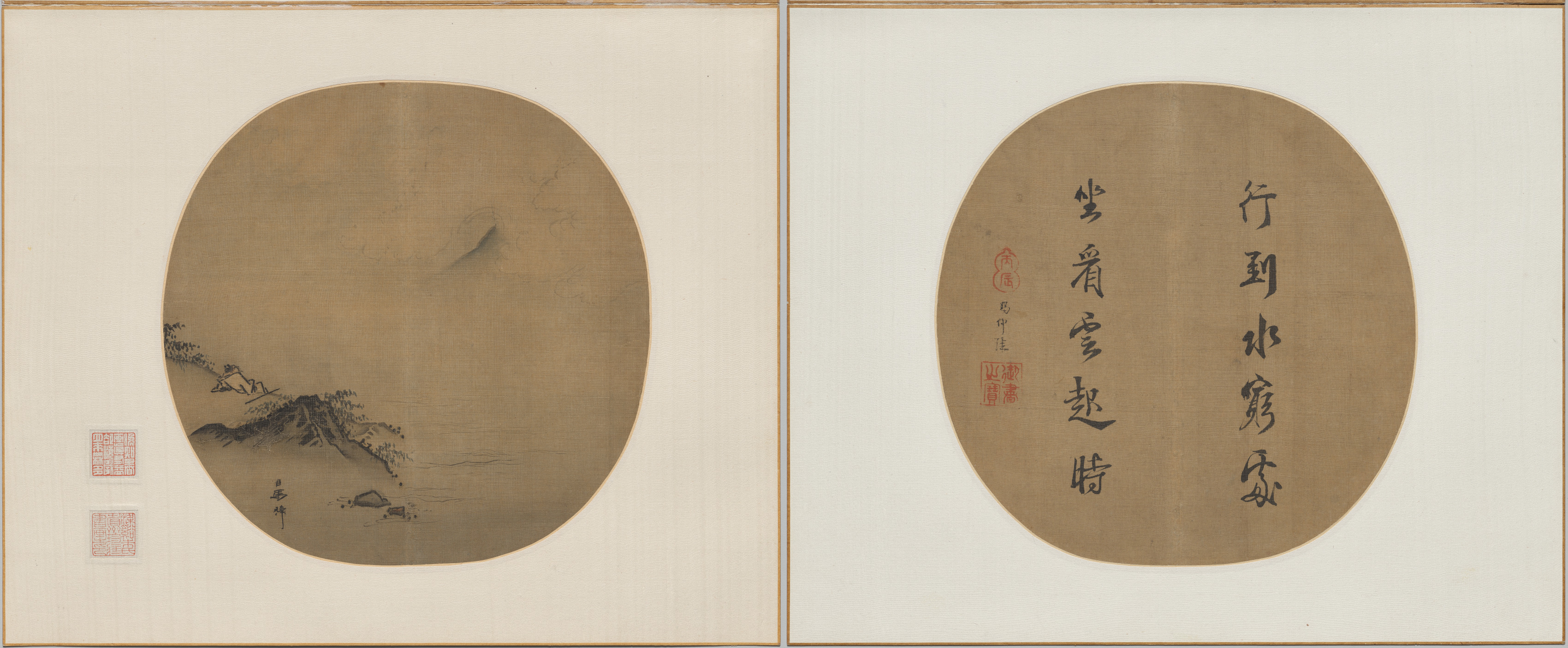
At Zoey Fashion Lab, our mission is to unravel the fabric of historical art and re-weave it into the avant-garde. The Scholar Reclining and Watching Rising Clouds, a Southern Song dynasty (1127-1279) album leaf attributed to the poetic vision of Wang Wei, presents a profound opportunity for such deconstruction. This ink-on-silk work, with its tranquil yet dynamic interplay of stillness and movement, offers a rich, paradoxical DNA strand for our next collection. We will not merely replicate its imagery; we will dissect its philosophical core—the tension between contemplation and change—and translate it into tactile, structural, and kinetic textile expressions. This analysis serves as the foundational blueprint for our upcoming line, where the scholar’s reclining posture becomes a pattern, the rising clouds become a fabric’s behavior, and the ink wash becomes a reactive color system.
I. The Philosophical DNA: Stillness and Flux as Material Properties
The poem and painting by Wang Wei embody a quintessential Daoist and Chan Buddhist ideal: the scholar in a state of wu-wei (effortless action) while observing the natural world’s ceaseless transformation. The reclining figure is not passive; it is a state of heightened receptivity. The rising clouds are not static; they are a metaphor for impermanence and the flow of qi (vital energy). For our avant-garde textile design, this duality becomes a core material property. We will engineer fabrics that embody both static structure and dynamic reactivity. Imagine a silk-based textile that, when still, presents a monochromatic, ink-wash gradient reminiscent of the album leaf’s muted tones. Yet, when the wearer moves—reclining, turning, or even breathing—the fabric’s surface shifts. Embedded micro-filaments or thermochromic inks could cause cloud-like patterns to “rise” and dissipate, mimicking the ephemeral nature of the painted clouds. The scholar’s gaze is no longer fixed on the painting; it is worn, and the clouds respond to the observer’s own kinetic energy. This transforms the garment from a static object into a living, breathing canvas that enacts the poem’s central theme.
II. Technical Deconstruction: From Ink Wash to Structural Weave
The Southern Song album leaf is a masterclass in subtlety. The ink is applied in washes of varying density, creating atmospheric perspective and depth without hard outlines. The silk support itself is integral to the image, its weave interacting with the ink to produce a soft, diffused effect. Our deconstruction begins at the molecular level of the textile. We will reverse-engineer this interaction by creating a double-layered weave where the outer layer is a sheer, irregularly patterned organza, and the inner layer is a dense, ink-dyed silk. The outer layer will be laser-cut with micro-perforations that correspond to the cloud forms in the painting. When the garment is at rest, these perforations blend into the overall pattern. However, when the wearer reclines (a specific posture we will study through motion-capture), the outer layer shifts, revealing the darker inner silk in a way that mimics the rising clouds. This is not a print; it is a structural illusion that evolves with the body’s axis. The “ink” becomes a dynamic interplay of light and shadow, not a fixed pigment. We will also experiment with conductive threads to create a subtle haptic feedback system: when the wearer’s posture mimics the scholar’s reclining pose, a gentle vibration or warmth emanates from the fabric, reinforcing the contemplative state.
III. The Avant-Garde Silhouette: Reclining as Architecture
The scholar’s reclining posture is not merely a pose; it is an architectural statement. The figure is often depicted leaning on a low table or armrest, creating a diagonal line that anchors the composition. For our collection, we will translate this into asymmetric, gravity-defying silhouettes. Garments will feature exaggerated shoulder panels that slope downward, mimicking the scholar’s relaxed yet deliberate lean. Sleeves will be elongated and weighted at the cuffs, creating a continuous, flowing line that echoes the rising clouds. We will incorporate internal boning and counterweights to allow the fabric to hold a “reclining” shape even when the wearer is upright. This challenges the conventional verticality of fashion, introducing a horizontal, meditative axis. A coat, for example, could be designed with a built-in, adjustable support system that allows the wearer to shift into a reclining stance, the fabric pooling around the body like clouds gathering at the horizon. The silhouette becomes a wearable sculpture that embodies the scholar’s state of dynamic repose.
IV. Color and Texture: The Monochromatic Spectrum of Ink
Wang Wei’s palette is almost exclusively monochromatic, relying on the gradations of black ink to convey depth, light, and atmosphere. Our avant-garde interpretation will not shy away from this limitation; instead, we will exploit it to create a new chromatic language. We will develop a series of reactive dyes that shift between deep charcoal, soft grey, and near-white based on temperature, humidity, and pressure. This creates a garment that is never the same color twice, much like the ink wash that changes with water and brush pressure. Texturally, we will combine raw, unpolished silk with highly polished satin to mimic the contrast between the rough edges of the scholar’s robe and the smooth, luminous clouds. We will also introduce woven metallic threads in select areas—not for shine, but to catch light in a way that suggests the subtle glow of clouds at sunrise. The overall effect is a monochromatic symphony where every nuance of grey tells a story of stillness and ascent.
V. The New DNA Strand: Synthesis of Tradition and Technology
The New DNA Strand reference is critical here. We are not borrowing from Wang Wei; we are splicing his visual and philosophical DNA into the genetic code of our textiles. This means integrating biomimicry with digital fabrication. The rising clouds, for instance, will be translated into a parametric pattern that is generated by an algorithm based on real-time weather data. A garment could display cloud patterns that correspond to the wearer’s location, creating a direct, living link between the ancient poem and the contemporary environment. The scholar’s reclining posture will be encoded into the garment’s pattern-making through 3D body scanning and kinematic simulation, ensuring that every cut and seam supports the intended movement. This is not a costume; it is a wearable interface that allows the user to inhabit the poem’s philosophy. The final collection will be a series of pieces that are both deeply rooted in the Southern Song aesthetic and radically forward-looking, proving that the most avant-garde innovations often emerge from the most contemplative traditions.
In conclusion, Scholar Reclining and Watching Rising Clouds provides Zoey Fashion Lab with a rich, multilayered blueprint. By deconstructing its philosophical, technical, and aesthetic elements, we will create textiles that are not merely garments but experiential environments. The rising clouds become a fabric’s memory, the scholar’s gaze becomes a wearer’s interaction, and the ink wash becomes a living color. This is the essence of our avant-garde approach: to honor the past not through imitation, but through transformation, weaving new DNA strands that carry the wisdom of centuries into the fabric of tomorrow.