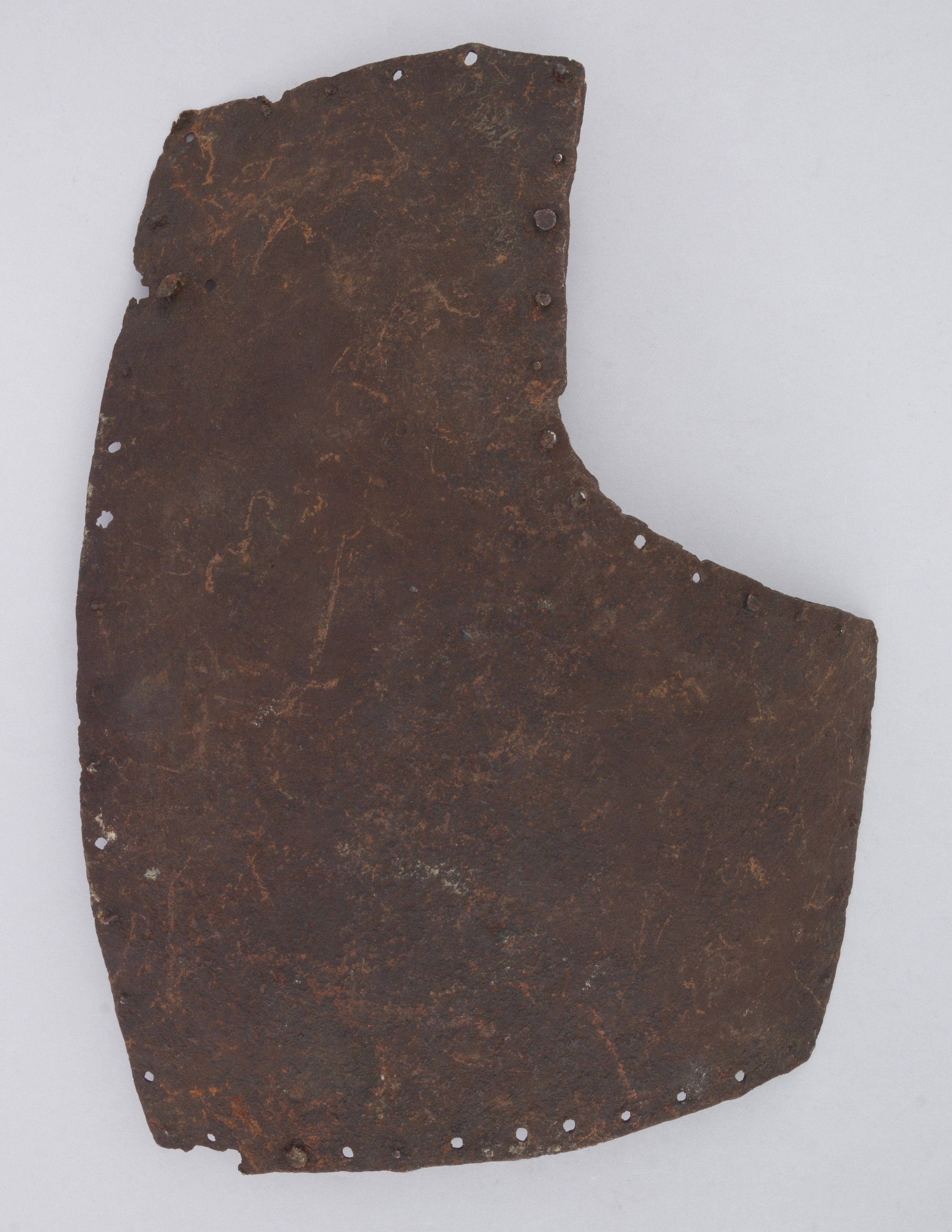
Deconstructing Armor: The Brigandine Plate as Avant-Garde Structural Lexicon for SS26
In the relentless pursuit of a new corporeal syntax, Zoey Fashion Laboratory turns its gaze toward an unexpected progenitor: the Italian brigandine plate. For SS26, this historical fragment—a small, overlapping iron alloy scale originally riveted to leather or canvas—is not a relic of medieval warfare but a radical blueprint for futuristic silhouette engineering. This analysis dissects the brigandine plate as a standalone avant-garde study, repositioning its structural logic from protection to proposition. The iron alloy, once a barrier against steel, becomes a medium for architectural articulation, a tool to fracture, suspend, and reanimate the human form in the coming season.
Historical Precedent vs. Futuristic Imperative
The Italian brigandine, dating from the 14th to 16th centuries, was a pragmatic compromise: flexible yet formidable. Its overlapping iron plates allowed for mobility while deflecting blows. Yet, for the avant-garde, this very principle of segmented rigidity offers a counterpoint to the fluid, draping tendencies of contemporary couture. The brigandine plate is not a shell but a system—a modular grammar of protection that can be inverted, exploded, or layered to create new volumetric languages. In the SS26 context, the iron alloy’s weight and opacity become assets: it introduces a deliberate, almost gravitational heaviness that contrasts with the season’s expected lightness. The challenge is to deconstruct the brigandine’s functionalist origins into a purely aesthetic, even sculptural, vocabulary.
Structural Innovation: The Plate as a Kinetic Grid
The core innovation lies in reimagining the brigandine plate not as a continuous shield but as a discontinuous grid of suspended, articulated elements. Instead of riveting plates to a backing, Zoey Fashion Laboratory proposes a floating system: individual iron alloy scales are attached to a transparent, high-tensile polymer mesh via micro-magnetic or friction-fit joints. This allows each plate to pivot independently, creating a surface that breathes, shifts, and fractures light. The futuristic silhouette emerges from this kinetic potential: a jacket that, in repose, appears as a rigid, almost robotic carapace, but in motion, opens into a rippling, scale-like second skin. The iron alloy’s patina—whether polished to a mirror finish or left with a raw, oxidized texture—becomes a narrative of time and transformation.
Furthermore, the structural logic of the brigandine plate enables asymmetrical volume distribution. By clustering plates on one shoulder or hip, the silhouette can be deliberately distorted, creating a gravitational imbalance that challenges the viewer’s perception of the body. For SS26, this translates into a dress where the left side is a dense, metallic cascade, while the right remains almost transparent, a ghost of fabric. The iron alloy’s rigidity is harnessed to create cantilevered forms—a collar that juts forward like a bird’s beak, a hem that flares outward in a series of interlocking scales. This is not armor for combat but armor for the gaze, a structural provocation.
Material Alchemy: Iron Alloy as a Canvas for Light and Shadow
The iron alloy itself undergoes a metamorphosis in the avant-garde context. Its inherent weight and density are not liabilities but opportunities for tactile and visual contrast. Through laser-cutting, the plates can be perforated with micro-patterns that evoke digital circuitry or organic cellular structures. This transforms the solid metal into a lace-like lattice, where shadow becomes a design element. The interplay of polished and matte finishes creates a dynamic surface that reflects and absorbs light in equal measure, lending the garment a chameleonic quality. In a futuristic silhouette, the iron alloy is no longer a barrier but a filter—a means to control the flow of light and air around the body. The structural innovation here is the use of negative space: the gaps between plates are as important as the plates themselves, forming a second, invisible architecture of voids.
Silhouette Architecture: The Brigandine as a Second Skeleton
The ultimate expression of the brigandine plate in SS26 is its integration into a exoskeletal garment. By attaching the iron alloy scales to a flexible, body-hugging base made of recycled carbon fiber or liquid silicone, the plates become an external skeleton that both constrains and liberates. The silhouette is simultaneously armored and vulnerable: the rigid plates protect the torso, while the exposed joints and underarms remain bare, a deliberate tension between protection and exposure. This duality is central to the avant-garde ethos. The silhouette can be further manipulated by varying the scale of the plates—large, almost shield-like panels on the back, smaller, more delicate scales on the arms—creating a visual rhythm that echoes the natural articulation of the human body. The futuristic silhouette is thus not a single shape but a series of interconnected, shifting volumes, a living sculpture in motion.
In practice, this manifests as a couture piece where the brigandine plates are arranged in a spiral pattern around the torso, mimicking the Fibonacci sequence. The iron alloy’s weight is counterbalanced by a trailing train of sheer, iridescent organza, creating a dialogue between the metallic and the ethereal. The garment’s structural innovation lies in its ability to be reconfigured: the plates can be detached and reattached, allowing the wearer to modulate the silhouette from day to night, from a restrained, columnar form to an explosive, radial one. This modularity is a direct response to the demands of the future fashion consumer—a desire for clothing that adapts, transforms, and challenges.
Conclusion: The Brigandine as a Manifesto
The Italian brigandine plate, stripped of its martial history, emerges as a potent symbol for SS26: a testament to the power of structural innovation in an era of digital saturation. It reminds us that the future of couture lies not in rejecting the past but in reanimating its forgotten technologies. The iron alloy, with its weight and permanence, offers a counterpoint to the ephemerality of fast fashion. The overlapping scales, once a means of defense, become a language of offense—a visual assault on conventional notions of beauty and proportion. Zoey Fashion Laboratory’s analysis affirms that the brigandine plate is not a relic but a resource, a modular, kinetic, and deeply physical lexicon for the avant-garde. In the hands of the visionary, armor becomes architecture, and history becomes the raw material for a new, unapologetically futuristic silhouette. The body, encased in iron, is not imprisoned but liberated—a moving monument to the art of the possible.