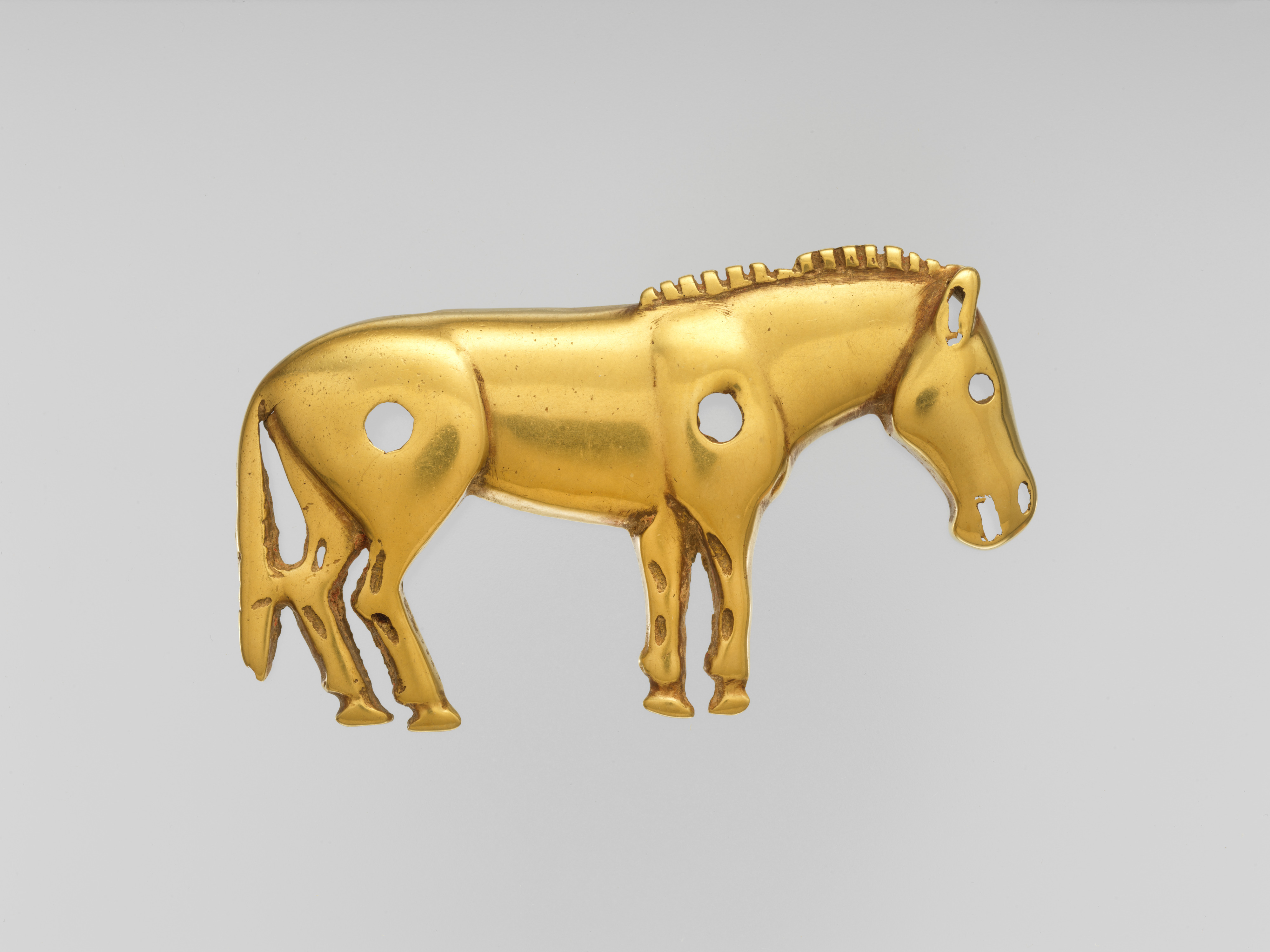
Deconstructing the Equine Pectoral: From Archaeological Relic to SS26 Architectural Silhouette
The discovery of a gold pectoral in the shape of a horse, originating from the nomadic cultures of North or Northeast China, presents not merely an artifact, but a profound architectural manifesto. For Zoey Fashion Laboratory’s SS26, this object transcends its historical context as a symbol of status, mobility, and spiritual power. It becomes the foundational algorithm for a collection that interrogates the very relationship between body, armor, and void. The pectoral’s primary function—to adorn and protect the chest—is a primal sartorial impulse we deconstruct. We ask: in a future where identity is fluid and the physical form is both celebrated and augmented, what constitutes protection? What new silhouettes can be born from the symbolic weight of the horse, an entity synonymous with unbridled freedom and formidable strength, rendered in static, precious metal?
Structural Innovation: The Exo-Skeletal Framework and Negative Space
The gold horse pectoral is not a flat plaque; it is a volumetric, sculptural form meant to sit upon the curvilinear plane of the torso. This inspires our core SS26 innovation: the Exo-Skeletal Framework. Moving beyond traditional tailoring, we engineer lightweight, articulated structures from aerospace polymers and recycled metallized composites. These frameworks are not hidden; they are the architecture of the garment. A jacket’s "ribcage" is externally rendered as a series of gleaming, interlocking arcs, echoing the pectoral’s curvature, leaving the actual fabric beneath—a sheer, technical mesh—visible in the negative spaces. The silhouette is simultaneously protective and exposed, a paradox central to modern identity.
This dialogue between solid and void is directly correlated with the provided archive node: “一面是光洁银镜上以黄金镶嵌的纷繁棕叶纹,另一面是冰冷石棺板上以浮雕诉说的生命叙事” (On one side, intricate palmette patterns inlaid in gold on a smooth silver mirror; on the other, a life narrative told through relief on a cold stone coffin panel). We interpret this as the dichotomy between the reflective surface (the mirror) and the textured narrative (the relief). Our garments will embody this split. One side may feature a seamless, mirror-polished panel, reflecting and distorting the environment—a futuristic, impersonal shield. The opposite side of the same garment erupts in intricate, horse-inspired浮雕 (relief), created through 3D-knitted bio-filaments and thermo-molded textures, telling a "life narrative" of motion and organic form frozen in a moment. The wearer becomes a walking dichotomy, a being of both cold reflection and warm, tactile story.
Futuristic Silhouettes: The Kinetic Drapery and Asymmetric Equilibrium
The horse is kinetic energy suspended. To capture this, we pioneer Kinetic Drapery. Fabrics are not merely cut and sewn; they are programmed. Using shape-memory alloys and electro-active polymers embedded within fluid textiles, sections of a gown can subtly contract and expand with body heat or ambient energy, creating a living, breathing silhouette that mimics the ripple of muscle or the flick of a tail. A seemingly static, sculptural shoulder—inspired by the stylized form of the gold horse—may trail into a skirt that undulates in slow motion as the wearer moves, a ghost of galloping momentum.
Furthermore, the pectoral’s origin—the nomadic steppes—demands a silhouette of Asymmetric Equilibrium. Nomadic life is not about perfect balance, but dynamic adaptation. SS26 silhouettes will embrace calculated imbalance. A single, exaggerated shoulder architectural element, reminiscent of a horse’s powerful forequarter, will be counterweighted not by an equal volume on the opposite side, but by a sweeping, parabolic train or a tightly wrapped, minimalist leg line. The silhouette walks a razor’s edge between collapse and poise, echoing the precarious, precious nature of the ancient artifact itself—a heavy gold object surviving millennia.
Material Alchemy: Gilded Biolayers and Sonic Surfaces
The materiality of the gold pectoral is literal, but our interpretation is alchemical. Gilded Biolayers replace solid metal. We develop translucent, fungal-derived leathers and algae-based membranes onto which 24-karat gold is applied via atomic deposition, creating a fragile, ethereal gilding that cracks and reveals the bio-texture beneath with wear—a commentary on the patina of time and the organic core beneath status symbols. Hard, polished "gold" surfaces are, in fact, acoustically engineered. Inspired by the mirror/relief dichotomy, these surfaces are micro-engraved to capture and subtly alter ambient sound, creating a personal sonic aura for the wearer—a whisper of hooves on steppe grass transformed into digital white noise.
The narrative of the stone coffin panel and the silver mirror finds its ultimate expression in this material dialectic. The cold, hard "coffin" material is represented by these sound-altering, reflective exo-skeletons—immutable and external. The "life narrative" is told through the biolayers, the kinetic fabrics, the living textures that cling to the body’s warmth. The garment is a tomb and a mirror, a protector and a confessor.
Conclusion: The Neo-Nomadic Body
For Zoey Fashion Laboratory SS26, the gold equine pectoral is the seed crystal for a new morphology. The collection, titled “Pectoral: The Neo-Nomadic Body,” proposes a future couture where garments are architectural exoskeletons, environments in miniature, and narrative devices. We move beyond clothing as covering to clothing as augmented corporeal reality. The silhouettes are bold, asymmetrical, and charged with latent motion; the structures are intelligent and revealing; the materials speak of past and future in the same breath. This is not fashion as historical reenactment, but as archaeological propulsion—digging into the past to launch the human form into a profoundly new sartorial dimension. The horse has been unbridled, and its form now gallops into the architectural landscape of the future body.