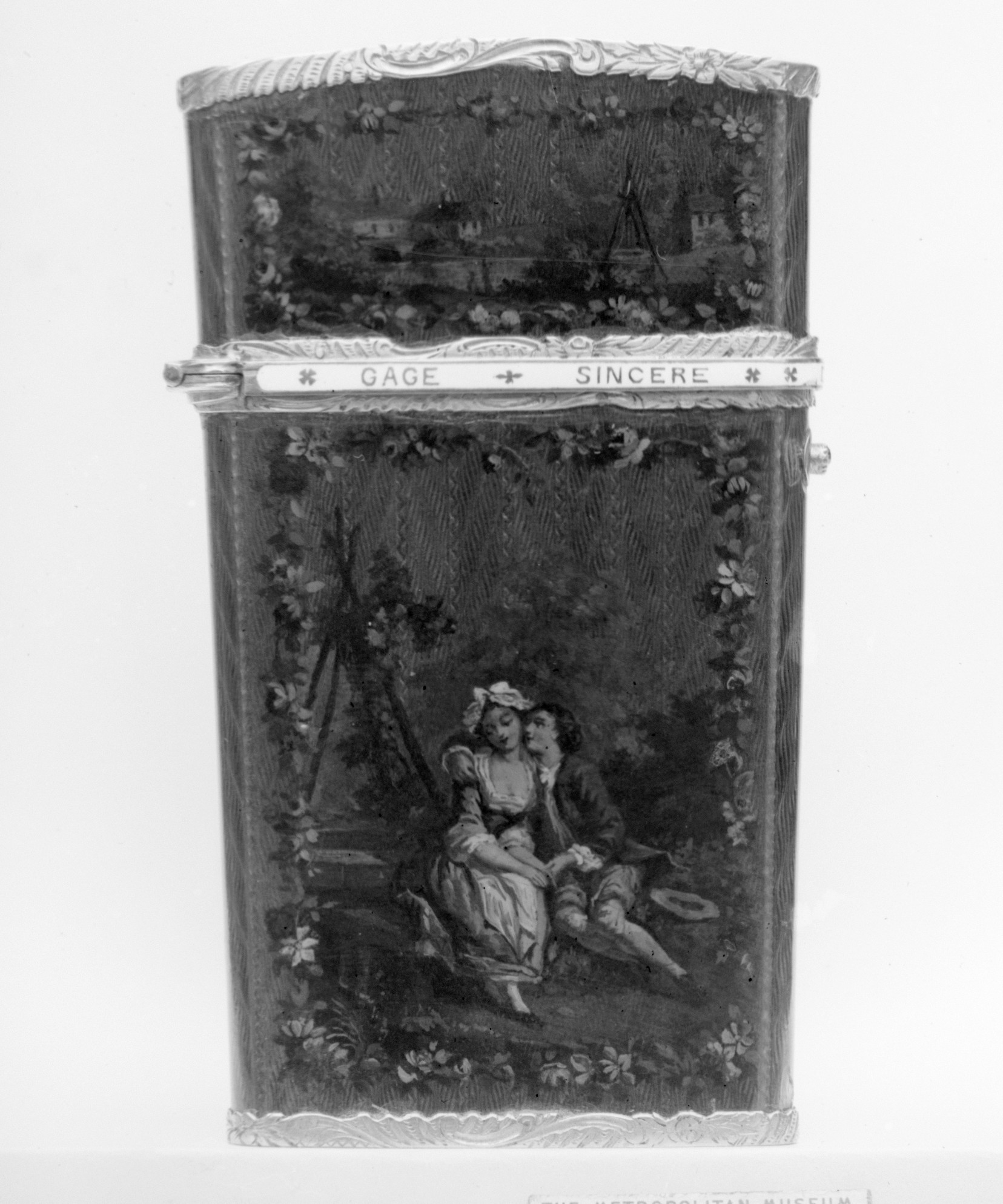
The Cartography of Memory: Deconstructing the Souvenir as Structural Armature for SS26
From Memento to Matrix: The Philosophical Recalibration
The Souvenir has historically been a passive vessel—a token of nostalgia, a sentimental anchor to a bygone moment. For Zoey Fashion Laboratory’s SS26 avant-garde study, we dismantle this archetype entirely. The souvenir is no longer a relic of the past but a generative blueprint for the future. It becomes a structural language of accumulation, fragmentation, and re-assembly. Drawing from the Global Frontier—a conceptual territory where cultural borders dissolve into hybrid topographies of influence—we treat each artifact as a datum point. The souvenir is not to be worn; it is to be inhabited. It is a cartographic trace of movement across time and space, rendered in the most precious and paradoxical of materials: gold, lacquer, enamel, diamond, and ivory. These are not mere embellishments; they are the tectonic plates of a new garment architecture.
Material Alchemy: The Dialectic of Hardness and Fluidity
The material palette for this collection is a deliberate confrontation. Gold—traditionally the metal of permanence and value—is reimagined as a malleable, almost liquid skin. Through advanced electroforming and micro-casting techniques, gold is coaxed into filigree armatures that mimic the organic growth of coral or the crystalline lattice of ice. Lacquer, in its high-gloss, obsidian-black iterations, becomes a second skin—a vitreous carapace that both protects and obscures. It is applied in layers, then partially sanded away to reveal the underlying gold, creating a topographical map of erosion and accretion. Enamel introduces the element of color as a coded language: vivid crimson, lapis lazuli, and verdigris green, each hue referencing a specific geographic or emotional coordinate. Diamonds are not set as traditional gems but are embedded as micro-optical lenses or abrasive particles within the lacquer, catching light in unpredictable refractions. Ivory—sourced exclusively from certified, ethically extinct mammoth tusk—is carved into skeletal, interlocking joints that function as the garment’s kinetic hinges. The result is a material vocabulary that oscillates between the monumental and the ephemeral, the precious and the brutal.
Futuristic Silhouettes: The Architecture of the In-Between
The silhouettes for SS26 reject both the human form’s natural contours and the exaggerated geometries of traditional couture. Instead, they occupy a third space: a state of perpetual transition. Garments are constructed as modular exoskeletons that can be reconfigured in real-time by the wearer. A single piece might begin as a rigid, gilded cuirass, then, through a series of ivory hinges and gold pin joints, unfold into a sweeping, asymmetrical train. The shoulder line is not a line at all but a fractured plane—a series of overlapping, lacquered panels that shift with each movement, creating a moiré effect of light and shadow. The waist is erased, replaced by a floating cage of diamond-studded enamel rods that hover a centimeter above the body, held in place by invisible tension wires. The back becomes a primary canvas: a landscape of gold filigree and ivory vertebrae that trace the spine’s curve like a fossilized relic from a future civilization. Every silhouette is a memory palace—a physical embodiment of a journey, a souvenir of a place that never existed but feels intimately known.
Structural Innovation: The Kinetic Archive
The true innovation lies in the mechanics of assembly. Each garment is conceived as a three-dimensional puzzle where every component is both structural and symbolic. The gold armature is laser-cut into interlocking tessellations, inspired by Islamic geometric patterns and fractal algorithms. These are then fused with lacquer using a proprietary heat-press technique that creates a seamless, monolithic surface. The enamel is applied as a cloisonné in reverse—the cells are first filled with color, then the gold wires are removed, leaving only the enamel as a self-supporting membrane. The diamonds are not set in prongs but are grown directly onto the lacquer via chemical vapor deposition, forming a crystalline crust that can be selectively polished or left rough. The ivory joints are carved with ball-and-socket mechanisms that allow for 360-degree rotation, enabling the garment to collapse into a compact, portable form—a literal souvenir case. The result is a collection that functions as a living archive: each piece can be disassembled, reconfigured, and re-remembered, much like the memory of a journey itself.
The Global Frontier: A Souvenir of the Unmapped
The Global Frontier is not a place but a condition—a state of constant, frictionless migration. The souvenirs in this collection are not from specific locales but from imagined intersections: the gold filigree of a Samarkand bazaar meets the lacquer of a Kyoto temple; the enamel of a Byzantine icon collides with the diamonds of a De Beers vault. The ivory—harvested from the Siberian permafrost—carries the memory of a prehistoric tusk, a souvenir from a time before borders. These materials are de-territorialized, stripped of their original contexts and re-assembled into a new, stateless language of luxury. The garment becomes a portable homeland, a souvenir of a global consciousness that is both deeply personal and universally accessible. It is a statement that memory is not a passive record but an active, structural force—a framework for constructing the future.
Conclusion: The Souvenir as Prophecy
In this avant-garde study, the souvenir is no longer a backward glance but a forward-looking artifact. It is a prophecy encoded in gold, lacquer, enamel, diamond, and ivory. The SS26 collection for Zoey Fashion Laboratory challenges the wearer to become a curator of their own narrative, to inhabit a garment that is at once a memory and a manifesto. The futuristic silhouettes are not about escaping the past but about reassembling it into a new order. The structural innovations are not mere technical feats but philosophical tools—a way to wear time itself as a material. This is couture as cartography, fashion as archaeology, and the souvenir as the most radical form of avant-garde architecture yet conceived.