Deconstructing the Loom: Crochet as Avant-Garde Architecture for SS26
The evolution of crochet within the avant-garde lexicon represents a paradigm shift from domestic craft to industrial-scale structural innovation. At Zoey Fashion Laboratory, we interrogate the very fiber of this technique, repositioning it not as a nostalgic relic but as a dynamic matrix for futuristic silhouettes. For the SS26 season, the global frontier of crochet work is not merely about thread and hook; it is a study in controlled chaos, tensile strength, and the deliberate subversion of volume. This analysis deconstructs the material’s potential to transcend its traditional boundaries, proposing a new architectural vocabulary for the body.
Structural Innovation: The Algorithmic Web
The core of our SS26 thesis lies in the redefinition of crochet as an algorithmic structure. Unlike woven textiles, crochet is a series of interconnected loops that can be manipulated in three dimensions without the need for darts or seams. This inherent property allows for the creation of self-supporting, cantilevered forms that defy gravity. We move beyond the flat lace doily to engineer garments that function as wearable exoskeletons. The key innovation is the introduction of variable-tension crochet, where the density of stitches transitions from opaque, rigid panels at the shoulder to gossamer, net-like expanses at the hem. This gradient of porosity creates a silhouette that is simultaneously armored and ethereal, a paradox central to the avant-garde aesthetic.
Consider the negative-space silhouette—a garment defined as much by its absences as by its presence. Using a combination of chain-stitch grids and double-crochet clusters, we can produce a hollowed-out volume that frames the body without constricting it. This is not a dress that hugs the form; it is a cage that celebrates the void. The structural innovation here is the use of monofilament and metallic threads integrated with traditional cotton or linen, creating a hybrid material that holds its shape under tension. The result is a futuristic silhouette that resembles a digital wireframe rendered in physical space—a blueprint for a body that exists in a state of perpetual becoming.
Global Frontier: The Nomadic Lattice
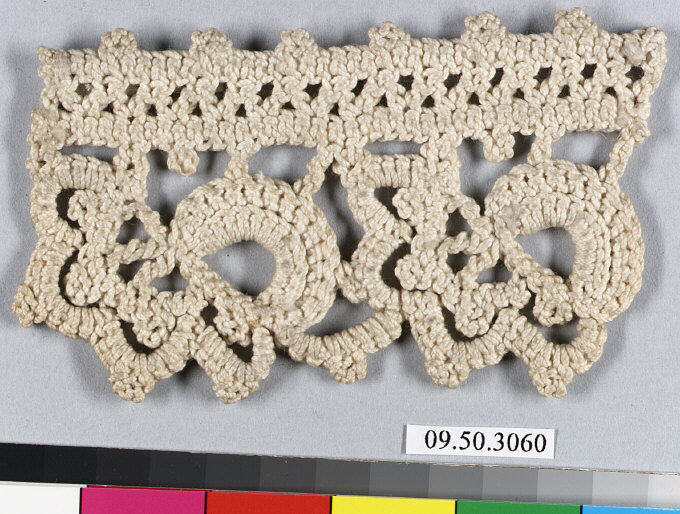
The global frontier of crochet work is a tapestry of cultural memory and industrial futurism. For SS26, we draw inspiration from the nomadic structures of Central Asian yurts and the intricate latticework of Japanese kumihimo, recontextualizing these traditions through a lens of cybernetic deconstruction. The material itself becomes a conduit for global narratives, but the execution is strictly avant-garde. We are not reproducing patterns; we are extracting their structural DNA. The geometric precision of Arabesque motifs is translated into a repeating hexagonal grid, while the free-form spirals of Irish crochet are mutated into asymmetrical, bio-morphic forms that wrap around the torso like organic scaffolding.
The key to this global synthesis is the abandonment of the rectangular garment. Traditional crochet pieces are often flat and two-dimensional. Our approach is fully three-dimensional, using modular construction. Each garment is composed of multiple, individually crocheted modules—a series of polygonal panels that are then joined with invisible seams. This allows for a sculptural silhouette that can be disassembled and reconfigured, echoing the nomadic principle of portability and adaptability. The futuristic silhouette emerges from this modular logic: a jacket that can be worn as a cape, a skirt that transforms into a hood. The garment is not a fixed object; it is a living system that responds to the wearer’s movement and environment.
Material Alchemy: From Thread to Membrane
The materiality of crochet is undergoing a radical transformation. For SS26, we are pioneering the use of thermoplastic yarns and recycled industrial filaments that can be heat-set into permanent, sculptural folds. This is material alchemy at its most potent: a soft, pliable thread is transformed into a rigid, architectural membrane. The process involves crocheting the garment in a relaxed state, then applying controlled heat and pressure to lock the stitches into a pre-determined shape. The result is a futuristic silhouette that resembles frozen motion—a dress that appears to be caught mid-cascade, a cape that stands away from the body like a cresting wave.
Furthering this innovation is the integration of conductive fibers within the crochet structure. These threads, woven into the lattice, can carry low-voltage currents, enabling the garment to respond to touch or temperature. This is not mere decoration; it is a functional extension of the architecture. A sleeve might tighten or release based on the wearer’s pulse, or a collar might emit a soft luminescence in low light. The crochet work becomes a second skin that is both protective and expressive, a hybrid of textile and technology. The structural innovation lies in the seamless integration of these elements—the crochet grid is not a backdrop for the technology; it is the technology.
Futuristic Silhouettes: The Asymmetric Horizon
The definitive silhouette for SS26 is the asymmetric, gravity-defying form. We reject the symmetrical, balanced shapes of conventional fashion in favor of deliberate imbalance. A single, exaggerated shoulder pad constructed from dense, sculpted crochet extends into a wing-like structure that arcs over the head, while the opposite side of the garment dissolves into a delicate, floor-length fringe. This futuristic silhouette is a study in tension and release, a visual representation of the forces that act upon the body. The structural innovation here is the use of cantilevered loops—stitches that are elongated and anchored at one point, creating a cantilever effect that projects the fabric into space without support.
Another key silhouette is the hollow core. This garment is constructed as a continuous, tubular crochet form that spirals around the body, leaving the center of the torso completely exposed. The spiraling structure creates a futuristic silhouette that is both revealing and concealing, a paradox that challenges the traditional boundaries of modesty and exposure. The material alchemy of heat-set yarns allows the spiral to hold its shape, creating a rigid, architectural frame that contrasts with the softness of the exposed skin. This is not a garment for the faint of heart; it is a declaration of the avant-garde’s commitment to structural innovation as a form of artistic expression.
Conclusion: The Loom Re-imagined
In conclusion, the avant-garde study of crochet for SS26 at Zoey Fashion Laboratory is a definitive departure from tradition. It is a global frontier where cultural motifs are deconstructed and re-engineered, where material alchemy transforms thread into architectural membrane, and where futuristic silhouettes are born from the deliberate manipulation of tension and void. The crochet work is no longer a craft; it is a structural innovation that defines the body’s relationship to space and time. This is the loom re-imagined—not as a tool for making cloth, but as a machine for generating form. The future of fashion is not woven; it is crocheted, one loop at a time, into a new reality.