The Deconstructed Grid: Embroidered Net and the Architecture of Absence for SS26
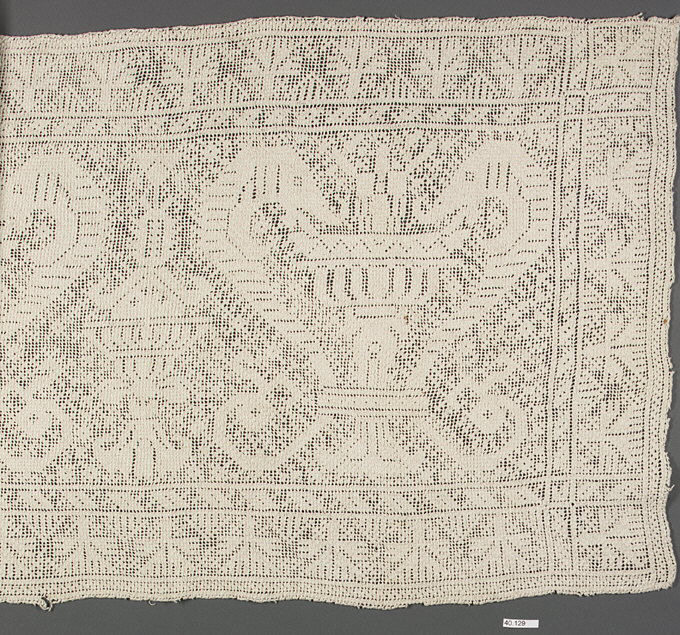
The avant-garde imperative for SS26 is not about covering the body, but about redefining its spatial relationship with the garment. At Zoey Fashion Laboratory, we eschew the conventional panel as a mere section of fabric. Instead, we propose the panel as a sovereign architectural unit—a fragment of a larger, deconstructed whole. This season, our focus narrows to a singular, transformative material: embroidered net. Originating from a global frontier of textile innovation, this material is not a background; it is the primary structural protagonist. It allows us to explore a new paradigm of negative-space couture, where the void between threads is as critical as the thread itself, and where the panel becomes a lattice for futuristic silhouettes.
The Material as Manifesto: Embroidered Net on the Global Frontier
The choice of embroidered net is a deliberate departure from traditional couture substrates. We source our base from a transcontinental nexus—a fusion of Japanese micro-mesh engineering and Italian hand-embroidery techniques. The net itself is a structural paradox: it is both fragile and resilient, transparent yet dense. For SS26, we have developed a proprietary architectural embroidery that does not merely decorate the net but reinforces it. Using a combination of metallic threads, liquid silicone, and bio-degradable polymers, the embroidery creates a series of load-bearing nodes. These nodes transform the net from a pliable textile into a geodesic framework. The panel, therefore, is no longer a flat piece of cloth but a three-dimensional lattice that can be manipulated into angular, cantilevered forms. This material innovation is the bedrock of our structural exploration.
Futuristic Silhouettes: The Panel as a Floating Scaffold
The traditional silhouette relies on seams, darts, and linings to create shape. We reject this. Instead, our panels of embroidered net function as floating scaffolds. The futuristic silhouette for SS26 is defined by asymmetry and suspension. Imagine a jacket where the front panel is a single, trapezoidal sheet of embroidered net, suspended from a carbon-fiber yoke. The net’s rigidity, achieved through the embroidery, allows it to project outward, creating a cantilevered shoulder that defies gravity. The back panel, conversely, might be a fragmented lattice that reveals the spine, with the embroidery concentrated at the edges to create a structural frame. This is not draping; it is engineering in fabric. The silhouette is not imposed on the body; it emerges from the tension between the net’s rigidity and the body’s movement. We are designing for a cyborg future where clothing is an exoskeleton of light and shadow.
Structural Innovation: Deconstructing the Panel into a Modular System
The core of our avant-garde study is the deconstruction of the panel itself. We have abandoned the concept of a single, continuous piece of fabric. Instead, a garment is composed of multiple, interconnected panels, each acting as a discrete structural module. These modules are connected not by seams but by magnetic clasps, laser-cut rivets, and tension cables. The embroidered net is cut into precise geometric shapes—hexagons, trapezoids, and elongated triangles—that are then assembled into a honeycomb-like exoskeleton. This modularity allows for unprecedented kinetic adaptability. A panel can be detached, repositioned, or reconfigured, allowing the wearer to alter the silhouette in real-time. For example, a skirt might consist of six independent net panels, each embroidered with a different density of thread. When the wearer moves, the panels separate, revealing the body in a fragmented, pixelated manner. This is wearable deconstruction at its most radical.
Negative Space and the Art of the Void
In traditional couture, the fabric is the protagonist. In our SS26 collection, the void is the protagonist. The embroidered net, by its very nature, is a study in negative space. The embroidery does not fill the net; it defines the boundaries of emptiness. We have developed a technique called “void mapping,” where the embroidery density is varied to create zones of opacity and transparency. A panel might be heavily embroidered at the shoulders and waist, creating structural anchors, while the center is left almost bare, creating a window of skin. This is not about modesty or exposure; it is about architectural transparency. The garment becomes a lens through which the body is viewed, but only in fragments. The negative space is not accidental; it is engineered to create a visual rhythm of light and shadow, solid and void. This is the ultimate expression of futuristic minimalism—where less material creates a more profound visual impact.
Case Study: The “Aether” Bodice
To illustrate this philosophy, we examine the “Aether” bodice, a flagship piece for SS26. The bodice is constructed from a single, large panel of embroidered net, cut into a complex, asymmetrical pattern. The embroidery is concentrated in a spiral pattern that originates at the left hip and expands outward, creating a vortex of structural lines. The net is then heat-set to hold a permanent, curved shape that hovers two centimeters away from the torso. The result is a floating shell that never touches the skin. The negative space between the net and the body is palpable, creating a second skin of air. The bodice is fastened with a single, hidden magnetic clasp at the back, allowing the entire structure to be donned like a piece of armor. This is not a garment; it is a wearable sculpture that redefines the relationship between the human form and the technological future.
Conclusion: The Panel as a Portal to the Future
The panel, in our avant-garde study, is no longer a passive element. Through the use of embroidered net, we have transformed it into an active, structural agent. The global frontier of textile engineering has provided us with a material that is both ancient in its craft (embroidery) and futuristic in its application (load-bearing lattice). The futuristic silhouettes of SS26 are not about draping or tailoring; they are about suspension, fragmentation, and the art of the void. The structural innovation lies in the modular deconstruction of the garment, where each panel is an independent unit that can be reconfigured at will. This is the new avant-garde: a couture of controlled chaos, where the body is not covered but framed by a lattice of light, shadow, and engineered emptiness. Zoey Fashion Laboratory stands at the precipice of this new frontier, where the panel is the portal, and the net is the architecture of tomorrow.