Technical Deconstruction: The Armored Genome
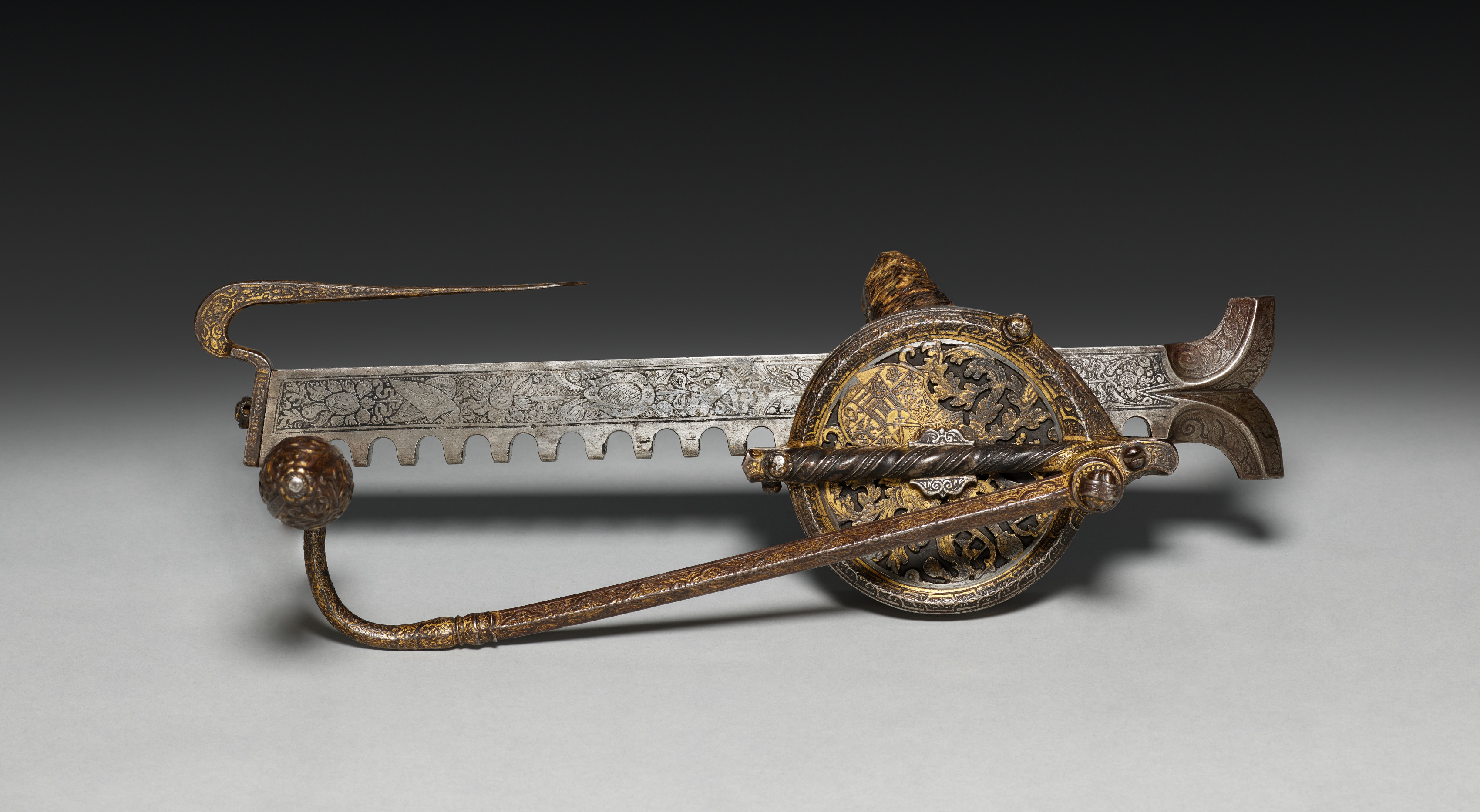
The Cranequin, a 16th-century German crossbow winding mechanism, is not merely an artifact; it is a compressed data file of power, precision, and political theater. For Zoey Fashion Lab, its value lies not in its function but in its formidable structural and decorative DNA. The core material is steel—forged, hardened, relentless. This is our base genome: a promise of resilience and sharp, unyielding lines. Upon this armature, the artisans of the Saxon court executed a tripartite surface narrative: etching, chasing, and gilding. Etching, the use of acid to bite design into steel, provides the deep, permanent groove—a precursor to laser-cutting and precise fabric scoring. Chasing, the manual hammering of tools to refine and raise the design, adds a low-relief topography—a direct analogue to strategic padding, quilting, and embossed leatherwork. Gilding, the fire-bonding of gold to steel, is the ultimate act of alchemy: hard power cloaked in radiant authority.
Narrative Extraction: The Semiotics of Saxon Power
The object is explicitly branded with the arms of Elector Augustus I of Saxony. This transforms it from tool to heraldic broadcast. Every etched vine, every gilded crest, speaks of curated legacy, territorial claim, and the nexus of martial strength and enlightened rule. The cranequin’s purpose—to tension the crossbow, to store immense energy for release—mirrors the Elector’s role: the centralizing force that consolidates and directs the power of the state. For our avant-garde translation, this narrative is key. We are not designing for a soldier, but for a modern sovereign of identity—an individual who armors themselves in intention, whose aesthetic choices are deliberate broadcasts of personal legacy and latent power. The "arms" are no longer heraldic but anatomical, integrated into the garment’s architecture.
Synthesis: The "New DNA Strand" – Avant-Garde Protocols
Referencing a "New DNA Strand" mandates a radical, molecular-level recombination of the source material. We do not replicate; we transcribe and translate. The cranequin’s core principles—tension, articulation, and adorned armature—become our avant-garde protocols.
Protocol 1: Tension as Silhouette
The cranequin is a study in controlled tension: the steel arc, the wound cord, the ratcheted gear. In silhouette, this translates to asymmetric opposition and kinetic restraint. Imagine a gown where one shoulder is constrained by a complex, geometric harness of hardened leather (the etched steel), pulling the bodice into a taut diagonal, while the opposite side explodes in a release of slashed chiffon or coiled, rope-like fringes (the released bowstring). The garment itself embodies the moment before release. Structural boning will not follow traditional curves but the precise radial lines of the winding mechanism, creating angular, architectural torsos that appear both loaded and elegant.
Protocol 2: Articulated Armor & Soft Mechanics
The cranequin is a machine of moving parts: gears, pawls, a winding handle. This inspires modular, articulated garment sections. Imagine a jacket comprised of interlocking, gilded leather plates over a steel-blue technical mesh, connected not by thread alone but by functional, miniature buckles and hooks that allow the wearer to reconfigure the armor. Sleeves could feature chased and padded "gear" motifs at the elbows, which actually flex and articulate with movement. The "chasing" technique translates into intricate, laser-cut patterns on neoprene or felt, layered to create a three-dimensional, topographic map on a skirt or cape.
Protocol 3: Gilded Etching as Surface Code
The etched and gilded decoration is our surface language. The elaborate foliate scrolls and coats of arms become abstracted, digitalized prints, acid-etched onto coated canvases or metallized fabrics. The contrast of matte and shine is paramount. We propose "negative gilding": where the 16th-century master applied gold to the raised design, we will apply a matte, rubberized coating to the raised areas of a shimmering gold or silver base fabric, inverting the hierarchy. The heraldic motifs break apart into fragmented, repeating patterns—a genetic sequence of power—printed on sheer overlays or embossed into vinyl.
Collection Manifesto: The Elector's New Court
The resulting collection, provisional title “Augustus: Tension Protocols,” exists at the intersection of the arsenal and the atelier. It is power-wear for a non-feudal world. Key pieces include:
The Windlass Corset: A structural torso piece using aerospace-grade cables and alloy rings to create a tensioning system across the back, adjustable by a miniature, cranequin-inspired winding key at the hip.
The Heraldic Pauldron Dress: A minimalist, steel-grey wool gown with a single, exaggerated shoulder piece—a sculpted, leather-and-resin artifact reproducing a deconstructed Saxon crest, partially gilded.
Etched Tension Trousers: Wide-leg pants in a stiff, paper-like cotton, featuring deep laser-etched "acid" patterns that create permanent, textural folds, suggesting stored energy in the limbs.
Our palette derives directly from the artifact: the cold grays and blacks of forged steel, the luminous, warm gold of fire gilding, and the deep verdigris that might accent aged metal. Fabrics are chosen for their dialectical properties: hardened technical textiles against liquid metallics, rigid embossed leather against fragile, etched silk organza.
In conclusion, the Cranequin of Augustus I provides a complete genetic blueprint. Its DNA strand of fortified structure, precise mechanics, and symbolic adornment, when spliced with avant-garde methodology, generates a potent new hybrid. For Zoey Fashion Lab, this object is not a relic but a prototype. It challenges us to build not clothes, but wearable architectures of identity, where history’s hardened symbols are rewound and released into the contemporary landscape, striking with silent, formidable elegance.