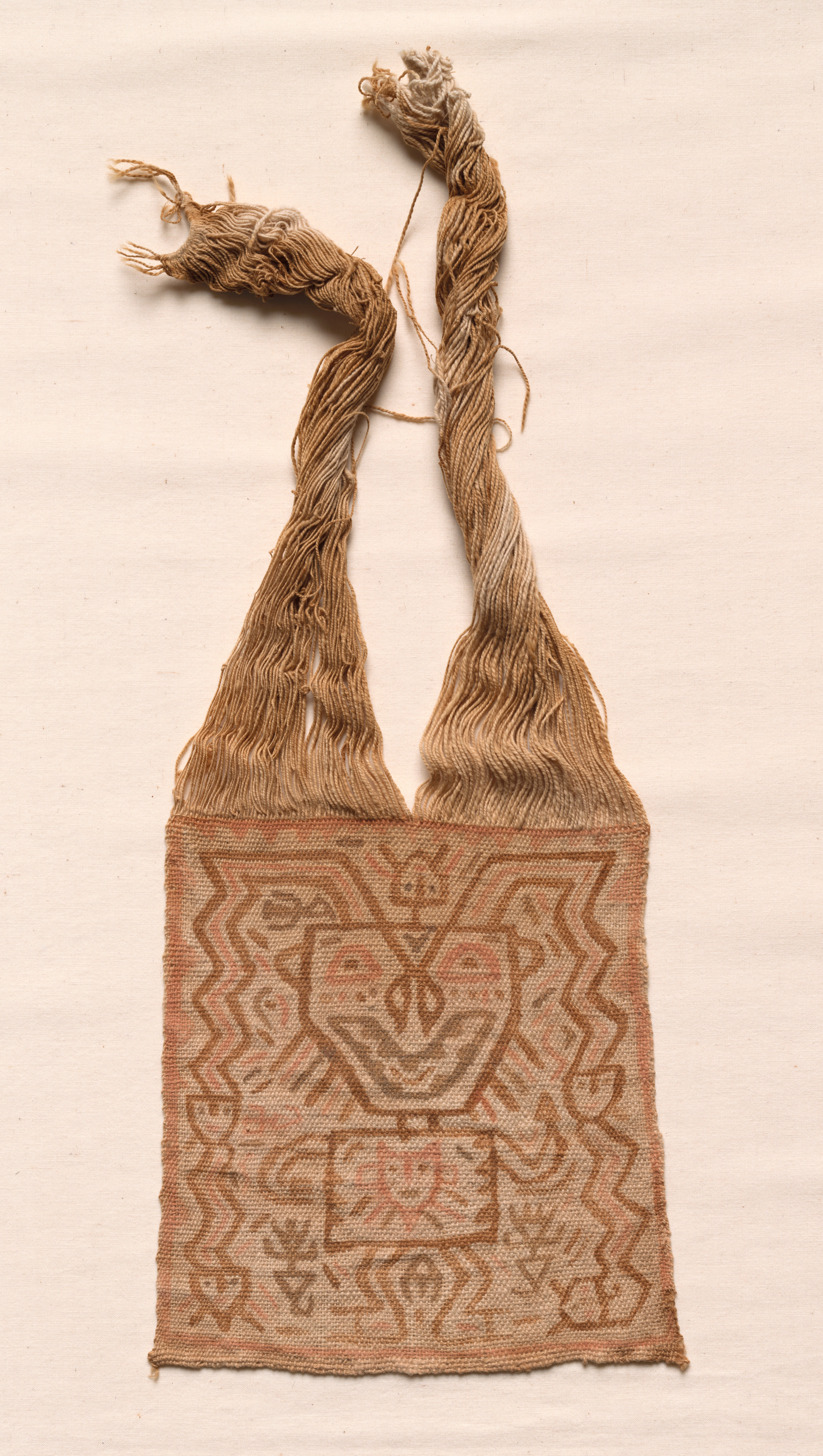
Deconstructing the Paracas Mask: An Avant-Garde Analysis for Zoey Fashion Lab
As the Chief Fabric Deconstructionist for Zoey Fashion Lab, I am tasked with dissecting the material, cultural, and aesthetic DNA of artifacts to extract avant-garde design principles. The subject of this analysis is the Mummy Bundle "Mask" from the Ocucaje site in the Ica Valley, Peru, dating to the Paracas culture (c. 800–100 BCE). This object—a painted, plain warp-faced cotton cloth—is not merely a funerary relic; it is a radical text of textile technology, pigment application, and symbolic compression. By applying a deconstructive lens, we can unravel how this pre-Columbian artifact anticipates contemporary avant-garde fashion’s obsessions with surface, structure, and the body’s absence.
Technical Framework: The Plain Warp-Faced Cloth as a Minimalist Canvas
The mask’s substrate is a plain warp-faced cotton cloth, a technical choice that is deceptively simple. In warp-faced weaves, the warp threads dominate the surface, creating a dense, ribbed texture that is both structurally rigid and visually uniform. This is not a fabric designed for drape or fluidity; it is a declarative surface—a taut, grid-like membrane that prioritizes linear tension over weft flexibility. For Zoey Fashion Lab, this materiality is a lesson in restraint. The plain weave is the zero degree of textile complexity, yet its very austerity becomes a platform for maximalist intervention through paint.
The cotton itself, native to the coastal valleys of Peru, was cultivated in natural hues of white, beige, and brown. However, the mask’s painted surface overrides this natural palette. The warp-faced structure creates a micro-topography where paint settles into the interstices between warp threads, producing a granular, almost pointillist effect when viewed closely. This is not a smooth, printed surface; it is a painted architecture where the fabric’s weave becomes a latent grid, visible beneath the pigment. For the avant-garde designer, this suggests a method where structure and decoration are inseparable—the cloth is not a neutral ground but an active participant in the image’s formation.
Cultural Resonance: The Mask as a Liminal Object
The mask’s function within the Paracas mummy bundle is critical. It was not worn by the living but placed over the face of the deceased, wrapped within layers of textiles. This is a portrait of absence—a face that is both present and erased, a proxy for the individual’s social identity in the afterlife. The painted motifs—often feline, avian, or geometric—are not decorative but transformative. They reconfigure the deceased into a supernatural being, a hybrid of human and animal powers. For Zoey Fashion Lab, this concept of the garment as a transformative skin is a core avant-garde principle. The mask is not a representation of a face; it is a new face, a second epidermis that redefines the wearer’s identity through pattern and pigment.
The Archive Resonance reference mentions "器物与绘画" (objects and painting) as witnesses to cultural collision and aesthetic fusion between the 16th and 17th centuries. While the Paracas mask predates this colonial era by over a millennium, it embodies a similar synthesis of media. The painted cloth exists at the intersection of textile and graphic art, challenging the Western hierarchy that separates craft from fine art. The mask’s surface is a textile-painting hybrid, where the fabric’s weave dictates the paint’s behavior, and the paint, in turn, redefines the fabric’s visual texture. This is a premodern example of material cross-disciplinary practice, a principle that avant-garde fashion exploits through techniques like digital printing on structural weaves or hand-painting on engineered knits.
Avant-Garde Extraction: Principles for Zoey Fashion Lab
From this analysis, I extract three avant-garde design principles that Zoey Fashion Lab can operationalize:
1. The Surface as a Structural Statement
The Paracas mask demonstrates that surface treatment is not secondary to structure. The warp-faced cloth’s rigidity is both a technical constraint and a creative opportunity. In avant-garde fashion, this translates to painting on high-tension fabrics—such as organza, stiffened cotton, or technical mesh—where the weave becomes a visible matrix for pigment. The result is a garment that reads as both textile and painting, where the body’s movement reveals the interplay between ground and image. Zoey Fashion Lab could experiment with resist-dyeing or screen-printing on warp-faced cottons, using the fabric’s linear grain to guide the composition, creating a dynamic tension between the painted motif and the cloth’s inherent geometry.
2. The Mask as a Bodily Absence
The mask’s placement over the face of the deceased suggests a garment that defines identity through absence. For the living wearer, this principle can be inverted: a garment that erases or obscures the body to project a new identity. Zoey Fashion Lab could develop hooded, face-covering pieces that use painted patterns to create a second face—a feline eye motif or geometric abstraction that replaces the wearer’s features. This is not about hiding but about transformation through textile. The mask’s painted surface becomes a portable identity, a concept that resonates with contemporary concerns about digital avatars and self-curation.
3. The Archive as a Material Collision
The Archive Resonance reference frames the artifact within a history of cultural collision—the meeting of Andean, European, and African aesthetics in the colonial period. The Paracas mask, however, is pre-Columbian, but its painted surface anticipates this collision by already being a hybrid: a textile that mimics the permanence of painting, a funerary object that functions as a living symbol. For Zoey Fashion Lab, this suggests a design methodology of intentional anachronism—combining ancient techniques (plain weave, natural pigment) with avant-garde silhouettes (asymmetry, deconstruction). The mask’s painted grid could inspire a digital print on a warp-faced base, where the pixelated effect of modern printing echoes the granular pigment application of the original, creating a dialogue between pre-Columbian craft and post-industrial technology.
Conclusion: The Mask as a Proto-Avant-Garde Text
The Paracas mummy bundle mask is not a primitive artifact but a sophisticated, proto-avant-garde textile object. Its plain warp-faced cloth is a minimalist substrate that demands maximalist intervention; its painted surface is a narrative of transformation that redefines the body; its cultural context is a resonance of collision that anticipates modern hybridity. For Zoey Fashion Lab, this analysis provides a blueprint for deconstructing historical textiles into avant-garde principles. The mask teaches us that the most radical designs often emerge from the most constrained materials—a lesson that is as relevant to pre-Columbian Peru as it is to the runways of tomorrow.