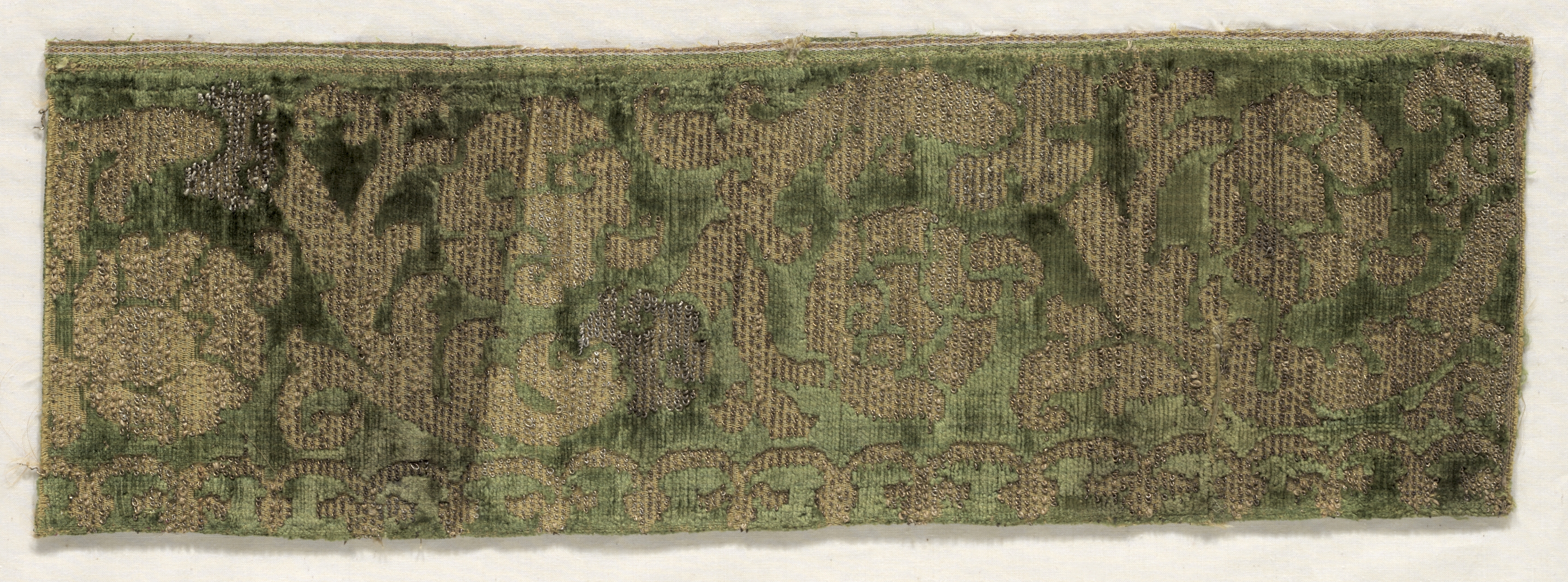
Deconstructing the Avant-Garde: A Technical Analysis of Spanish Velvet with Metallic Thread
At Zoey Fashion Lab, the role of the Chief Fabric Deconstructionist is to unravel not just the physical threads of a textile, but the narrative, the engineering, and the potential it holds for radical transformation. Our latest subject of inquiry is a specimen of exceptional complexity: a Spanish velvet woven from silk and metallic thread, presented under the stylistic directive of Avant-garde and the conceptual reference of New DNA Strand. This is not merely a fabric; it is a coded message from the intersection of artisanal heritage and bio-futurism.
I. Provenance and Materiality: The Spanish Legacy
The origin of this textile is paramount. Spain, particularly the regions of Valencia and Catalonia, has a centuries-old tradition of velvet production, historically influenced by Moorish craftsmanship. This legacy is not merely historical; it is encoded in the tension, density, and luster of the pile. The base structure—a silk foundation—provides an unparalleled softness and a deep, almost liquid color absorption. Silk, being a natural protein fiber, offers a unique drape and a subtle, organic irregularity that synthetic velvets cannot replicate.
The inclusion of metallic thread, likely a fine silver or gold-plated copper or a silk-core wrapped in metal foil, introduces a radical disruption. In traditional Spanish textiles, metallic threads were reserved for ecclesiastical vestments or aristocratic court dress. Here, they are woven integrally into the pile, not merely as a surface embellishment. This creates a bimodal tactile experience: the plush, yielding silk pile contrasted with the cool, rigid, and reflective metallic strands. This duality is the first clue to the Avant-garde intent—a dialogue between the organic and the inorganic, the historical and the alien.
II. Technical Construction: The Velvet Weave as a Biological Code
To understand the "New DNA Strand" reference, we must deconstruct the velvet weave itself. A standard velvet is a warp pile weave, where an extra set of warp yarns is woven over rods or wires, then cut to create the pile. In this Spanish specimen, the process is elevated to a level of programmatic complexity.
The silk threads form the ground weave (the structural DNA backbone), providing stability and flexibility. The metallic threads, however, are not simply inserted as a supplementary weft. Instead, they are engineered into the pile loops themselves. This means that the metallic thread rises from the ground, forms a loop, and is then cut, leaving a tiny, sharp metallic tip alongside the softer silk pile. The result is a surface that, under magnification, resembles a microscopic forest of soft, translucent stalks interspersed with rigid, reflective needles.
This construction technique creates a dynamic optical effect. When viewed from a direct angle, the velvet appears as a rich, dark solid color. As the viewing angle shifts, the metallic threads catch the light, creating a shimmering, almost electrical discharge across the surface. This is not a simple shine; it is a controlled, directional reflection that mimics the helical structure of a DNA strand, where information is stored and revealed only under specific conditions. The fabric literally encodes and decodes light based on the viewer’s position.
III. The Avant-Garde Imperative: Deconstructing the Pile
For Zoey Fashion Lab, the Avant-garde is not about decoration; it is about systemic disruption. This velvet challenges the fundamental definition of a textile. It is not a uniform surface but a field of discrete, interactive elements. The metallic threads, due to their higher tensile strength and lower elasticity compared to silk, create internal stresses. Over time, or with intentional manipulation, the pile can be made to lean, collapse, or stand upright, altering the fabric’s texture and reflectivity.
Our deconstruction protocol suggests several radical interventions:
- Selective Shearing: Using laser or mechanical shearing to remove the silk pile in specific areas, leaving only the metallic "stubble." This creates a topographical map of the fabric’s DNA—a literal gene sequence of raised and recessed zones.
- Heat Distortion: Applying localized heat to the metallic threads can cause them to curl or contract, creating a three-dimensional, scar-like texture that contrasts with the pristine silk. This mimics genetic mutation.
- De-weaving and Re-weaving: Extracting individual metallic threads and re-integrating them as free-floating filaments, creating a frayed, deconstructed edge that exposes the fabric’s internal structure. This is the ultimate act of deconstruction—exposing the code itself.
IV. Sensory and Conceptual Implications
The sensory profile of this textile is extraordinary. The sound of the metallic threads rubbing against silk produces a faint, high-frequency whisper—a sonic signature of friction between two worlds. The weight is substantial, yet the silk base ensures it drapes with a liquid, almost sentient quality. This is a fabric that demands to be touched, not just seen. It invites the wearer to interrogate its surface, to feel the cold metal among the warm silk.
Conceptually, the "New DNA Strand" reference is fully realized. This velvet is not a finished product but a living system. It can be programmed (through weave density), mutated (through physical intervention), and expressed (through light and movement). For the Avant-garde designer, this fabric offers a vocabulary of biomimicry and technological hybridity. It speaks to a future where garments are not static objects but dynamic interfaces—where the boundary between the natural (silk) and the synthetic (metal) is not a line but a gradient.
V. Conclusion: A Blueprint for the Future
This Spanish silk and metallic velvet is a masterclass in contradictory harmony. It respects the deep, artisanal history of its origin while aggressively pointing toward a future of responsive, data-driven textiles. For Zoey Fashion Lab, it serves as a primary research material for exploring how heritage techniques can be repurposed for radical, futuristic expression. The velvet’s DNA is not a fixed code; it is a set of instructions waiting to be rewritten. Our deconstruction reveals that the true power of this textile lies not in its beauty, but in its latent potential for transformation. It is a strand of fabric that, when pulled, unravels the very definition of what a garment can be.