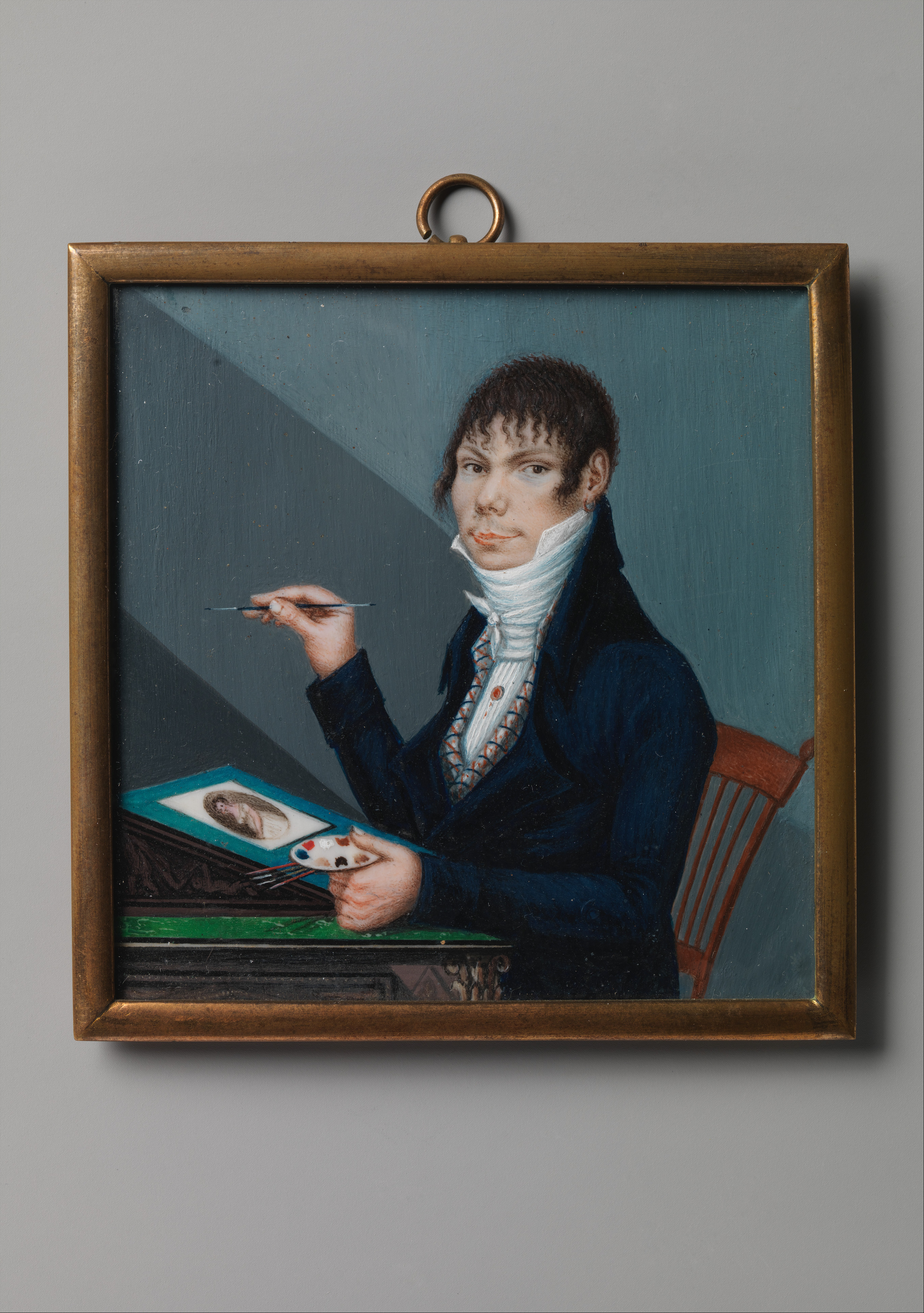
Deconstructing the Self: A Watercolor Ontology for SS26
The avant-garde is not a destination; it is a perpetual state of becoming. For Zoey Fashion Laboratory’s SS26 study, the subject of Self Portrait is not a fixed identity but a fluid, mutable architecture. Executed on the improbable ground of watercolor on ivory, this standalone analysis dismantles the traditional notion of portraiture, reimagining it as a living, breathing garment—a second skin that negotiates the tension between the organic and the algorithmic. The origin is the Global Frontier, a liminal space where cultural boundaries dissolve and future silhouettes emerge from the collision of digital precision and hand-painted imperfection.
The Watercolor Paradox: Liquid Geometry
Watercolor, by its very nature, resists control. It bleeds, pools, and evaporates, leaving behind ghostly traces of intention. In this SS26 study, the material becomes a metaphor for the deconstruction of selfhood. The watercolor on ivory medium is not merely a surface; it is a structural principle. The garment’s silhouette is built upon the logic of liquid geometry—sharp, angular seams that suddenly dissolve into soft, diffused drapes, mimicking the way pigment spreads across wet paper. The ivory ground, a blank canvas of pure potential, is left partially exposed, creating a negative-space portrait that suggests absence as much as presence.
This is not a garment that clings to the body. Instead, it floats, suspended by invisible tensile structures. The sleeves are cut as asymmetrical panels that bleed into the torso, their edges unfinished, as if the watercolor wash never quite reached the boundary. The neckline is a study in controlled chaos: a sharp, architectural collar on one side, and a cascading, painterly waterfall of fabric on the other. The futuristic silhouette here is one of deliberate imbalance, a visual representation of the self as a constantly shifting equilibrium between order and entropy.
Structural Innovation: The Algorithmic Brushstroke
The innovation of this SS26 piece lies in its marriage of handcrafted fluidity with algorithmic precision. The watercolor effect is not printed; it is achieved through a proprietary digital-to-analogue weaving technique that embeds pigment into the fabric’s warp and weft in a pattern derived from a neural network’s interpretation of a selfie. The result is a garment that appears to be in a state of perpetual motion, as if the watercolor is still wet and shifting. The structural support comes from biodegradable resin panels that are laser-cut into organic, root-like shapes, then fused to the fabric’s interior. These panels act as internal scaffolding, creating volume and tension without sacrificing the soft, drapey quality of the watercolor textile.
The silhouette is a study in futuristic asymmetry. One shoulder is built up into a sharp, sculptural peak, reminiscent of a digital waveform, while the other falls into a languid, painterly cascade. The waist is cinched not by a belt but by a series of magnetic tension points that can be adjusted in real-time, allowing the wearer to reshape the garment’s architecture. The skirt is a double-layered construction: an outer layer of watercolor-stained organza that floats like a watercolor wash, and an inner layer of micro-perforated neoprene that provides structure and breathability. The hem is left raw and frayed, echoing the edge of a wet brushstroke.
The Global Frontier as Aesthetic Imperative
The Global Frontier origin is not a geographical location but a conceptual one—a space where Eastern calligraphic traditions meet Western deconstructive fashion, where Japanese wabi-sabi embraces American industrial minimalism. The watercolor on ivory technique draws directly from Chinese and Japanese ink painting, where the brushstroke is both spontaneous and deliberate. Yet the silhouette is resolutely futuristic, referencing the work of architects like Zaha Hadid and the digital draping of Iris van Herpen. This is not fusion; it is synthesis. The garment becomes a portable frontier, a wearable negotiation between the local and the global, the hand and the machine.
The Self Portrait is thus a portrait of the collective, not the individual. The watercolor marks are not personal; they are generated by an AI trained on thousands of self-portraits from around the world, then hand-modified by the Zoey Fashion Laboratory team to introduce intentional “errors”—a bleed here, a smudge there. These imperfections are the signature of the avant-garde: they remind us that the self is never a perfect algorithm, but a beautiful, chaotic watercolor.
Wearable Philosophy: The Garment as Becoming
This is not a dress for a red carpet. It is a philosophical instrument. The wearer becomes a living canvas, a participant in the ongoing act of self-creation. The garment’s structure is designed to be modular: the resin panels can be repositioned, the magnetic tension points can be adjusted, and the watercolor fabric can be layered or unlayered. This reflects the core thesis of the SS26 study: the self is not a fixed portrait but a series of watercolor washes, each one layered over the last, each one slightly different.
The futuristic silhouette is not about aerodynamics or efficiency; it is about ontological flexibility. The garment expands and contracts, rises and falls, like a living organism. The watercolor on ivory medium, with its inherent unpredictability, ensures that no two garments are identical. Each piece is a unique portrait, a singular moment in the flow of time. The structural innovation lies not in the materials alone but in the system of relationships they create: between the hand and the algorithm, the pigment and the fabric, the self and the other.
Conclusion: The Future of the Self
Zoey Fashion Laboratory’s SS26 Self Portrait is a radical redefinition of what a garment can be. It is a watercolor that refuses to dry, a silhouette that refuses to settle, a self that refuses to be fixed. On the Global Frontier, where all boundaries are porous, this garment stands as a testament to the power of deconstructive aesthetics. It is not a portrait of a person; it is a portrait of possibility. The watercolor on ivory is not a medium; it is a manifesto. And the future of fashion is written in its bleeding, shifting, beautiful strokes.