The Stucco Fragment: A Blueprint for SS26 Deconstructive Couture
Excavating the Architectural Fossil
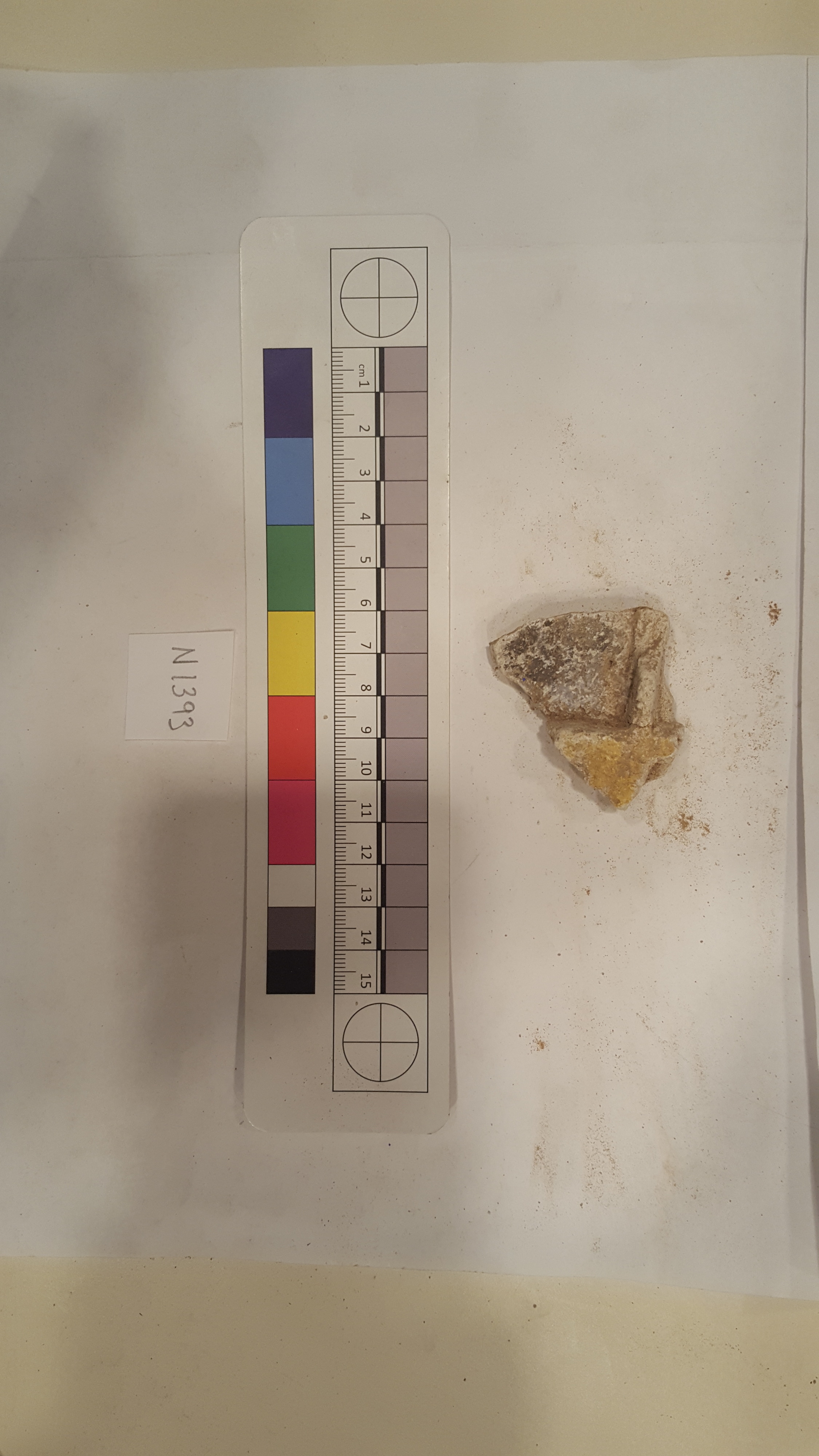
The Stucco Fragment, sourced from the nebulous terrain of the Global Frontier, is not merely a relic of vernacular construction but a manifesto of materialized time. In the context of Zoey Fashion Laboratory’s SS26 avant-garde study, this carved and painted mortar fragment transcends its utilitarian origins to become a blueprint for a new structural lexicon. The fragment’s surface—a palimpsest of eroded geometry and residual pigment—offers a radical departure from the ephemeral softness of traditional haute couture. It proposes a future where garment architecture is defined by rigid fluidity and calcified movement, a direct challenge to the seasonal orthodoxy of drapery and weave.
Futuristic Silhouettes: The Petrified Drape
The primary silhouette innovation derived from the Stucco Fragment is the Petrified Drape. Where fabric would conventionally cascade, the SS26 collection will feature panels of composite stucco-infused textile that hold a frozen, dynamic fold. This is not armor; it is arrested motion. The fragment’s carved indentations and raised reliefs translate into negative-space tailoring—garments that appear to have been excavated from a single block of material, leaving voids where the body becomes the negative cast. Key silhouettes include the Asymmetric Cantilever Jacket, where a single shoulder is built outward in a sweeping, mortar-like curve, counterbalanced by a minimal, almost absent back panel. The lower body introduces the Fractured Column Skirt, a cylindrical form that splinters at the hem into jagged, painted shards, mimicking the fragment’s own broken edges. Color is restricted to the fragment’s palette: raw limestone white, oxidized ochre, and faded cerulean, applied as pigment washes over structural seams to blur the line between construction and decay.
Structural Innovation: The Mortar Joint as Seam
The Stucco Fragment’s most profound contribution to SS26 lies in its reinterpretation of the seam. Traditional couture relies on thread and stitch, but the fragment proposes the Mortar Joint Seam—a technique where garment panels are bonded using a non-crystalline, flexible resin that dries to a stucco-like finish. This seam is both structural and decorative; it can be sculpted while wet to create raised ridges, then painted to imitate the fragment’s weathered surface. For SS26, Zoey Fashion Laboratory will deploy this method in three distinct applications:
1. Load-Bearing Drapes: Sections of the garment that require tension—such as a cape’s dramatic fall or a sleeve’s architectural puff—are reinforced with internal mortar joint ribs, allowing the fabric to hold a shape without the use of boning or wire. The result is a silhouette that feels both ancient and extraterrestrial, as if the garment is a fossilized second skin.
2. Painted Relief Mapping: The fragment’s painted surface is not flat; it is a topographical map of brushstrokes and erosion. SS26 will translate this into relief-printed textiles where pigment is layered in thick, paste-like applications over the mortar joints, then partially sanded away to reveal the base fabric. This creates a haptic, three-dimensional surface that changes with movement and light, echoing the fragment’s history of exposure.
3. Modular Excavation: The fragment’s broken edges inspire the collection’s modular approach. Garments are designed as assemblages of excavated forms—a collar might be a detachable, carved stucco crescent that snaps onto a sheer, mortar-stained base. The consumer becomes an archaeologist, assembling and disassembling the garment’s narrative. This aligns with the Global Frontier’s ethos of nomadic, adaptable luxury, where a single piece can reconfigure from a sculptural bustier to a floating, fragment-like tunic.
The Global Frontier Aesthetic: Decay as Decoration
The Stucco Fragment’s origin—the Global Frontier—is a conceptual space where cultural, temporal, and material boundaries dissolve. For SS26, this translates into a design philosophy that embraces controlled decay. The collection will feature intentional distress: edges left raw and crumbling, seams intentionally misaligned to mimic the fragment’s fracture lines, and pigment applied in uneven, water-thinned washes that suggest centuries of rain. Yet, this is not grunge or deconstruction for its own sake. Every mark of wear is a calculated structural decision. A jacket’s shoulder might appear to be shedding its outer layer, revealing a second, differently painted surface beneath—a nod to the fragment’s stratigraphy. This is patina as prestige, where the garment’s history is embedded in its construction, not merely its styling.
Material Alchemy: Stucco-Infused Textiles
To realize these innovations, Zoey Fashion Laboratory has developed a proprietary textile: Stucco-Silk. This is a hybrid material where a base of ultra-fine, raw silk is coated in a micro-thin layer of flexible, breathable stucco composite. The result is a fabric that can be cut, draped, and sewn like traditional silk but that holds a shape with the rigidity of plaster. It is washable, lightweight, and can be re-sculpted with heat, allowing for a garment to evolve over time. The Stucco Fragment’s painted motifs—abstract geometric lines, faded floral remnants, and unintentional splatters—are digitally mapped and recreated as reactive pigment prints that deepen in color when exposed to body heat, making the garment a living archive of its wearer’s presence.
Conclusion: The Fossilized Future of Couture
The Stucco Fragment from the Global Frontier is not a source of inspiration but a materialized thesis on the future of avant-garde fashion. For SS26, Zoey Fashion Laboratory will not merely reference its forms but will internalize its logic: that the most radical futures are excavated from the past, that decay can be a constructive force, and that the boundary between architecture and apparel is a membrane to be dissolved. The collection will stand as a petrified manifesto, challenging the industry to consider that the next great silhouette might not be woven but carved, not sewn but bonded, not finished but forever in a state of beautiful, deliberate ruin. In the Stucco Fragment, we find not a relic, but a roadmap.