Deconstructing the Void: Textile Fragment as Avant-Garde Manifesto for SS26
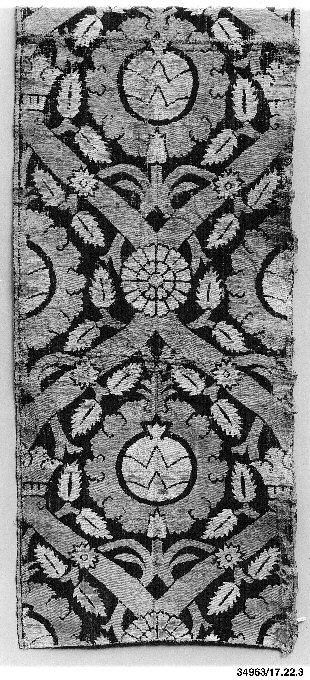
The most compelling avant-garde statements are not born from abundance, but from calculated absence. At Zoey Fashion Laboratory, we have isolated a singular Textile Fragment—a cut voided satin velvet and metal-wrapped thread brocade—to serve as the foundational thesis for SS26. This is not merely a swatch; it is a structural proposition, a dialogue between the tangible and the spectral, the historical and the hyper-futuristic. In an era where fashion oscillates between digital ephemerality and haptic reality, this fragment embodies a third path: architectural ambiguity. It does not clothe the body; it redefines the space the body inhabits.
Materiality as a Temporal Paradox
The genius of this textile lies in its inherent contradiction. Voided satin velvet, by its very construction, is a study in negative space. The pile is selectively cut away, leaving behind a ground of sheer, lustrous satin. This is not a flat surface; it is a topographical map of absence. When paired with metal-wrapped thread brocaded into the structure, the fabric becomes a battlefield of textures. The velvet absorbs light, creating deep, velvety blackness, while the metallic threads reflect it in sharp, linear bursts. This is not decoration; it is a light-management system. For SS26, this fragment dictates a silhouette that is fragmented and reassembled. Imagine a double-layered shell jacket where the outer layer is a lattice of laser-cut voided panels, revealing the metallic brocade beneath only at moments of movement. The body becomes a kinetic sculpture, with the textile fragment acting as a dynamic interface between opacity and transparency.
Structural Innovation: The Cut Void as Architectural Blueprint
Traditional couture treats fabric as a continuous skin. Our approach for SS26 is to treat this fragment as a modular component. The cut void is not a flaw; it is a structural pivot. We propose a silhouette defined by asymmetrical, cantilevered volumes. Consider a dress where the bodice is constructed from a single, unbroken panel of the brocaded velvet, but the skirt is a series of independent, floating panels—each a cut void fragment—suspended from a metallic exoskeleton. The voids create negative space between the panels, allowing the wearer’s skin or a contrasting underlayer to become part of the garment’s visual field. This is deconstructive architecture applied to fashion: the garment is not sewn together; it is engineered into existence. The metal-wrapped thread provides the necessary tensile strength to support these cantilevered forms, transforming the fabric from a soft textile into a rigid, yet pliable, structural element.
Futuristic Silhouettes: The Exoskeletal and the Ethereal
The metal thread brocade suggests an aesthetic of industrial futurism—think cybernetic embroidery. For SS26, we are exploring silhouettes that blur the line between armor and drapery. A key piece is the “Void Corset”: a sculpted bodice where the cut velvet forms a dense, opaque core, while the metallic threads are woven into a web-like, openwork structure that extends outward into exaggerated shoulders and a trailing, asymmetrical train. This is not a corset that constricts; it is one that expands the wearer’s presence. The voids become windows to the body, while the metal threads create a shimmering, almost holographic aura. Alternatively, consider a “Fragment Coat”—a full-length duster where the back is a single, uninterrupted expanse of the brocade, but the front is a series of detached, floating panels that overlap like digital pixels. The wearer can adjust the degree of exposure by repositioning these panels, making the garment an interactive, living system. The silhouette is simultaneously monolithic and fragmented, a paradox that defines the avant-garde.
Color Palette and Light Interaction
The fragment’s inherent drama dictates a restrained, high-impact chromatic strategy. We are working with a palette of absolute black, oxidized silver, and deep, infrared-adjacent burgundy. The black velvet absorbs all light, creating a visual void. The silver metal thread reflects it, creating sharp, directional highlights. The burgundy, achieved through a specialized dye process on the satin ground, appears almost black in low light but reveals a blood-like richness under direct illumination. This is a chromatic narrative of emergence: the garment changes its identity based on the environment. In a gallery, it is a monolith; on a runway, it is a kinetic light show. The cut void technique further enhances this by allowing underlayers of pure silver or sheer black organza to peek through, creating a layered luminosity that defies the fabric’s flatness.
Contextual Significance: A Standalone Avant-Garde Study
This Textile Fragment is not a component of a larger collection; it is the entirety of the collection’s thesis. In an era of mass production and digital saturation, the avant-garde must return to the primacy of the object. This fragment forces a reconsideration of what a garment can be. It is a rejection of the seamless and an embrace of the engineered void. For SS26, Zoey Fashion Laboratory proposes a future where clothing is not worn but inhabited—a series of architectural interventions that redefine the human form through absence, light, and structural tension. The cut voided satin velvet and metal-wrapped thread brocade is our manifesto: a fabric that is as much about what is removed as what is present, as much about the future as the past. This is not fashion. This is material philosophy.