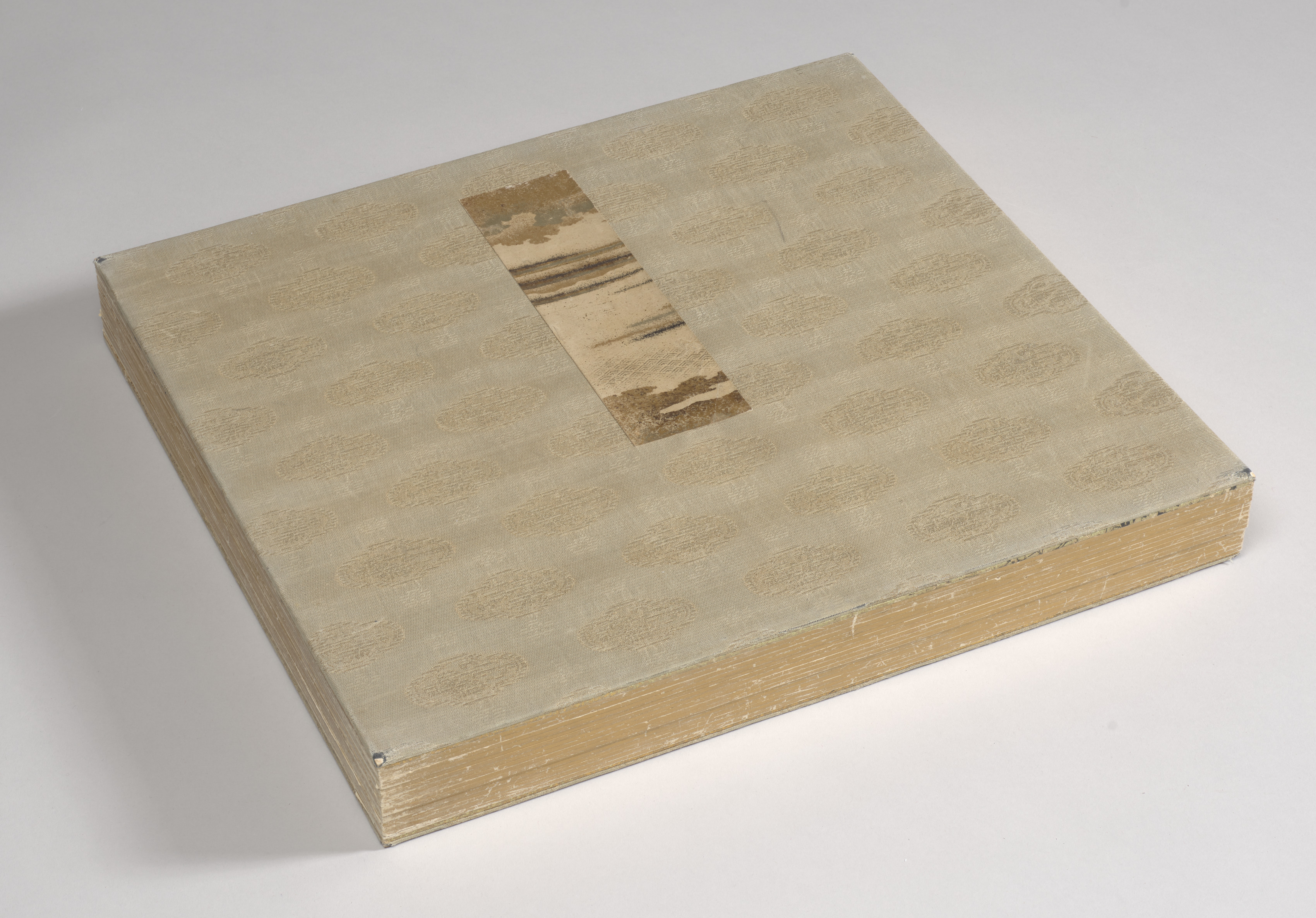
Deconstructing the Tang-Nara Silk Album: A New DNA Strand for Avant-Garde Expression
As Chief Fabric Deconstructionist at Zoey Fashion Lab, I have the privilege of dissecting not merely textiles, but the very threads of history. The subject of this analysis—an album of silk textile samples, attributed to either China’s Tang dynasty (618–907) or Japan’s Nara period (710–794)—presents a unique challenge and an extraordinary opportunity. These fragments are not relics to be preserved under glass; they are raw genetic material for a new species of avant-garde fashion. This report details the deconstruction of these historical silks, proposing a methodology to extract their structural, chromatic, and symbolic DNA, and re-sequence it into a collection that redefines the boundaries of contemporary design.
Structural Archaeology: The Weave as a Blueprint
The first phase of our deconstruction involves a forensic examination of the silk’s construction. Tang and Nara silks are celebrated for their technical sophistication, particularly the use of jin (warp-faced compound weaves) and kesi (silk tapestry). These are not mere fabrics; they are engineered systems. The warp threads, often of a single color, create a rigid, structural foundation, while the weft threads, in multiple hues, are introduced selectively to build pattern and depth. This is a binary logic—warp as constant, weft as variable—that echoes the principles of digital coding.
For Zoey Fashion Lab, this translates into a new architectural paradigm for garments. We will replicate this warp-weft relationship not with silk, but with advanced technical fibers—carbon nanotubes for the warp (providing structural memory and shape retention) and biodegradable, color-shifting polymers for the weft. The result is a fabric that is both rigid and fluid, a living exoskeleton that responds to movement. The Tang-Nara grid becomes a lattice for 3D-printed panels, where the “weft” is applied via robotic embroidery, creating patterns that evolve over time as the user interacts with the environment.
Chromatic Decomposition: The Alchemy of Faded Pigments
The color palette of these historic samples is not what it was. Over centuries, the original vibrant madder reds, indigo blues, and safflower yellows have oxidized, faded, and migrated into the silk’s fibers. What remains is a spectral archive of time—a muted, ethereal quality that holds more power than any synthetic dye could achieve. The avant-garde designer must understand that the color is not the pigment; it is the interaction between light, fiber, and decay.
Our deconstruction process will involve micro-spectrophotometry to map the original dye molecules and their degradation products. We will then synthesize a new class of “chronochromatic” dyes—pigments that are inherently unstable, designed to fade, shift, and morph over the garment’s lifecycle. A dress might be born a deep, imperial purple, but after three months of wear, it will soften to a lavender gray, then to a pale silver. This is not a flaw; it is the garment’s narrative. The wearer becomes a co-creator, and the fabric’s color tells a story of exposure, time, and memory—a direct homage to the Tang-Nara album’s own history.
Symbolic Re-Sequencing: From Motif to Meta-Statement
The motifs on these silk samples—phoenixes, lotus blossoms, celestial clouds, and geometric lozenges—are not merely decorative. They are ideograms of power, spirituality, and cosmology. The phoenix represents imperial authority and rebirth; the lotus signifies purity and enlightenment; the cloud pattern suggests the ethereal realm of the immortals. To simply copy these motifs would be a failure of imagination. Our task is to deconstruct their symbolic syntax and re-code it for a contemporary, global audience.
We will extract the underlying geometric logic of these patterns—the rotational symmetry, the fractal repetition, the negative space—and translate it into parametric design algorithms. The phoenix’s tail feathers become a generative pattern for a laser-cut leather cape; the lotus’s petals inform the modular construction of a detachable collar; the cloud forms are abstracted into a series of floating, translucent organza panels that shift with the wearer’s breath. The result is a garment that does not illustrate a symbol, but embodies its structural principle. The wearer is not adorned with a phoenix; they are the phoenix, their movement creating the form.
The New DNA Strand: Hybridization and Mutation
The reference to a “New DNA Strand” is critical. We are not simply mimicking the past; we are using it as a template for genetic mutation. The Tang-Nara album provides the base pairs—the structural weave, the chromatic decay, the symbolic logic—but we must splice them with alien genetic material. This means introducing elements from digital culture, biotechnology, and post-human aesthetics.
Consider a garment that uses living bacterial cellulose as its base, grown in a lab to mimic the hand of 8th-century silk. This “bio-silk” is then dyed with the chronochromatic pigments derived from our analysis. The pattern is not woven, but programmed into the bacteria’s growth, creating a fabric that is alive, breathing, and evolving. The phoenix motif might be encoded as a sequence of proteins that cause the cellulose to fluoresce under UV light. The lotus might become a pattern of micro-perforations that allow the fabric to “breathe” in response to humidity. This is not fashion; it is wearable biology.
Deconstruction as a Creative Act
To deconstruct is not to destroy; it is to liberate the potential trapped within a form. The Tang-Nara silk album is a frozen moment of human ingenuity. By dissecting its weave, decoding its color, and re-scripting its symbols, we give it a new life. Zoey Fashion Lab’s avant-garde collection will not look like Tang or Nara clothing. It will look like nothing that has ever existed. It will be a garment that remembers its own past, speaks in the language of algorithms, and breathes with the rhythm of living cells.
This is the new DNA strand. It is a thread that connects the weaver’s hand of the 8th century to the coder’s keyboard of the 21st. It is a fabric that is both ancient and unborn. And it is our responsibility, as deconstructionists, to weave it into the future.