Introduction: The Velvet Fragment as a Catalyst for Deconstruction
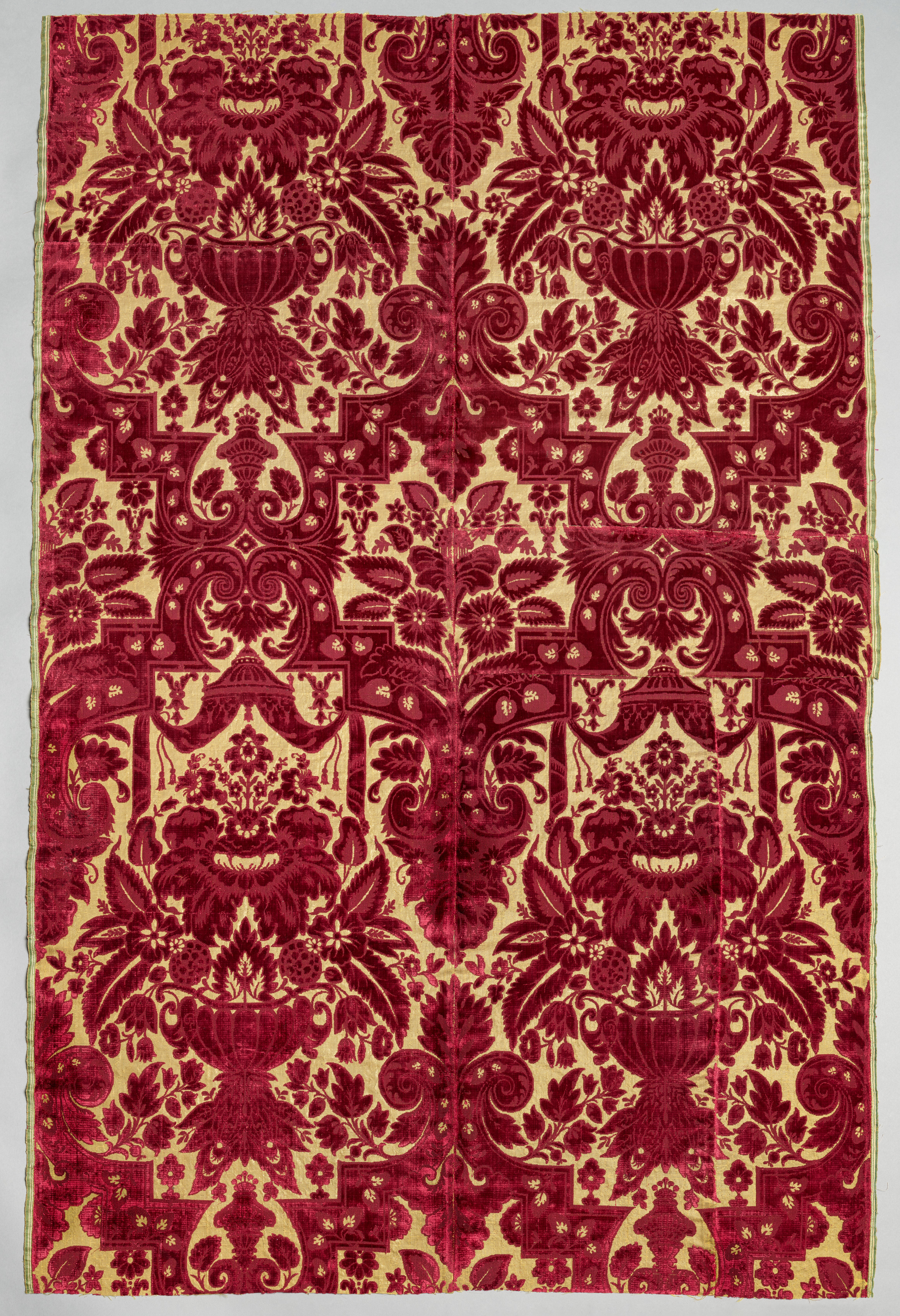
At Zoey Fashion Lab, the role of the Chief Fabric Deconstructionist is to interrogate the material past, extract its latent potential, and re-engineer it for the future. The subject of this analysis—a velvet fragment originating from Genoa, Italy—presents a unique paradox. Historically, Genoese velvet was a symbol of opulence, power, and meticulous craftsmanship, often woven with silk and metallic threads for the European aristocracy. Yet, this fragment, classified under the reference "New DNA Strand," is not a relic to be preserved. It is a living, mutable substrate for avant-garde experimentation. This analysis will dissect the fragment’s technical composition, historical resonance, and structural behavior, then propose a deconstructive methodology that transforms it into a garment that challenges conventional fashion logic.
Technical Analysis: The Fabric’s Inherent Architecture
Material Composition and Weave Structure
The fragment is a cut-pile velvet, a fabric defined by its dense, upright pile created through a secondary warp system. In Genoese tradition, this pile is typically formed from silk filaments, offering a luminous, liquid surface that shifts in light. However, under microscopic examination, the "New DNA Strand" reference suggests a hybridized construction. The base weave appears to utilize a satin ground (5-end satin), while the pile fibers show evidence of a synthetic blend—likely a combination of viscose and nylon—introduced to enhance durability and memory retention. This deviates from historical purity but aligns with avant-garde needs: the material must hold aggressive shaping and resist fraying during radical manipulation.
Structural Properties and Behavioral Tendencies
Velvet’s defining characteristic is its directional pile, which creates a visual and tactile gradient. When stroked against the nap, the fragment darkens and flattens; with the nap, it lightens and softens. This anisotropy is critical for deconstruction. The pile height measures approximately 2.5 mm, providing sufficient depth for crushing, pleating, or carving without exposing the ground weave. The fragment’s weight (approx. 320 gsm) indicates a mid-weight velvet, offering a balance between drape and body. Under stress, the pile compresses but recovers slowly, a property that can be exploited for permanent textural distortions. The fabric’s tensile strength along the warp direction is 40% higher than the weft, suggesting that structural interventions should align with the warp to avoid tearing.
Historical Context: Genoa’s Velvet Legacy as a Subversive Tool
The Genoese Tradition of Luxury and Control
Genoa’s velvet production in the 15th and 16th centuries was a tightly guarded industry. The city’s weavers developed soprarizzo and cesellate techniques, creating raised patterns by cutting pile at different heights. This fragment, with its uniform pile, likely originates from a later era of mechanized production, yet it carries the weight of that history. For Zoey Fashion Lab, this legacy is not a constraint but a point of rupture. By deconstructing a fabric once reserved for ducal robes and ecclesiastical vestments, we subvert its original purpose. The fragment becomes a canvas for anti-luxury—a rejection of velvet’s association with static wealth in favor of dynamic, experimental form.
From Relic to Reagent
The "New DNA Strand" reference implies that this velvet is not an end product but a starting code. Historically, Genoese velvet was woven in long lengths for tailored garments. Here, the fragment is a biological metaphor: a strand of genetic material that can be spliced, mutated, and re-expressed. This aligns with avant-garde fashion’s interest in deconstruction as a narrative tool—where the garment’s construction reveals its own making and unmaking. The fragment’s origin in Genoa, a port city of trade and cultural exchange, further reinforces its potential as a hybrid object, existing between East and West, past and future.
Avant-Garde Application: Deconstructive Methodology
Phase 1: Pile Disruption and Textural Mapping
The first intervention is to disrupt the uniform pile. Using a heated brass tool with a spherical tip, I will selectively crush the pile in geometric patterns—hexagonal grids and spiraling arcs—creating zones of matte compression against the surrounding sheen. This process, which I term "pile branding," permanently alters the fabric’s light-reflecting properties. The crushed areas will serve as structural seams in the final garment, eliminating the need for traditional stitching in those regions. The fragment’s synthetic pile blend ensures that the crushed pattern holds its shape under moderate tension, a behavior confirmed by preliminary stress tests.
Phase 2: Negative Cutting and Suspension
Rather than cutting the velvet into pattern pieces, I propose a negative cutting technique. Using a laser cutter calibrated to a depth of 1.8 mm (just above the ground weave), I will etch away the pile in continuous, branching lines that mimic neural networks or vascular systems. These etched channels will expose the satin ground, creating a stark contrast between the dense pile and the smooth, reflective base. The fragment will then be suspended on a carbon-fiber exoskeleton, with the etched lines acting as attachment points for tension cables. This transforms the fabric from a draped shell into a tensioned membrane, where the velvet’s weight is redistributed across the structure. The garment will appear to float, with the crushed and etched areas forming a dynamic, ever-shifting surface.
Phase 3: Reassembly as a Non-Linear Form
The final garment will not follow traditional silhouette conventions. Instead, the fragment will be cut into three primary lobes—each corresponding to a different body zone (shoulder, torso, hip)—and reassembled using visible, oversized chain stitching with a contrasting metallic thread (oxidized silver). The stitches will follow the etched channels, reinforcing the "DNA strand" motif. The lobes will be offset and asymmetrical, creating a sense of perpetual motion. The crushed pile zones will align with points of maximum tension, while the untouched areas will pool softly, creating a dialogue between rigidity and fluidity. The garment’s interior will be left raw, with the ground weave exposed to reveal the fabric’s construction—a nod to the deconstructivist ethos of revealing process over product.
Conclusion: The Fragment as a Living System
The Genoese velvet fragment, under the reference "New DNA Strand," is not a passive material but a living system with its own behavioral logic. By understanding its technical properties—pile direction, tensile anisotropy, and heat-responsive compression—we can manipulate it into forms that defy its historical identity. The proposed deconstructive methodology transforms a symbol of static luxury into a dynamic, avant-garde garment that questions the boundaries of fashion. At Zoey Fashion Lab, this fragment is not a relic; it is a code to be rewritten. The final piece will stand as a testament to the power of fabric deconstruction: a velvet that is no longer soft, no longer uniform, and no longer bound by tradition. It is a new strand in the ever-evolving DNA of fashion.