Deconstructing the Global Frontier: The Insertion of Bobbin Lace into Futuristic Silhouettes
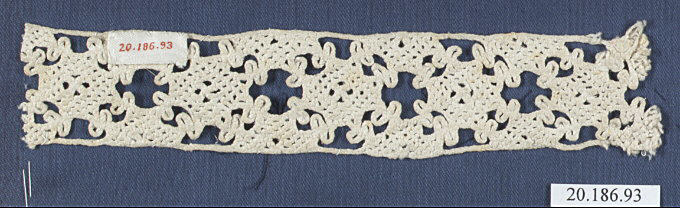
The avant-garde imperative for Spring/Summer 2026 is not merely about the garment; it is about the intervention. At Zoey Fashion Laboratory, we reject the passive drape and the static form. Our latest study, Insertion, redefines the sartorial landscape by interrogating the very act of construction. The subject—Insertion—is both a verb and a noun: a process of deliberate, surgical placement of material into a structural void, and the resulting architectural anomaly. The origin is the Global Frontier, a liminal space where digital precision meets artisanal heritage, and the material is bobbin lace—a paradoxical choice for a future-forward collection. This analysis dissects how this fragile, handcrafted textile becomes the linchpin of structural innovation, transforming the silhouette into a site of tension, transparency, and technological transcendence.
Redefining Insertion: From Decoration to Structural Catalyst
Historically, insertion in couture has been a decorative afterthought—a lace panel sewn into a seam for visual contrast. In our SS26 paradigm, insertion is reimagined as a load-bearing architectural device. The bobbin lace is not applied; it is embedded. We treat the lace as a tensile membrane, a grid of negative space that dictates the garment’s geometry. By inserting lace into laser-cut, rigid polymer frames, we create a dialogue between the ephemeral and the permanent. The lace’s intricate, hand-knotted loops become structural nodes, absorbing stress and distributing tension across the silhouette. This is not ornamentation—it is engineering. The insertion point is a fulcrum, where the softness of the lace is forced into a relationship with the starkness of the border, generating a silhouette that appears to be in a state of constant, frozen expansion.
The Global Frontier: A Synthesis of Hand and Machine
The Global Frontier is not a geographic location but a conceptual territory where tradition and futurism collide. Bobbin lace, a craft born in 16th-century Flanders, is recontextualized through digital fabrication. We source the lace from artisan cooperatives across Belgium and France, then digitize its pattern for algorithmic manipulation. The insertion process begins with a 3D-scan of the human form, onto which we map a lattice of stress points. The lace is then selectively inserted into these zones—shoulder blades, hip bones, the cervical spine—areas where the body’s kinetic energy is most concentrated. The result is a silhouette that mimics a cyborg’s exoskeleton, yet retains the tactile warmth of hand-made thread. The frontier is the gap between the hand and the machine, and insertion is the bridge. This synthesis produces a garment that is simultaneously nostalgic and prescient, a testament to the enduring power of craft in a digital age.
Structural Innovation: The Lace as a Tensile Membrane
Our SS26 silhouettes are defined by asymmetrical tension. The bobbin lace, when inserted into transparent, thermoformed polycarbonate panels, creates a futuristic corset that breathes. The lace’s openwork allows for ventilation, while the rigid frame provides structure. We have developed a proprietary technique called “lace-locking,” where the bobbin threads are chemically fused to the polymer at specific insertion points, creating a seamless bond. This eliminates the need for stitching, allowing the lace to float within the garment like a spider’s web caught in a glass case. The silhouette is no longer a silhouette in the traditional sense—it is a volume of voids. The negative spaces within the lace become positive structural elements, casting intricate shadows that shift with movement. This is architecture on the body, where insertion is the act of creating space within space.
Futuristic Silhouettes: The Anti-Drape and the Kinetic Form
For SS26, we reject the flowing, organic lines of conventional spring collections. Instead, we propose the anti-drape. The bobbin lace is inserted into rigid, angular armatures that jut from the body like fractured geometry. Consider a jacket where the left shoulder is a solid, sculpted block of resin, and the right shoulder is a cascade of bobbin lace inserted into a cantilevered wire frame. The lace appears to be growing from the structure, an organic outgrowth of the inorganic. This creates a silhouette that is both aggressive and delicate, a paradox that defines the avant-garde. The kinetic form is paramount: as the wearer moves, the lace vibrates, its threads catching light in a moiré effect. The insertion points act as hinges, allowing the lace to flutter while the frame remains static. This is not a garment that moves with the body—it is a garment that generates its own movement, a living sculpture of inserted tension.
Material Alchemy: Bobbin Lace as a Conductor of Light and Shadow
The choice of bobbin lace is a deliberate affront to the cold, synthetic textures often associated with futuristic fashion. Yet, through insertion, the lace becomes a conductor of optical effects. We treat the threads with a micro-coating of iridescent silver nanoparticles, causing them to refract light in a spectrum of blues and violets. When inserted into a garment, the lace acts as a light-diffusing membrane, softening the harsh lines of the structural frame. The contrast between the matte polymer and the shimmering lace creates a visual tension that is central to the collection’s aesthetic. Furthermore, the lace’s inherent transparency allows for the insertion of internal lighting elements—thin fiber-optic cables woven into the bobbin pattern. These lights are triggered by body heat, illuminating the lace from within as the wearer’s temperature rises. The garment becomes a responsive organism, where insertion is the mechanism of biofeedback.
Conclusion: Insertion as a Manifesto for SS26
In Insertion, Zoey Fashion Laboratory presents a radical thesis: the future of couture lies not in the creation of new forms, but in the strategic intervention into existing materials. Bobbin lace, a relic of a pre-industrial past, is reborn as a futuristic tensile membrane through the precise act of insertion. The Global Frontier is not a place to be explored, but a condition to be engineered—a state of perpetual asymmetry where hand and machine, fragility and strength, tradition and innovation coexist in a state of productive tension. Our SS26 silhouettes are not garments; they are architectural propositions, each insertion a statement against the tyranny of the seamless. The lace does not fill a void—it creates one. It is in this void, this space of insertion, that the avant-garde finds its most potent expression. The body is no longer a passive vessel; it is a site of structural innovation, and insertion is the tool that rewrites its future.