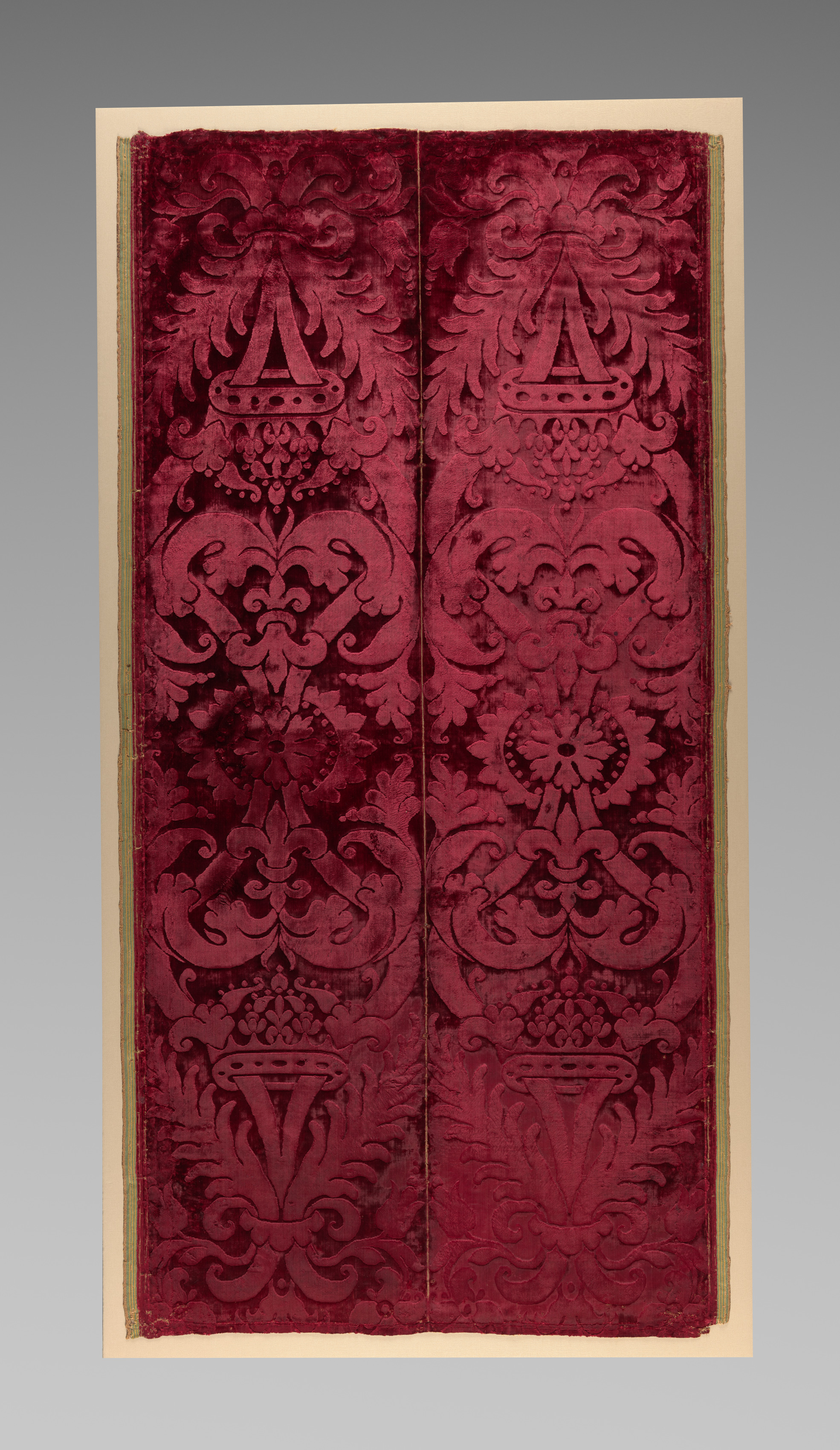
Deconstructing the Procurator’s Velvet Stole: A Study in Textural DNA
As the Chief Fabric Deconstructionist for Zoey Fashion Lab, my role is to dissect not just the physical weave of a textile, but its latent potential—the narrative encoded within its fibers. The Procurator’s Velvet Stole, originating from the historic workshops of Venice, Italy, presents a singular challenge. At first glance, it is a relic of opulent authority, a garment of state. Yet, beneath its sumptuous surface lies a New DNA Strand—a genetic blueprint for an entirely new aesthetic language. This analysis will disassemble the stole’s technical, historical, and stylistic components to reveal how its alto e basso silk velvet construction can be re-engineered for the avant-garde.
Technical Foundation: The Alto e Basso Revolution
The term alto e basso (high and low) is not merely descriptive; it is a declaration of dimensional warfare. Unlike standard velvet, which uses a single pile height, this technique employs two distinct pile heights within the same weave. The result is a sculptural surface where raised motifs—often heraldic or floral—emerge from a deeper, shadowed ground. For the Procurator’s Stole, this creates a topography of authority: the high pile catches light with a glossy, almost metallic sheen, while the low pile absorbs it, generating a velvety blackness that recedes into the fabric’s core.
From a deconstructionist perspective, this is not a static pattern but a dynamic interplay of positive and negative space. The stole’s design—likely featuring interlocking civic symbols or Byzantine-inspired vines—is not printed or embroidered; it is woven into the very structure. This means that any attempt to alter the stole’s form must respect the integrity of its pile. Cutting or draping this fabric requires a new kind of pattern-making: one that treats the high pile as a structural element, a kind of textile architecture that can be folded, pleated, or even partially shorn to reveal the underlying warp.
To extract the New DNA Strand, we must isolate the stole’s core genetic material: the contrast between tactile density and visual void. In the lab, we can replicate this through digital jacquard weaving, but the true innovation lies in using the stolen pile as a modular component. Imagine a garment where the high pile sections can be detached and reconfigured, like a textile circuit board. The stole’s original rigidity—necessary for its ceremonial drape—becomes a liability in avant-garde design, but its directional pile offers a solution. By aligning the pile in multiple directions within a single garment, we can create optical illusions of movement, a trompe-l’œil effect that shifts with the wearer’s gesture.
Historical Context: The Procurator’s Burden Reimagined
The Procurator of St. Mark’s was a figure of immense political and judicial power in Renaissance Venice. His stole was not merely a scarf; it was a symbol of jurisdiction, a textile scepter. The weight of the velvet, the precision of its cut, and the cost of its silk all communicated an unassailable authority. For the modern avant-garde, this historical weight is not a burden but a counterpoint. To deconstruct the stole is to critique the very concept of authority it once embodied.
Our analysis must consider the stole’s original function: it was worn as a horizontal band across the shoulders, framing the face and emphasizing the verticality of the body. This creates a natural visual axis. In re-engineering this piece, we can exploit that axis to create asymmetry. For example, by cutting the stole at a severe angle, we can transform its ceremonial horizontality into a diagonal slash that disrupts the wearer’s silhouette. The high pile motifs, once static symbols of office, become fragmented calligraphy—a language of power broken and reassembled into a new syntax of rebellion.
The historical use of black and crimson dyes in Venetian velvet is also critical. The original stole likely used madder root for red and iron mordants for black. In our deconstruction, we can introduce color shifts through chemical re-dyeing or laser ablation, creating gradients that fade from authority to decay. The New DNA Strand here is the concept of patina as design—not as aging, but as intentional transformation. The stole’s original perfection is its weakness; we must introduce imperfection as a strength.
Avant-Garde Application: The Stole as a Wearable Sculpture
The avant-garde demands that a garment challenge the boundaries between fashion, art, and technology. The Procurator’s Velvet Stole, when deconstructed, becomes a wearable sculpture that interrogates the relationship between surface and depth. The alto e basso technique is already a form of low-relief carving. By extending this logic, we can create garments that are hollowed out—where the high pile forms the outer shell and the low pile is cut away to reveal a secondary layer of sheer organza or metallic mesh. This creates a textile architecture that is both opaque and transparent, solid and void.
Consider a deconstructed stole that is not worn around the neck but draped asymmetrically across the torso, with one end anchored at the shoulder and the other trailing to the floor. The high pile motifs can be laser-cut into intricate, lace-like patterns, transforming the stole from a solid block of velvet into a negative space garment. The remaining low pile acts as a shadow, a ghost of the original form. This approach aligns with the New DNA Strand concept: the stole’s genetic code is not lost but re-expressed in a new context.
Another avenue is hybridization. The stole’s silk velvet can be bonded with technical fabrics like carbon fiber or Kevlar, creating a composite that retains the tactile luxury of velvet while gaining structural integrity. The high pile can be used as a textile sensor—its fibers can be treated with conductive polymers, turning the stole into a responsive surface that changes color or texture with touch or temperature. The Procurator’s symbol of static authority becomes a dynamic interface between the wearer and the environment.
Conclusion: The Stole as a Living Archive
The Procurator’s Velvet Stole is not a dead object. It is a living archive of Venetian weaving mastery, a repository of political symbolism, and a material challenge to any designer who dares to touch it. For Zoey Fashion Lab, the New DNA Strand is not about discarding the past but mutating it. The alto e basso technique gives us a blueprint for dimensional design; the historical weight gives us a narrative to subvert; and the avant-garde aesthetic gives us a license to destroy and rebuild. In our hands, the stole becomes a procurator of the future—not a symbol of authority, but a catalyst for transformation. The velvet whispers its secrets; it is our job to listen, to unravel, and to weave them anew.