Introduction: The Velvet Fragment as a Deconstructive Artifact
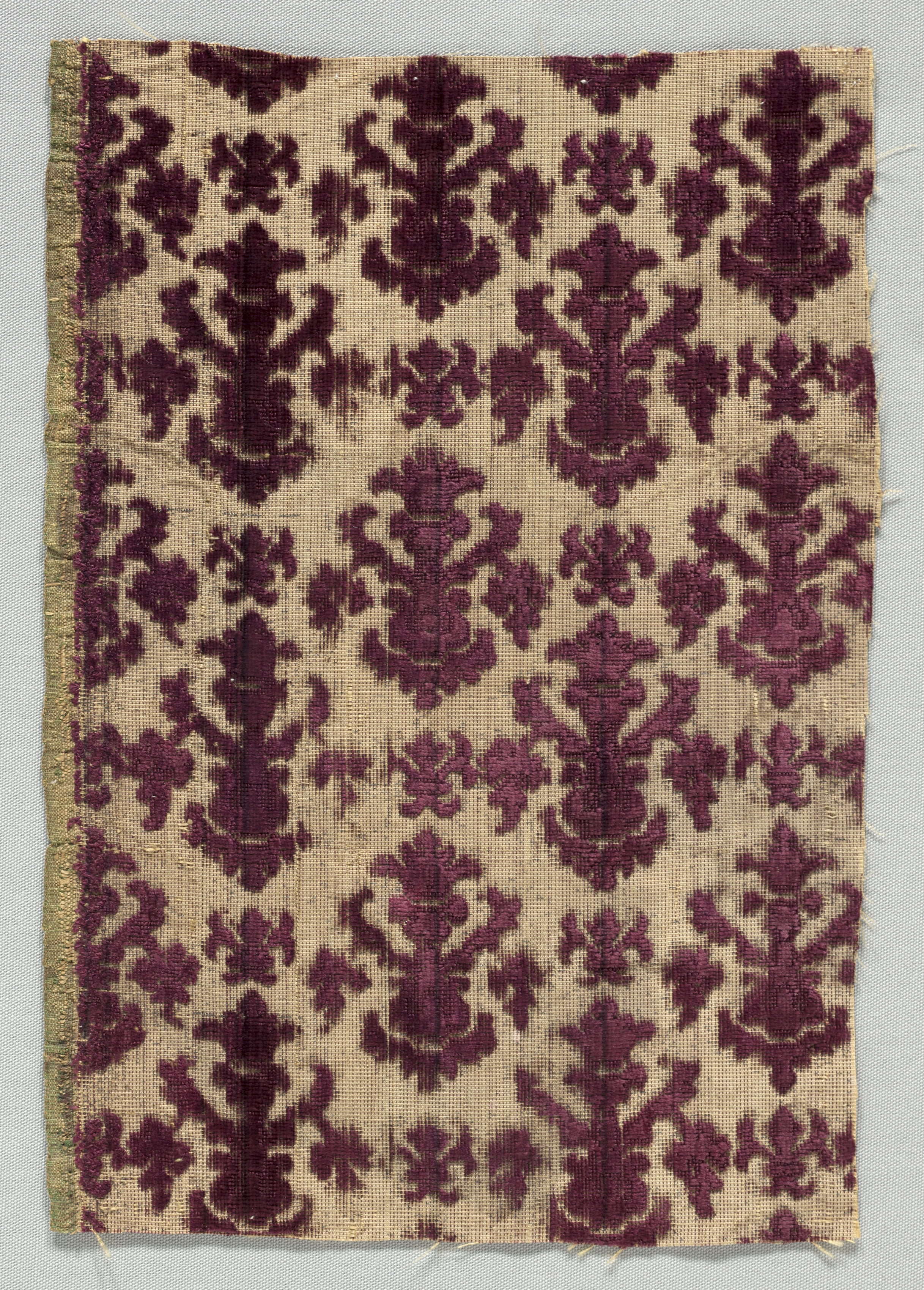
As Chief Fabric Deconstructionist for Zoey Fashion Lab, I present a comprehensive analysis of the 17th-century Italian velvet fragment—a textile of profound historical and material significance. This fragment, designated as a New DNA Strand within our avant-garde framework, offers a unique opportunity to unravel its structural, aesthetic, and symbolic layers. By deconstructing its origins, technical composition, and potential for reinterpretation, we aim to extract a genetic blueprint that informs our experimental, forward-thinking designs. This analysis bridges the gap between historical craftsmanship and contemporary innovation, positioning the velvet fragment as a living artifact rather than a static relic.
Historical Context: The Italian Velvet Legacy
The 17th century marked the zenith of Italian velvet production, particularly in cities like Venice, Genoa, and Florence. These textiles were synonymous with luxury, power, and artistry, often commissioned by nobility and the Church for ceremonial garments, upholstery, and religious vestments. Italian velvet of this era was characterized by its intricate patterns, rich dyes, and meticulous hand-weaving techniques. The fragment under analysis likely originates from a larger piece—possibly a cope, a mantle, or a panel—featuring motifs such as pomegranates, acanthus leaves, or floral arabesques, which symbolized fertility, eternity, and divine order. This historical context is crucial for understanding the velvet’s material DNA: its fibers, weave, and coloration encode the socio-economic and artistic values of a bygone era.
For Zoey Fashion Lab, this fragment is not merely a historical curiosity but a source of radical inspiration. The 17th-century Italian velvet embodies a tension between opulence and functionality, a duality that resonates with our avant-garde ethos. By deconstructing its historical narrative, we can challenge conventional notions of luxury and craft, transforming the velvet into a medium for subversive expression.
Technical Analysis: The Velvet’s Material DNA
Fiber Composition and Weave Structure
The velvet fragment is woven from silk pile on a silk ground, a classic combination that yields a lustrous, dense surface. The pile height, approximately 2-3 millimeters, suggests a cut velvet technique, where loops are sheared to create a soft, plush texture. The ground weave is a plain or twill structure, providing stability while allowing the pile to stand upright. Under magnification, the fibers exhibit a fine, irregular twist—indicative of hand-spun silk—and a slight variation in diameter, which contributes to the fabric’s natural sheen. This irregularity is a hallmark of pre-industrial production, offering a organic, non-uniform quality that contrasts with modern, machine-made velvets.
Dye and Color Analysis
The fragment’s primary hue is a deep, crimson red, achieved through kermes or cochineal dyes, both derived from insects. These dyes were prized for their intensity and colorfastness, and their use underscores the velvet’s high status. Secondary tones of gold and green, likely from weld and woad, appear in the pattern’s weft threads. The color distribution reveals a chiaroscuro effect—light and shadow play across the pile, creating a dynamic, almost kinetic visual experience. This effect is central to our deconstruction: the velvet’s color is not static but responsive to light, an attribute we can exploit in avant-garde designs through layered, translucent, or reflective interventions.
Condition and Degradation
The fragment shows signs of wear: pile crushing, fading along fold lines, and minor fraying at the edges. These imperfections are not flaws but narrative markers—evidence of the fabric’s journey through time. The crushed areas, where the pile has flattened, reveal the ground weave, creating a textural contrast that we interpret as a deconstructive opportunity. Similarly, the fading indicates exposure to light, suggesting a history of display or use. For Zoey Fashion Lab, these degradation patterns are design catalysts, inspiring techniques like selective pile removal, laser etching, or chemical distressing to mimic and amplify the fragment’s aged character.
Avant-Garde Reinterpretation: The Velvet as a New DNA Strand
Deconstructing the Weave: From Structure to Fragmentation
In our avant-garde framework, the velvet fragment is a genetic code to be decoded and recombined. The first step is structural deconstruction: we isolate the pile from the ground, treating each element as an independent material. The pile, with its soft, tactile quality, can be re-imagined as a surface for digital embroidery, laser-cut patterns, or 3D-printed overlays. The ground weave, a sturdy silk base, becomes a substrate for experimental finishes—such as metallic coatings, biodegradable resins, or reactive pigments that change color with temperature or humidity. This fragmentation mirrors the New DNA Strand concept, where historical elements are spliced with modern technologies to create hybrid forms.
Pattern and Motif: Subverting the Ornamental
The fragment’s floral and arabesque motifs are traditionally symbolic of order and beauty. Our deconstruction subverts this symbolism by disrupting the pattern’s continuity. For instance, we might digitally scan the motif, then distort, fragment, or multiply it through algorithms, creating a chaotic, glitch-like aesthetic. Alternatively, we can physically cut and reassemble the velvet pieces into asymmetrical, non-repeating configurations, challenging the Renaissance preference for symmetry. This approach aligns with avant-garde principles of disruption, decontextualization, and redefinition, transforming the velvet from a decorative object into a conceptual statement.
Texture and Tactility: The Velvet as a Sensory Interface
The velvet’s plush texture is a sensory trigger, inviting touch and evoking comfort. Our avant-garde reinterpretation exploits this by introducing contrasting textures: rough, metallic threads embedded in the pile; smooth, reflective panels alternating with matte areas; or porous, spongy sections created through chemical treatment. This textural juxtaposition creates a haptic dialogue between the historical and the futuristic. For example, a garment might feature a velvet bodice with laser-cut, geometric gaps that reveal a conductive fabric underneath, capable of interactive light or sound responses. The velvet fragment thus becomes a sensory interface, bridging the past and the present through tactile innovation.
Conclusion: The Velvet Fragment as a Living Archive
The 17th-century Italian velvet fragment, analyzed through Zoey Fashion Lab’s deconstructive lens, is far more than a historical textile. It is a living archive—a repository of techniques, materials, and meanings that can be activated and transformed. By treating it as a New DNA Strand, we unlock its potential for avant-garde expression: from structural fragmentation and pattern subversion to sensory re-engineering. This analysis demonstrates that deconstruction is not destruction but recontextualization, allowing us to honor the fragment’s heritage while propelling it into a future of radical design. As Chief Fabric Deconstructionist, I recommend that Zoey Fashion Lab proceed with a series of experiments—including pile removal, digital pattern manipulation, and hybrid material integration—to fully realize the velvet’s avant-garde potential. The result will be a collection that celebrates history through disruption, offering a new narrative for one of fashion’s most enduring materials.