The Cartography of Being: An Avant-Garde Deconstruction of the Embroidered Map Sampler for SS26
Preliminary Thesis: The Sampler as a Site of Radical Reconstruction
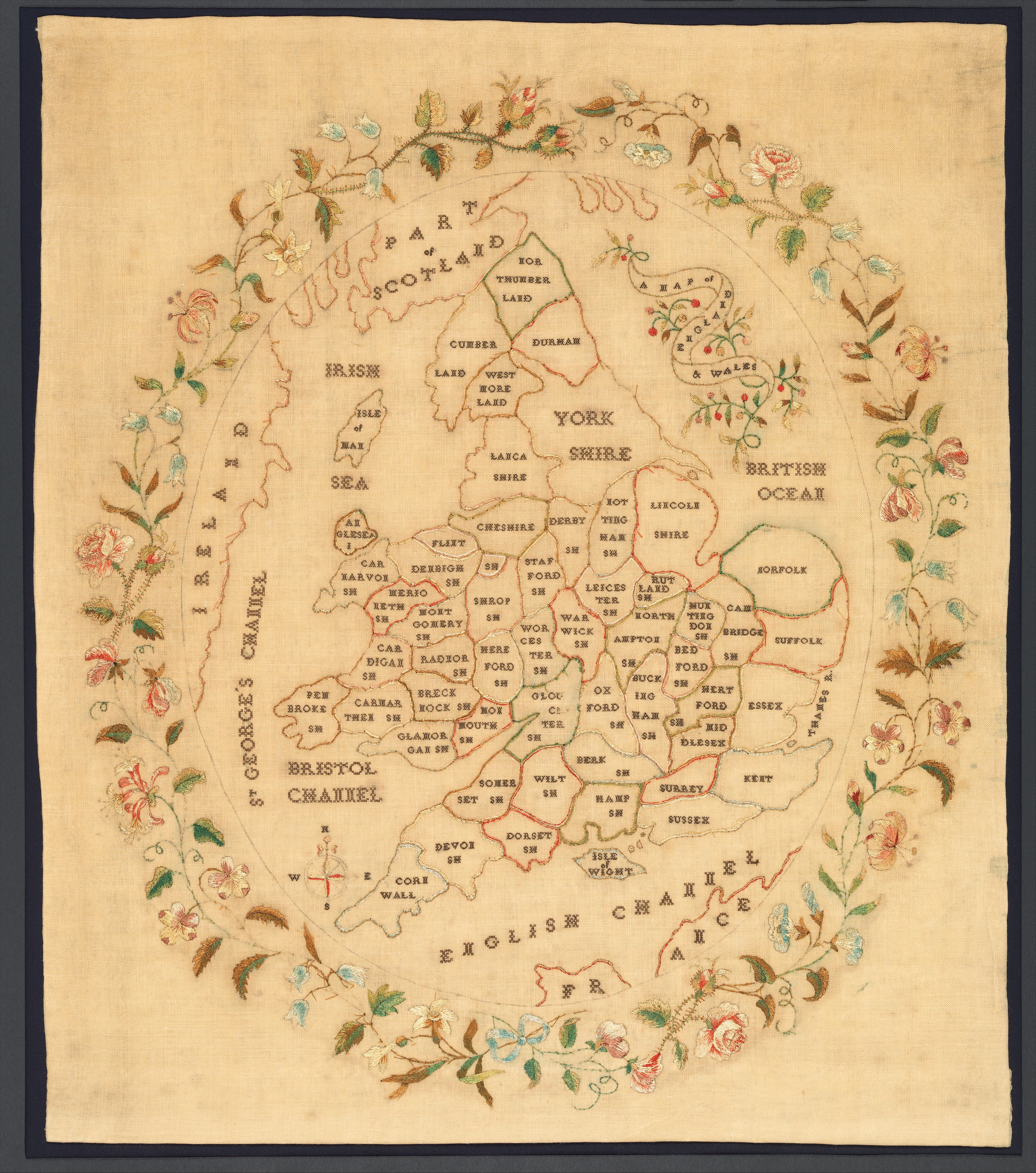
The embroidered map sampler, a relic of domestic pedagogy and geopolitical assertion, undergoes a profound ontological shift within the Zoey Fashion Laboratory for SS26. No longer a passive, decorative record of known territories, it is reimagined as a dynamic, structural interface—a living cartography of the body in motion. This analysis posits that the sampler, in its transition from a flat, handcrafted artifact to an avant-garde garment architecture, becomes a tool for challenging the very boundaries of form, identity, and spatial perception. The material dialogue between silk embroidery on wool is not merely decorative; it is a tensioned system of force, memory, and futuristic silhouette, engineered to disrupt the conventional garment’s relationship with the human form.
Material Alchemy: Silk and Wool as Contradictory Forces
The selection of silk embroidery on wool is a deliberate act of structural dissonance. Wool, with its inherent memory and thermal mass, serves as the foundational matrix—a landscape of potential. It is the ground, the terra firma, that absorbs and retains the narrative of the stitch. Yet, silk, with its tensile strength and luminous, almost liquid drape, operates as the insurgent element. The embroidery is not applied as a surface embellishment but as a series of tensioned vectors that actively distort the wool’s natural drape. This creates a futuristic silhouette characterized by controlled asymmetry and volumetric shifts. The silk threads, when pulled taut, create internal channels and rigid, sculptural folds, transforming the garment into a three-dimensional relief map. The sampler’s traditional grid is subverted into a dynamic, topological surface where the body is the topographic center.
Structural Innovation: The Garment as a Navigable Topography
The core of this avant-garde study lies in the redefinition of the garment’s structure. The map sampler’s traditional iconography—rivers, borders, compass roses—are abstracted into load-bearing seams and stress points. For SS26, the silhouette is not draped or tailored in the classical sense but is instead generated by the embroidery itself. The silk stitches become architectural ribs, creating a cage-like exoskeleton that hovers above the body. This exoskeleton, or “cartographic carapace,” redefines the shoulder line, the hip, and the spine. The futuristic silhouette emerges as a series of floating planes and cantilevered volumes. A jacket, for example, might have its shoulders defined not by padding but by a dense, embroidered map of a mountain range that arcs upward and outward, creating a sharp, aerodynamic line. The waist is cinched not by a belt but by a silk-embroidered river that spirals around the torso, compressing the wool and creating a corset-like structure without a single bone. The result is a silhouette that is both organic and engineered, referencing the natural world while projecting a distinctly post-human, cybernetic aesthetic.
Deconstructive Aesthetics: The Unraveling of the Grid
The deconstructive process is central to this collection. The traditional sampler’s orderly grid is deliberately fragmented and reassembled. The embroidery is not always complete; threads are left dangling, forming loose, kinetic lines that map the wearer’s movement. This deliberate incompleteness is a critique of the fixed, colonial gaze of traditional cartography. Instead of presenting a finished, authoritative map, the garment becomes a living, mutable document. A skirt might feature a half-embroidered ocean, the silk threads trailing off into unstitched wool, suggesting the limits of knowledge and the uncharted territories of the self. The wool base is often left raw at the edges, fraying into the space around the body, blurring the line between garment and environment. This deconstructive aesthetic is not chaos but a calculated strategy to reveal the garment’s construction as a process of becoming, not being.
Futuristic Silhouettes: The Body as a Geopolitical Site
The SS26 silhouette is defined by a radical rethinking of proportion and volume. The map sampler’s motifs are scaled up and down to create extreme contrasts. A single, oversized compass rose might be embroidered across the entire back of a coat, its needle pointing not to magnetic north but to the wearer’s spine, centering the body as the ultimate point of reference. The futuristic silhouette is further emphasized by the use of negative space. The wool is often cut away or left translucent where it is not embroidered, creating windows of skin that are themselves framed by silk borders. This creates a visual and tactile rhythm, a dialogue between the solid and the void, the mapped and the unmapped. The overall shape is elongated and streamlined, with a strong verticality. Shoulders are broad and sharp, waists are defined by internal tension, and hems are asymmetrical, often trailing behind the wearer like a cartographic train. This is not a silhouette that seeks to flatter the body in a classical sense; it seeks to augment it, to transform it into a living monument of exploration and self-definition.
Conclusion: The Sampler as a Manifesto for SS26
In conclusion, the embroidered map sampler, when subjected to the avant-garde methodologies of Zoey Fashion Laboratory, transcends its historical origins. It becomes a manifesto for SS26, a declaration that fashion is not merely about covering the body but about redefining its relationship to space, time, and identity. The tension between silk and wool, the deconstruction of the grid, and the generation of futuristic silhouettes through structural embroidery create a collection that is intellectually rigorous and viscerally compelling. This is not a nostalgic return to craft but a radical re-engineering of it, using the language of cartography to map a new, uncharted territory for the human form. The garment is no longer a static object; it is a navigational device, a site of constant discovery, and a testament to the power of the stitch to reshape the world. The sampler, once a lesson in obedience and order, is now a blueprint for liberation and structural innovation.