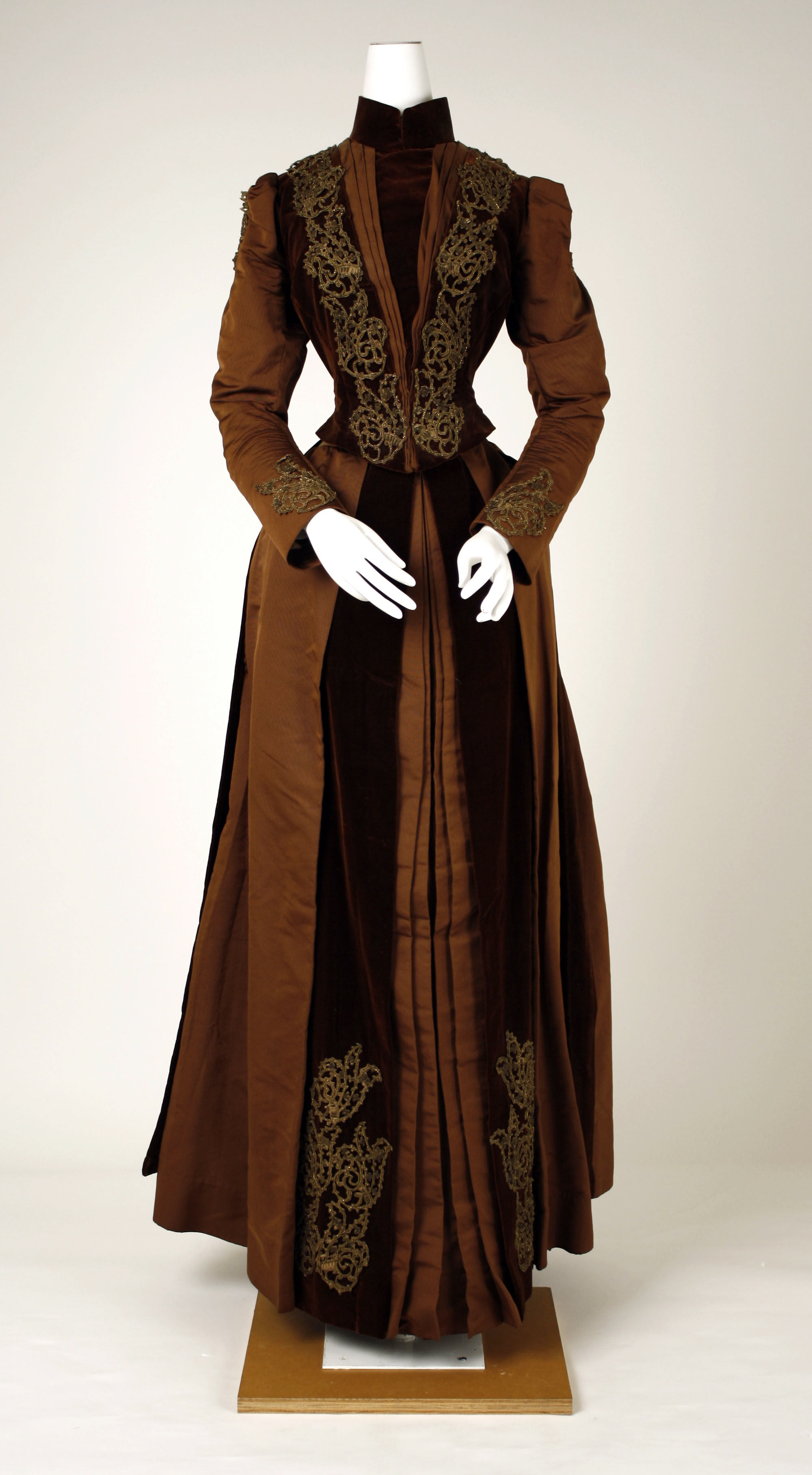
The Deconstruction of Fluidity: An Avant-Garde Analysis of an American Silk Dress for SS26
Introduction: The Paradox of Silk in the Avant-Garde Lexicon
Within the pantheon of high-concept fashion, silk occupies a contested space. Historically revered for its drape, luminosity, and tactile sensuality, it has often been relegated to the realms of romanticism and classical elegance. Yet, for the SS26 season, the Zoey Fashion Laboratory proposes a radical recontextualization: silk as a medium for structural rebellion. This analysis dissects an American-origin silk dress that defies its own material heritage. It is not a garment of soft surrender, but a manifesto of architectural tension—a study in how the most pliant of fibers can be coerced into futuristic silhouettes that challenge the very definition of a dress. The piece serves as a standalone thesis on the intersection of material science, deconstructivist philosophy, and speculative design.
The Material Paradox: Silk as a Structural Armature
The foundational paradox of this dress lies in its material selection. Silk, with its high tensile strength yet low shear resistance, is traditionally anathema to the rigid, geometric forms often associated with avant-garde futurism. However, the Laboratory’s approach for SS26 leverages advanced textile manipulation techniques—specifically, a proprietary method of thermal-set pleating and resin-infused seam construction—to transform the silk into a quasi-architectural substrate. The resulting fabric retains its characteristic lustrous sheen but acquires a new, almost ceramic rigidity at specific stress points.
This is not a simple application of stiffening agents. The innovation lies in the gradient of rigidity. The dress transitions from a fluid, almost liquid silk at the hemline to a sharply faceted, origami-like structure at the shoulder and bodice. This gradient creates a visual and tactile narrative of transformation: the dress appears to be crystallizing from a molten state into a solid, futuristic form. The American origin of the silk—sourced from a specialized mill in New York’s Garment District—ensures a high-tension weave that can withstand these structural interventions without compromising the fiber’s inherent luster.
Futuristic Silhouette: The “Aero-Dynamic Cocoon”
The silhouette of this dress is best described as an “Aero-Dynamic Cocoon.” It rejects both the natural hourglass and the minimalistic shift in favor of a volumetric, asymmetrical architecture that references both bio-mimicry and aerospace engineering. The bodice is a single, continuous piece of pleated silk that wraps the torso in a spiral, creating a helical seam that runs from the left shoulder to the right hip. This seam is not merely decorative; it is a functional load-bearing element, reinforced with a hidden, lightweight carbon-fiber frame that is invisible to the eye.
The skirt, or lower structure, erupts from this helix in a series of geometric, non-Euclidean folds. It does not fall; it projects. The silk is manipulated into sharp, polygonal facets that catch light at varying angles, creating a moiré effect that shifts with the wearer’s movement. This is not a dress that drapes; it is a dress that occupies space. The volume is concentrated at the back and left side, creating an intentional imbalance that forces the wearer into a dynamic, forward-leaning posture. This silhouette is a direct critique of static, front-facing fashion—it demands to be viewed in the round, as a kinetic sculpture.
Structural Innovation: The “Tensioned Void” and Negative Space
The most radical innovation of this dress is its use of negative space as a structural element. A large, ovular void is cut into the left side of the bodice, extending from the underarm to the waist. This is not a simple cutout; it is a tensioned void. The edges of the aperture are lined with a thin, flexible silicone rim that is sewn under tension to the silk. This forces the surrounding fabric to pull away from the body, creating a rigid, three-dimensional ring of air. The wearer’s skin is visible, but the void is not a window; it is a structural tunnel that redefines the relationship between garment and body.
Further structural innovation is evident in the “floating collar.” A high, mandarin-style collar appears to levitate approximately one centimeter from the neck. It is attached to the dress only at the back and two points on the front, supported by invisible, transparent polymer struts. This creates an optical illusion of a detached, hovering element. The collar is made from a single, continuous piece of silk that has been folded and heat-set into a rigid, toroidal shape. It does not touch the skin, creating a constant micro-ventilation that is both functional and symbolic of a future where clothing is not a second skin, but a separate, self-supporting environment.
Deconstructivist Aesthetics: The Unfinished as a Statement of Intent
The dress’s aesthetic is firmly rooted in deconstructivism. The seams are often exposed and left raw, with the silk’s frayed edges intentionally visible. However, this is not a gesture of carelessness. The fraying is controlled and directed; each thread is a deliberate line of tension. The hemline is left asymmetrically unfinished, with one side extending to the floor while the other is sharply cropped at the mid-thigh. This asymmetry creates a dynamic, almost violent visual rhythm, suggesting a garment that is perpetually in a state of becoming—never complete.
Color plays a crucial role in this deconstruction. The dress is a single, deep “lunar silver” hue, achieved through a specialized dye process that gives the silk a metallic, almost liquid-mercury finish. This monochromatic palette forces the viewer to focus exclusively on the silhouette and the structural plays of light and shadow. It strips away the distraction of pattern or color blocking, leaving only the pure architecture of the garment. The result is a piece that feels both ancient—like a ceremonial armor—and hyper-futuristic, as if retrieved from a post-human civilization.
Conclusion: A Manifesto for SS26
This American silk dress is not merely a garment; it is a thesis statement for Zoey Fashion Laboratory’s SS26 collection. It proves that silk, the quintessential material of the past, can be the primary vehicle for a futuristic, structural avant-garde. By manipulating its tensile properties, employing tensioned voids, and constructing a silhouette that rejects gravity and symmetry, the dress offers a new paradigm: clothing as an autonomous, self-supporting structure. It challenges the wearer to inhabit not a dress, but a piece of wearable architecture. For the avant-garde connoisseur, this piece represents the definitive convergence of material intelligence, deconstructivist philosophy, and speculative design—a true landmark in the evolution of American couture.