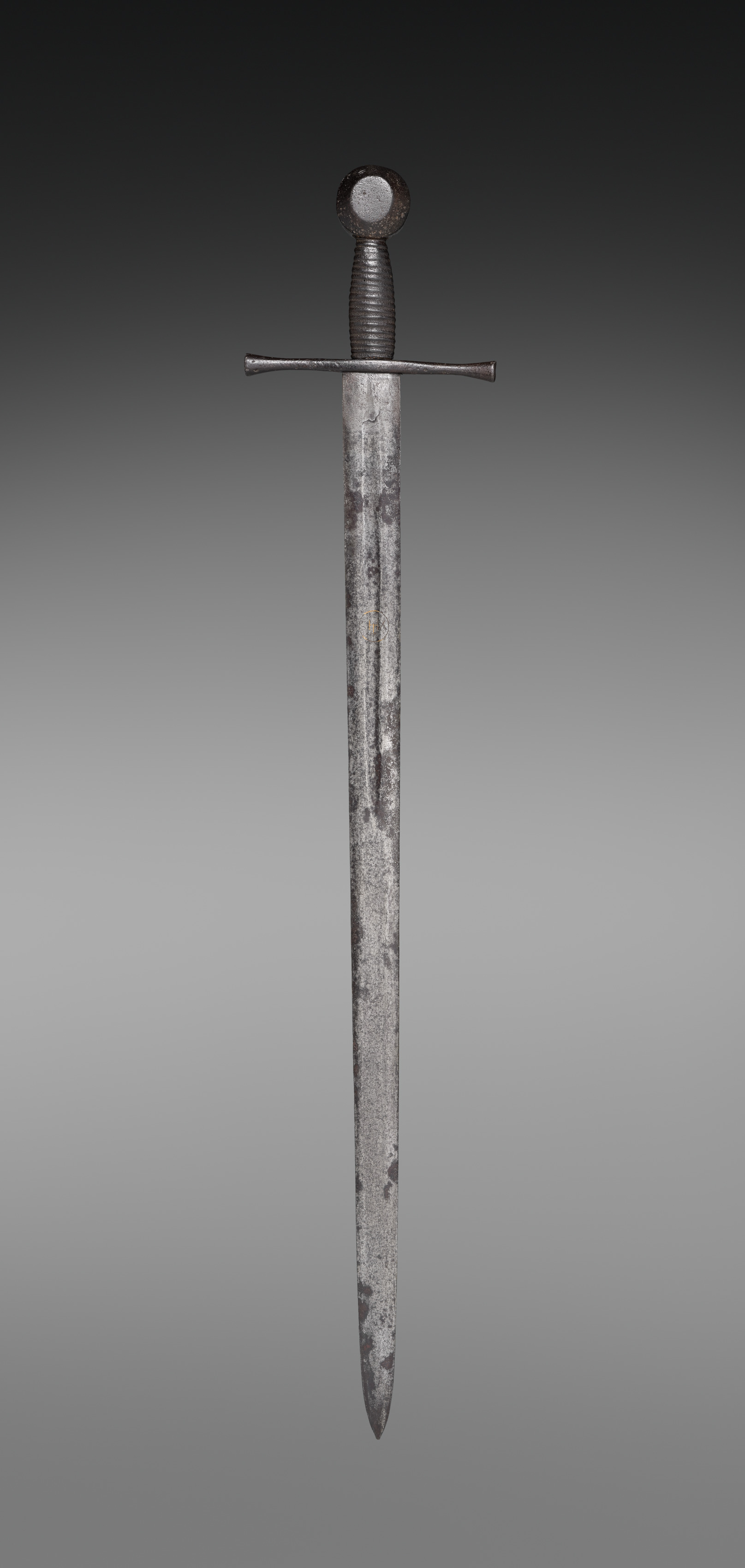
Deconstructing the Blade: A Fabric Deconstructionist's Analysis of the German Sword
As the Chief Fabric Deconstructionist for Zoey Fashion Lab, I am tasked with dissecting not merely garments, but the very essence of form, material, and narrative. Our latest subject—a sword of presumed German origin—presents a profound challenge. At first glance, it is a relic of martial history: cold, sharp, and functional. Yet, through the lens of our lab’s avant-garde methodology, this object is not a weapon but a new DNA strand—a genetic blueprint for a future where fashion is architecture, armor, and living sculpture. This analysis will deconstruct the sword’s material components—steel, wood, and leather—and re-synthesize them into a conceptual framework for a collection that redefines the boundaries between the human form and the object it wields.
Material Dissection: The Steel Core
The primary material, steel, is the sword’s structural spine. In traditional metallurgy, steel is a symbol of strength, rigidity, and permanence. For our purposes, we must deconstruct this association. The blade’s polished surface, when examined under the micro-lens of avant-garde fashion, becomes a reflective membrane. It does not merely cut; it mirrors the environment, absorbing and distorting light. This property is the foundation of our first design principle: Chromatographic Armor. We envision a fabric that mimics the blade’s reflective quality—not through metallic threads, but through a liquid-crystal polymer weave that shifts color and opacity based on the wearer’s movement and ambient light. The steel’s coldness becomes a thermal narrative; we can embed thermochromic dyes that react to body heat, creating a living pattern that “breathes” like a blade cooling after a strike. The sword’s edge, sharp and linear, inspires a geometric cut—a series of angular, asymmetrical drapes that create tension and release, echoing the blade’s dual nature as both a tool of precision and a symbol of chaos.
Organic Architecture: The Wood and Leather Grip
The grip, composed of wood and leather, offers a counterpoint to the steel’s industrial coldness. Wood, a natural polymer, introduces a biomorphic element. Its grain is a map of organic growth—a record of time, moisture, and environmental stress. In our deconstruction, this grain becomes a texture pattern for a new textile: a bio-engineered cellulose fiber that can be grown in controlled, irregular patterns, mimicking the wood’s unique striations. This material would be both structural and flexible, capable of being molded into three-dimensional forms that wrap around the body like a second skin. The leather, traditionally a symbol of durability and tactile warmth, is reimagined as a living membrane. We propose a lab-grown leather infused with micro-encapsulated oils that release scent upon friction—a olfactory narrative of movement and touch. The grip’s ergonomic design—curved to fit the hand—inspires a modular fastening system: a series of interlocking, organic-shaped panels that can be reconfigured by the wearer, allowing the garment to adapt to different postures and environments, much like a sword is held in different grips for different strikes.
The New DNA Strand: Synthesis and Mutation
The sword as a new DNA strand is not a metaphor but a literal design framework. Just as DNA carries genetic information that can be edited, spliced, and re-expressed, the sword’s components are genetic sequences that we can mutate. The steel’s reflective quality is a gene for optical transformation; the wood’s grain is a gene for textural memory; the leather’s tactile nature is a gene for sensory interaction. Our collection, tentatively titled Blade Genesis, will splice these genes with unexpected partners: bioluminescent bacteria for self-illuminating seams, shape-memory alloys for garments that shift silhouette with body heat, and piezoelectric fibers that generate energy from movement, storing it in battery-like pockets woven into the fabric. The sword’s pommel, often a counterweight, becomes a kinetic hub—a central node where these technologies converge, perhaps a small, wearable device that controls the garment’s color, texture, or even its fragrance.
Avant-Garde Expression: From Object to Experience
In the avant-garde tradition, fashion is not about covering the body but about redefining its relationship to space and time. The sword, in its original context, is an extension of the arm—a tool that amplifies human capability. Our collection extends this principle: garments become exoskeletal extensions that enhance perception, communication, and even vulnerability. For example, a jacket inspired by the blade’s edge might have razor-sharp lapels that are not dangerous but acoustically sharp—they amplify sound, allowing the wearer to hear whispers from across a room. The leather grip’s tactile nature inspires a glove that translates touch into visual signals, with LED-embedded fingertips that glow brighter with increased pressure. The wood’s grain becomes a biometric interface: a dress that changes pattern based on the wearer’s heartbeat, creating a living, breathing second skin that reveals emotional states. This is not fashion as adornment; it is fashion as communication device, armor, and living organism.
Conclusion: The Blade as a Mirror
Ultimately, this deconstruction reveals that the sword is not a weapon but a mirror of human ambition. It reflects our desire to extend our physical limits, to impose order on chaos, and to create beauty from function. For Zoey Fashion Lab, the German sword is a primordial strand—a starting point for a new genetic code in fashion. By dissecting its materials and re-synthesizing them with biotech, digital interfaces, and avant-garde design, we create not just a collection but a new taxonomy of wearables. The steel, wood, and leather are no longer historical artifacts; they are prototypes for a future where every garment is a living, evolving entity, a blade that cuts through the mundane to reveal the extraordinary. This analysis is not an end but a beginning—a strand of DNA that will be spliced, mutated, and grown into a body of work that challenges the very definition of fashion itself.