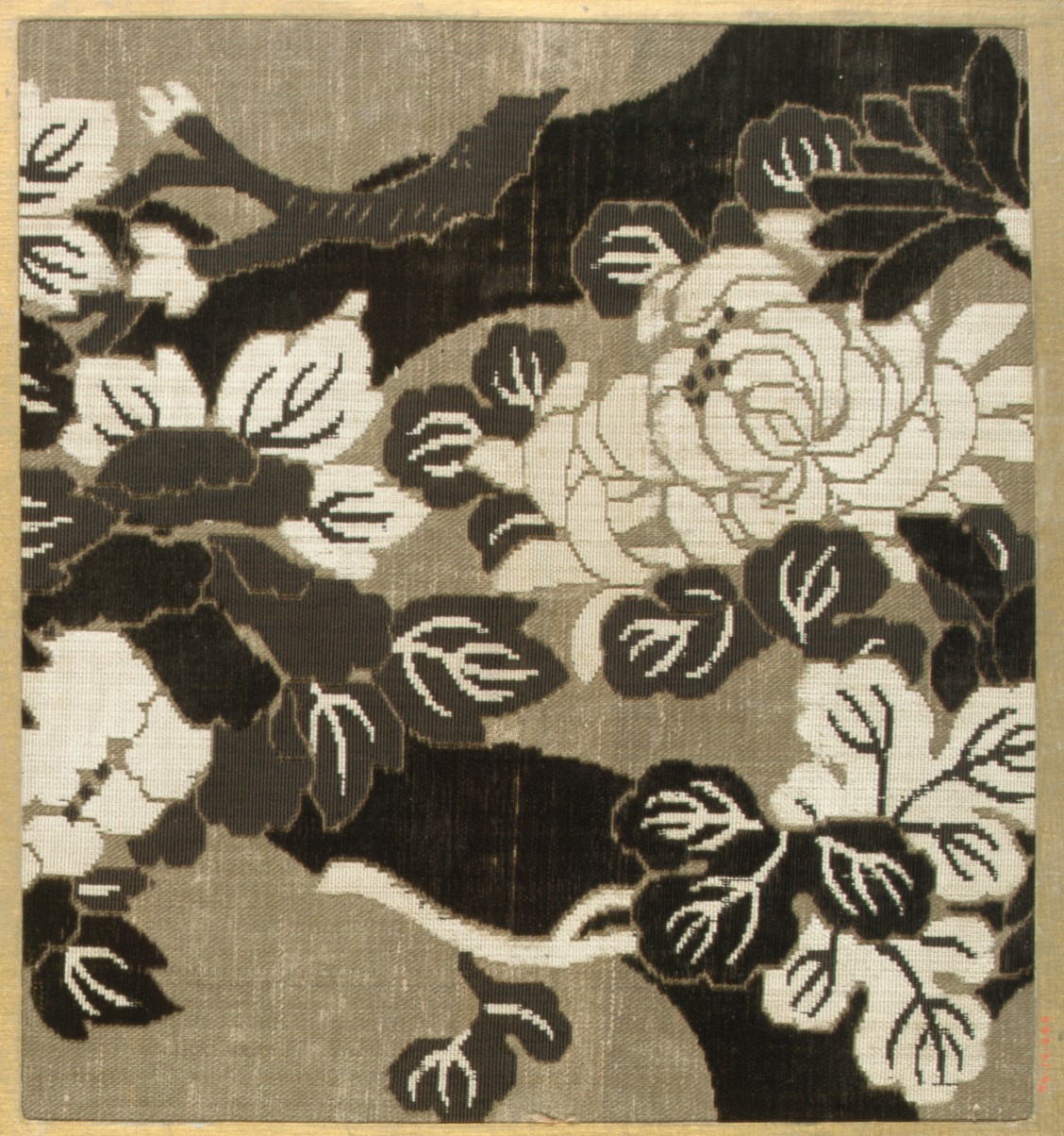
Deconstructing the Ephemeral: A Structuralist Reading of Japanese Silk in Avant-Garde Couture for SS26
The intersection of Japanese material heritage and avant-garde structuralism has long been a crucible for fashion’s most radical propositions. For Zoey Fashion Laboratory’s SS26 collection, a singular piece—a deconstructed silk body-form—emerges as a definitive manifesto. This is not merely a garment; it is a philosophical object, a study in controlled entropy where the fluidity of silk is subjugated to, and then liberated by, a futuristic architectural framework. The analysis herein dissects the piece’s material paradox, its volumetric innovations, and its conceptual resonance within the vanguard of contemporary couture.
Material Paradox: Silk as Rigid Ephemera
Silk, historically synonymous with opulence, drape, and sensuous surrender, is radically recontextualized. In this SS26 piece, the fabric is not allowed to fall; it is forced to stand. Through a proprietary technique of thermo-reactive resin bonding and layered, laser-cut structural seams, the silk is transformed into a material that retains its tactile softness yet achieves a startling, almost architectural rigidity. The grain of the silk—its natural luster and subtle unevenness—becomes a textural narrative against the precision of the cuts. This is a deliberate subversion of the fabric’s conventional identity. The garment does not cling; it encloses. It does not flow; it defines space.
The application of a matte, micro-perforated finish on select panels introduces a futuristic, almost digital texture. This is not a nostalgic nod to traditional Japanese kimono silks, but a brutalist reinterpretation. The silk here is a skin—a second, engineered epidermis that breathes yet remains impermeable to the whims of gravity. The choice of a single, undyed ecru base further emphasizes the material’s intrinsic properties, stripping away chromatic distraction to focus solely on the interplay of light and shadow across its newly rigid planes. This is a study in negative space, where the absence of color amplifies the presence of structure.
Futuristic Silhouette: The Bio-Architectural Form
The silhouette is the piece’s most radical departure. Eschewing the human body’s natural topography, the form is a non-Euclidean exoskeleton. The shoulders are exaggerated into sharp, asymmetrical cantilevers, reminiscent of origami folded into a state of permanent tension. The torso is not a cylinder but a series of interlocking, faceted planes that create a dynamic, shifting volume. This is achieved through a complex system of hidden, articulated seams and internal, lightweight carbon-fiber stays that are completely encased within the silk layers. The result is a silhouette that appears both organic and machine-made—a hybrid of flora and robotics.
The most striking element is the deconstructed sleeve. It is not attached at the shoulder in a conventional manner. Instead, a single, elongated panel of silk, stiffened into a spiral, originates from the back of the shoulder blade, wrapping around the arm like a DNA helix. This creates a kinetic sculpture that moves with the wearer yet maintains its structural integrity. The hemline is equally radical: a series of irregular, jagged points that terminate in razor-thin, resin-hardened edges. These edges do not touch the floor; they hover, creating an illusion of levitation. The entire piece is designed to be worn in a state of controlled suspension, challenging the very concept of a garment’s relationship to ground and gravity.
Structural Innovation: The Logic of Controlled Collapse
The core innovation lies in the piece’s modular structural system. The garment is not sewn in a traditional sense. It is assembled via a series of magnetic, interlocking nodes and tensioned silk cables. This allows for the silhouette to be reconfigured. The wearer, or a stylist, can adjust the tension of the cables to alter the angle of the cantilevered shoulder or the curvature of the spiral sleeve. This introduces a dynamic, interactive dimension to couture, where the garment is not a static object but a responsive system. The logic is one of controlled collapse—the piece is designed to be in a state of perpetual, elegant disassembly, held together only by the precise application of force.
Furthermore, the application of laser-cut, organic latticework on the back panel is a marvel of engineering. The silk is perforated with a pattern derived from a mathematical fractal, creating a breathable, transparent zone that contrasts with the solid, opaque front. This lattice is not merely decorative; it serves as a structural stress-relief system, allowing the fabric to flex and breathe without compromising its rigid form. The edges of these cuts are heat-sealed to prevent fraying, a technique borrowed from aerospace textile engineering. This is couture as applied physics, where every cut and seam is a deliberate calculation of tension, weight, and volume.
Conceptual Resonance: The Avant-Garde as a Statement of Intent
Within the context of SS26, this piece is a powerful counter-narrative to the prevailing trends of digital saturation and fast-fashion ephemerality. It is a manifesto of slowness and precision. The garment demands a new kind of engagement—one of contemplation, not consumption. It speaks to a future where fashion is not about covering the body but about redefining the space the body occupies. The Japanese origin is not merely a geographic footnote; it is a philosophical anchor. The piece channels the wabi-sabi appreciation for impermanence and imperfection, but through a futuristic, industrial lens. The controlled chaos of the deconstructed sleeve, the asymmetrical cantilever—these are not errors; they are deliberate celebrations of asymmetry as a form of higher order.
In conclusion, this singular piece of Japanese silk, transformed by Zoey Fashion Laboratory, is a definitive avant-garde statement for SS26. It is a structural poem that challenges the very definition of a garment. It rejects the passive drape of tradition in favor of an active, architectural presence. It is not a dress; it is a habitable sculpture for the future human. For the connoisseur of avant-garde couture, this piece is not an acquisition; it is a provocation to rethink the boundaries of fabric, form, and the future of fashion itself. It is a testament to the power of material innovation and structural logic to create a truly new visual language.