Deconstructing the Sovereign: The Five Pound Piece as Avant-Garde Textile Narrative
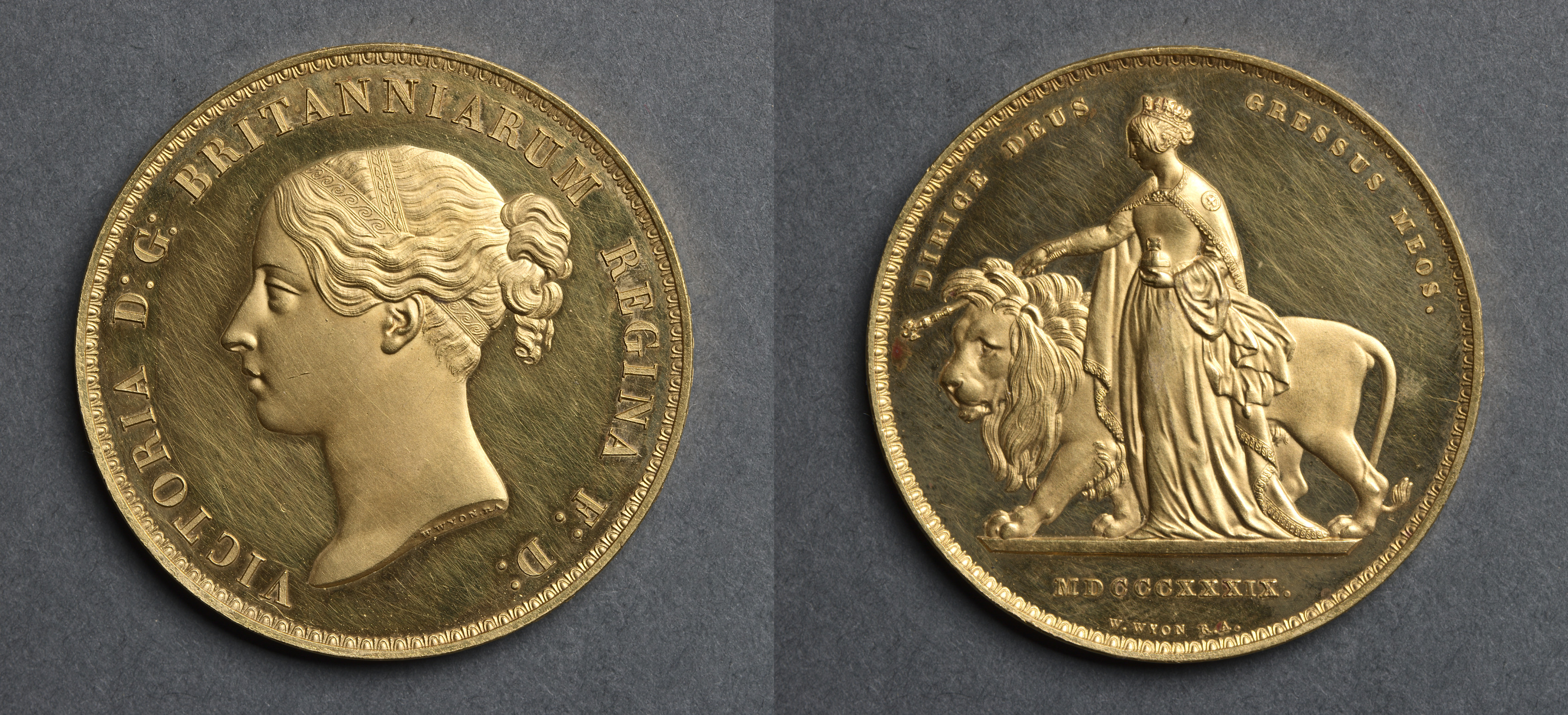
In the lexicon of Zoey Fashion Lab, the deconstruction of historical artifacts is not merely an act of analysis but a creative re-weaving of time, material, and meaning. The subject before us—a Five Pound Piece from the reign of Queen Victoria (1837-1901), struck in gold—presents a particularly potent paradox. On its obverse, we encounter the sovereign’s profile, a symbol of imperial stability and monetary value. On its reverse, the allegorical figure of Una (from Spenser’s *The Faerie Queene*) leads a lion, representing Truth and the British Empire’s moralizing mission. Yet, the provided reference, Archive Resonance: 一面是光洁银镜上以黄金镶嵌的纷繁棕叶纹,另一面是冰冷石棺板上以浮雕诉说的生命叙事——《Mirror with Split-Lea..., reframes this coin not as currency but as a binary textile construct: one side a reflective, gilded surface of ornate palm leaves; the other a cold, stone-like slab bearing a narrative in bas-relief. This analysis will deconstruct the Five Pound Piece through the lens of avant-garde fashion, interpreting its metallic structure, dualistic surfaces, and embedded historical narrative as raw materials for a radical garment concept.
Obverse: The Gilded Mirror and the Ornamented Surface
The obverse of the coin, traditionally the side bearing the monarch’s portrait, is here reimagined through the reference’s first half: “光洁银镜上以黄金镶嵌的纷繁棕叶纹” (a smooth silver mirror inlaid with intricate gold palm leaf patterns). This is not a static image of Victoria but a deconstructed surface of reflection and excess. The “smooth silver mirror” suggests a polished, reflective plane—a material akin to liquid metal or high-gloss satin. In an avant-garde context, this becomes a chimeric textile: a base of silver lamé or mirrored PVC that catches and distorts the viewer’s own image, questioning the relationship between observer and observed, wearer and society. The “intricate gold palm leaf patterns” inlaid upon this mirror are not mere decoration; they are structural appliqués that disrupt the reflective surface. These gold elements—perhaps laser-cut metallic leather or gilded chainmail—create a tactile, three-dimensional topography. The palm leaf, a symbol of victory and peace, is here rendered as a fractured ornament, evoking the Victorian obsession with naturalistic detail but subverting it through material excess. This side of the garment would be a hard, armored carapace, a shield of opulence that simultaneously hides and reveals. The wearer becomes a living coin, their identity flattened into a reflective surface, yet fragmented by the gold inlays that demand attention. This is the public face of the garment, the side presented to the world—a declaration of wealth, power, and impenetrable surface.
Reverse: The Stone Slab and the Narrative in Relief
Flipping the coin reveals its opposite: “冰冷石棺板上以浮雕诉说的生命叙事” (a life narrative told in relief on a cold stone coffin lid). This is a radical departure from the obverse’s glittering surface. The “cold stone coffin lid” evokes death, memory, and permanence. The material shifts from reflective metal to a matte, heavy, and somber substance—perhaps raw wool felt, concrete-textured jacquard, or even a rigid, resin-cast panel. This is the interior or hidden side of the garment, the part that touches the body or is revealed only in movement. The “life narrative told in relief” refers to the allegorical scene of Una and the lion. In fashion terms, this becomes a narrative bas-relief applied to the garment’s surface. Techniques might include embossed leather, raised embroidery with metallic threads, or 3D-printed polymer elements that mimic the coin’s sculpted imagery. The story of Una—a lone woman leading a lion—is a potent allegory for Victorian femininity: chaste, virtuous, yet commanding. Deconstructed, this narrative is no longer a celebration of empire but a haunting, melancholic tableau. The lion’s mane might be rendered as frayed, unspun wool; Una’s gown as tattered silk organza. The relief is not smooth but fragmented and eroded, as if the stone coffin lid has been weathered by time. This side of the garment speaks to the private, historical, and mortal aspects of identity. It is the weight of history pressing against the wearer’s back, a reminder that beneath the gilded surface lies the cold truth of mortality and narrative.
Dualistic Construction: The Garment as Coin
The avant-garde garment derived from this coin must embody its binary nature. It is not a simple reversible jacket but a dialectical object that forces the wearer to inhabit a paradox. The obverse side, the “mirror,” is the exterior shell—a structured, sculptural piece reminiscent of a metal corset or armored bodice. Its gold palm leaves are not flat but articulated, allowing for movement while maintaining a rigid silhouette. The reverse side, the “stone slab,” is the interior lining or underlayer—a heavy, draped fabric that weights the garment downwards, creating a sense of gravitas. The transition between the two is not seamless but abrupt, perhaps marked by a raw, unfinished edge where the silver mirror meets the stone felt, or by a series of functional clasps that mimic the coin’s edge. The garment’s silhouette would be asymmetrical and deconstructed: one shoulder might be sharp and metallic, the other soft and draped. The hemline could be jagged, suggesting the coin’s milled edge. Pockets or seams might be placed at odd angles, disrupting the body’s natural lines. This is not a garment for comfort but for conceptual confrontation. It forces the viewer to consider the duality of value—monetary versus historical, public versus private, life versus death.
Materiality and Technique: From Coin to Couture
Translating the coin’s materiality requires experimental textile techniques. The “gold inlaid on a silver mirror” can be realized through laser-cut gold-plated brass appliqués on a base of silver micro-pleated foil. The “stone coffin lid” demands a heavy, textural fabric like double-faced wool crepe treated with a resin coating to achieve a stone-like finish. The narrative relief is the most complex element: it could be hand-embroidered using gold and silver threads in a raised, stumpwork technique, or cast from a 3D-printed mold using a flexible, stone-colored silicone. The contrast between the two sides is tactile and visual: one side is cold, smooth, and reflective; the other is matte, rough, and weighty. The garment’s construction would prioritize deconstruction and reveal. Seams might be left exposed, showing the transition between the two materials. The lining could be partially detached, allowing the “stone” side to peek out from behind the “mirror.” This is a garment that invites touch and examination, revealing its dual nature only upon close inspection.
Cultural and Historical Resonance
This deconstruction is not merely formal but deeply critical. The Five Pound Piece is a relic of Victorian imperialism, a symbol of Britain’s global dominance and the commodification of the monarch’s image. By reimagining it as an avant-garde garment, Zoey Fashion Lab subverts its original function. The coin’s value as currency is replaced by its value as narrative and material. The “mirror” side critiques the Victorian obsession with surface and spectacle; the “stone” side mourns the lives and histories buried beneath that spectacle. The garment becomes a wearable archive, a protest against forgetting. It asks the wearer: What do you choose to reflect, and what do you choose to carry as weight? In the context of contemporary fashion, this piece is a challenge to fast fashion and disposable luxury. It demands that we consider the embodied history of every material, every stitch. The avant-garde is not about novelty for its own sake but about revelation through distortion.
Conclusion: The Garment as Artifact and Prophecy
The Five Pound Piece, deconstructed through the lens of Archive Resonance, yields a garment that is at once a mirror and a tomb. It is a metal carapace that reflects the present while bearing the relief of the past. For Zoey Fashion Lab, this analysis is a blueprint for a radical wearable object—one that forces the wearer and viewer to confront the duality of value, the weight of history, and the fragile boundary between surface and depth. This is not a costume but a critical statement, a garment that speaks in the language of gold and stone, of reflection and relief. It is the ultimate deconstruction of a sovereign’s currency, re-forged into a narrative of mortality, memory, and the relentless avant-garde pursuit of meaning through material.