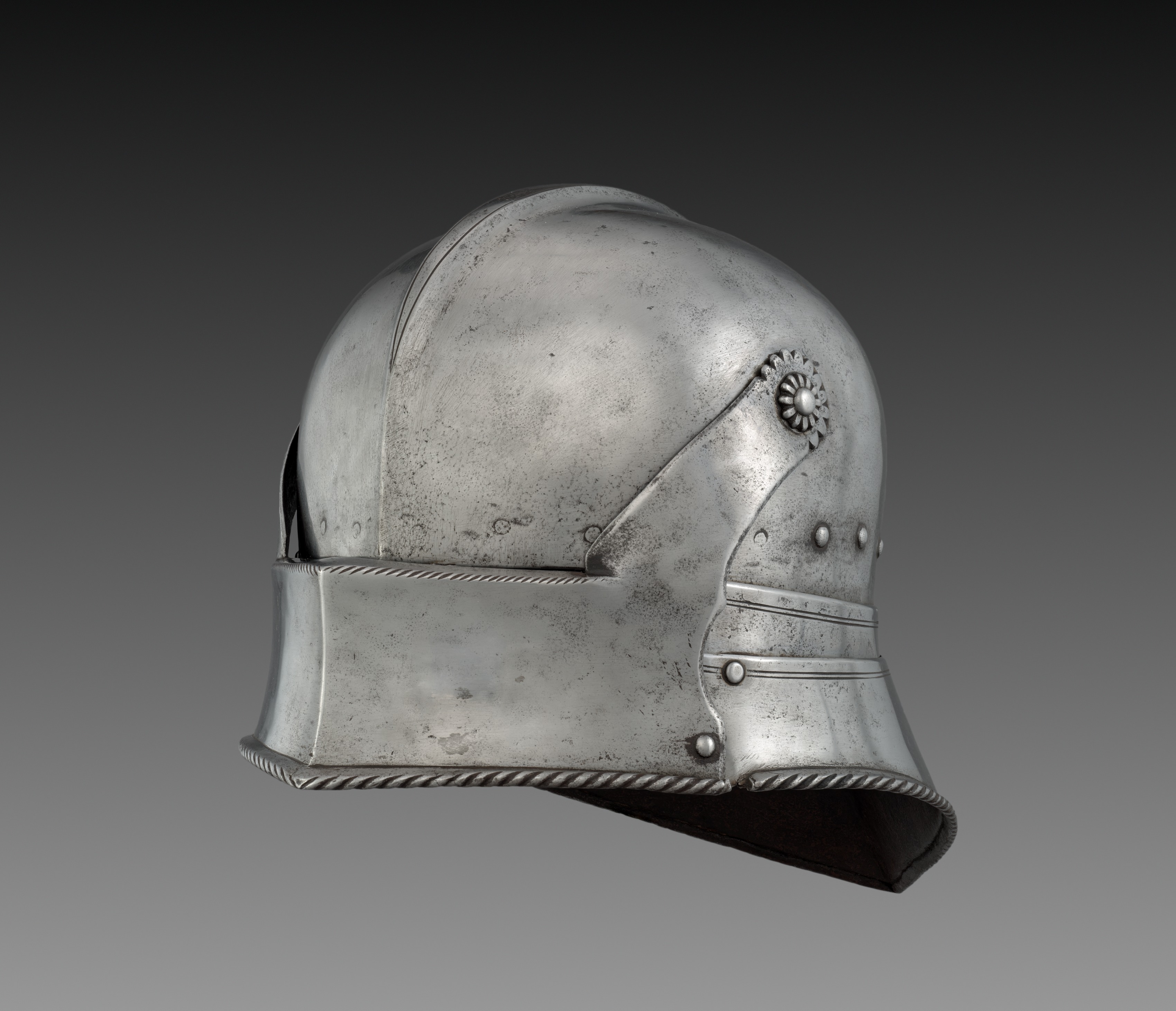
Deconstructing the Visored Sallet: A DNA Analysis for Zoey Fashion Lab
As the Chief Fabric Deconstructionist for Zoey Fashion Lab, my role is to dissect historical artifacts not merely as relics, but as living blueprints for avant-garde design. The subject of this analysis—the Visored Sallet, originating from 15th-century Germany and constructed from forged steel—presents a unique challenge. It is not a textile, yet its structural logic, surface treatment, and ergonomic principles form a New DNA Strand for our future collections. This document will deconstruct the Sallet’s physical and conceptual architecture, translating its medieval military engineering into a lexicon of modern, avant-garde fashion.
1. The Structural Lexicon: From Armor to Architecture
The Visored Sallet is a masterpiece of functional geometry. Its primary components—the skull (dome), the tail (extending down the back of the neck), and the visor (pivoting face protection)—create a silhouette that is both protective and predatory. For Zoey Fashion Lab, this translates into a new structural vocabulary for outerwear and headwear.
The Skull (Dome): The seamless, hammered curvature of the steel skull is a lesson in monocoque construction. In our designs, this can be replicated through molded leather or thermoplastic polyurethane (TPU) panels that are heat-set into a single, unbroken curve. The key is the absence of seams, creating a smooth, almost organic form that feels both futuristic and ancient. This technique can be applied to shoulder armor, sculptural bodices, or even structured handbags, where the curve of the material defines the entire shape.
The Tail: The elongated, flared tail of the Sallet is a dynamic element that balances the front-heavy visor. In fashion, this translates to asymmetrical draping or extended back panels on jackets and coats. Imagine a blazer where the back panel extends into a sharp, flared tail, creating a dramatic silhouette that shifts with movement. The material could be a stiffened wool or a layered, laser-cut leather that mimics the overlapping plates of a gorget (neck armor).
The Visor: The pivoting visor is the most transformative element. It is a functional, interactive component that alters the wearer’s identity. For Zoey, this inspires a line of modular face coverings or convertible collars. A visor could be attached to a hood or a high-neck top, allowing the wearer to “close” or “open” their face, much like a medieval knight. The mechanism—a simple rivet or hinge—can be exposed as a design feature, celebrating the engineering rather than hiding it. This is pure avant-garde: functionality as ornament.
2. The Surface Narrative: Patina, Texture, and the Unfinished
Steel, in its forged state, is not a static material. The Visored Sallet’s surface tells a story of heat, hammer, and wear. Its patina—the subtle oxidation, the scratches from battle, the polished highlights from handling—is a narrative of time and use. For Zoey Fashion Lab, this is a critical lesson in surface design.
Forged vs. Polished: The Sallet often combines areas of high polish (the visor’s sight slit) with rough, hammered textures (the skull). This contrast is a powerful stylistic tool. We can replicate this through contrasting fabric treatments: a smooth, liquid-like silk for the “polished” areas, juxtaposed with a heavily textured, crushed velvet or a hand-pleated organza for the “hammered” zones. The key is to create a tactile hierarchy that guides the eye and the hand.
Patina as Print: The irregular, organic patterns of rust and wear on historical armor are a natural print. We can develop a custom digital print or embroidery technique that mimics this patina. Imagine a jacquard fabric woven with metallic threads that oxidize over time, or a print that uses subtle gradations of grey, brown, and ochre to simulate aged steel. This is not about replicating rust, but about capturing the beauty of decay and transformation—a core avant-garde concept.
Raw Edges: The cut edges of the Sallet’s steel plates are often left raw, a testament to the material’s strength. In fabric, this translates to unfinished hems, laser-cut frayed edges, or bonded seams that are left exposed. This technique challenges the traditional notion of “finishing” a garment, celebrating the raw, structural integrity of the material. A coat could have a hem that is simply cut and sealed, with the internal structure visible, much like the exposed rivets on the Sallet.
3. The Ergonomic Paradox: Rigidity and Mobility
The Visored Sallet is a paradox: it is a rigid, unyielding shell designed to protect a highly mobile, vulnerable body. This tension between structure and movement is the heart of avant-garde fashion. The Sallet’s design achieves mobility through strategic articulation—the visor pivots, the tail flares to allow head rotation, and the skull is shaped to fit the crown without impeding vision.
Articulated Panels: For Zoey, this inspires segmented construction in garments. A skirt, for example, could be constructed from overlapping, rigid panels (made of leather, resin, or reinforced fabric) that are connected by flexible joints. This allows the garment to move with the body while maintaining a sculptural, armor-like silhouette. The joints themselves—whether hinges, grommets, or elastic webbing—become design elements.
Weight and Balance: The Sallet’s weight is carefully distributed, with the heaviest part (the skull) sitting directly on the head. In fashion, this principle translates to strategic weighting. A dramatic collar or shoulder piece can be balanced by a heavier hem or a trailing cape. The goal is to create a garment that feels grounded and substantial yet does not restrict movement. This can be achieved through the use of weighted hems, internal boning, or layered fabrics that create a sense of gravitational pull.
The Second Skin: Underneath the steel, the knight wore a padded arming cap or maille. This inner layer is the soft, organic counterpart to the hard shell. For Zoey, this suggests a layered system: a base garment of soft, stretchy, or draped fabric (like a fine knit or liquid jersey) is worn under a rigid, sculptural outer piece. The contrast between the two—the fluid and the fixed—creates a dynamic, living silhouette that evolves with the wearer’s movement.
4. The Avant-Garde Translation: The New DNA Strand
The Visored Sallet is not a costume piece; it is a system of design principles. The New DNA Strand we extract from it is a set of directives for Zoey Fashion Lab:
- Form Follows Function, But Function is Ornament: Every rivet, hinge, and plate should be both structural and decorative. Expose the mechanics.
- Embrace the Unfinished: Raw edges, patina, and wear are not flaws; they are narratives. Let the material tell its own story.
- Rigidity and Fluidity as Partners: Design for the body in motion, using rigid elements that articulate and soft elements that ground the structure.
- Silhouette as Identity: The Sallet transforms the wearer into a warrior. Our garments should transform the wearer into a modern icon—a figure of strength, mystery, and intentionality.
In conclusion, the Visored Sallet is not a historical artifact to be copied, but a living code to be decoded and re-encoded into fabric, form, and function. For Zoey Fashion Lab, this analysis provides a roadmap for creating pieces that are not merely clothes, but wearable architecture—a fusion of medieval engineering and avant-garde vision. The steel is cold, but the DNA is alive. Let us forge it into the future.