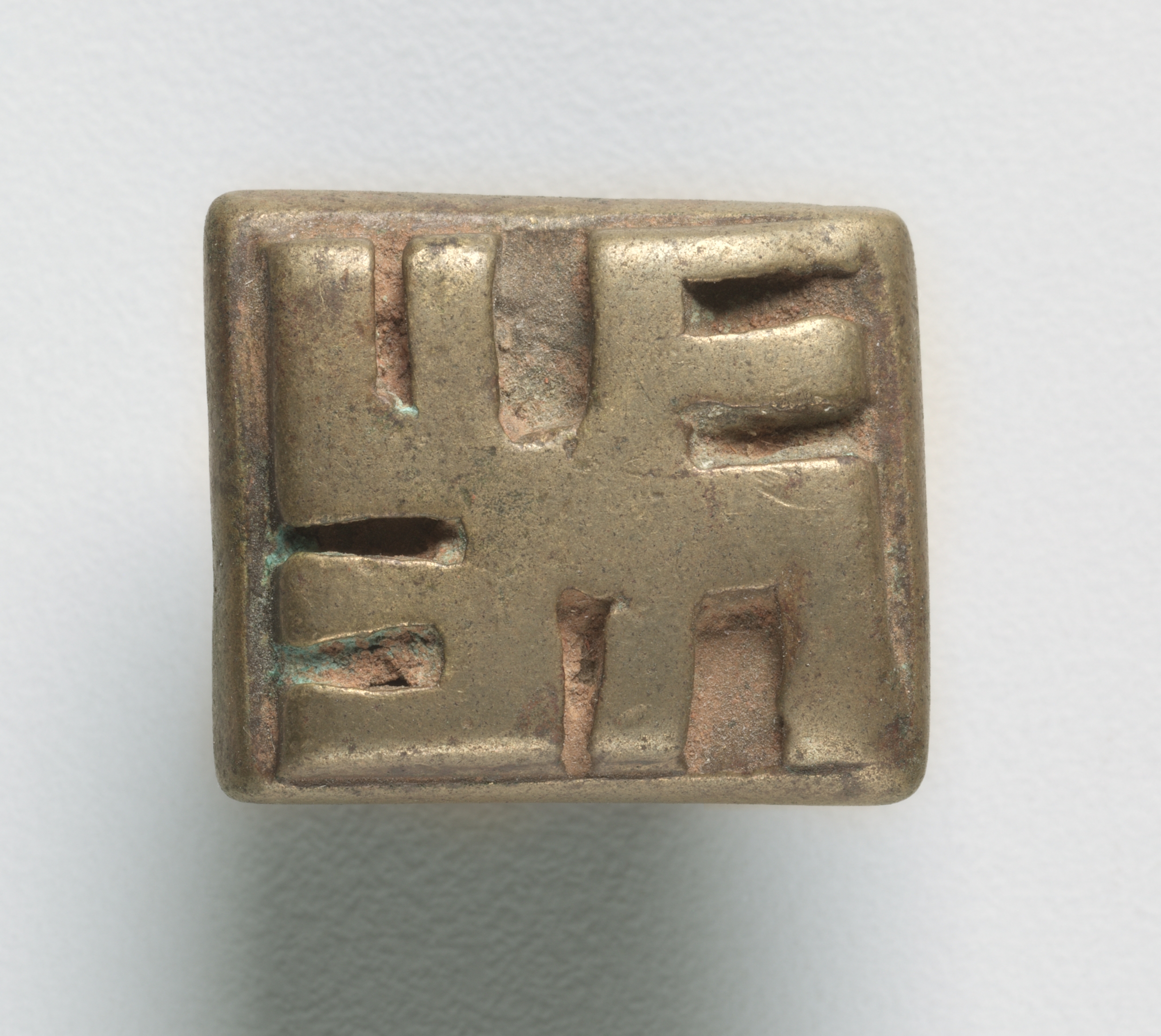
Deconstructing the Geometric Gold Weight: An Avant-Garde Analysis for Zoey Fashion Lab
At Zoey Fashion Lab, our mission is to excavate the latent narratives embedded within historical artifacts, transforming them into avant-garde design language. The subject of this analysis—a Gold Weight (abrammuo) from the Asante goldsmiths of Ghana—is a prime candidate for such deconstruction. Crafted from copper alloy and characterized by its geometric form, this object is far more than a simple counterbalance for measuring gold dust. It is a condensed archive of power, philosophy, and visual abstraction. For the avant-garde designer, the abrammuo offers a radical departure from Western notions of ornamentation, proposing a system where form is inherently linked to function, status, and proverbial wisdom. This analysis will dissect the object’s material, geometry, and cultural resonance, proposing a framework for its integration into Zoey Fashion Lab’s future collections.
Material Alchemy: Copper Alloy as Avant-Garde Substrate
The choice of copper alloy—often brass or bronze—for these weights is a deliberate act of material alchemy. While gold was the substance being measured, the weights themselves were rarely made of pure gold. This creates a powerful dialectic: the abrammuo is a tool for valuing gold, yet it is rendered in a base metal. For Zoey Fashion Lab, this material paradox is a rich vein for exploration. The copper alloy, when cast using the lost-wax method, develops a unique patina over time—a surface that records its own history through oxidation and wear. This is not a sterile, polished surface; it is a living skin.
In an avant-garde context, this suggests a design philosophy that embraces imperfection and temporal change. Imagine a garment or accessory that is not finished at the point of sale, but is designed to evolve with the wearer. A copper alloy chainmail top, for instance, would develop a greenish patina where it contacts skin, creating a personalized map of use. The geometric forms of the weight—often pyramids, cubes, or stepped rectangles—could be translated into modular metal components that are riveted or woven into fabric. The weightiness of the alloy, its cool heft against the body, becomes a tactile reminder of the object’s original function: to measure value. In our designs, this weight can be redistributed, creating a garment that is both sculptural and physically grounding.
Geometric Abstraction: From Proverb to Pattern
The geometric nature of Asante gold weights is not arbitrary. Each shape, whether a simple pyramid or a complex stepped structure, often references a specific proverb or philosophical concept. For example, a weight shaped like a crocodile might symbolize adaptability, while a geometric abstraction of a drum might represent communication and community. The abrammuo is thus a three-dimensional hieroglyph, encoding wisdom into form. For the avant-garde designer, this offers a methodology for embedding meaning into silhouette and structure.
Consider the geometric purity of a stepped pyramid weight. Its angular, tiered form can be deconstructed into a series of horizontal planes. In a garment, this translates to layered, asymmetrical hemlines that create a visual rhythm of ascension. The negative space between these tiers—the voids—becomes as important as the solid forms. This is a direct challenge to conventional draping, which often prioritizes continuous flow. Instead, we propose a geometric fragmentation, where the body is framed by sharp, proverbial volumes. A jacket might feature shoulder pads that are not rounded but faceted, like miniature pyramids, each face catching light differently. The pattern-making process itself would be reimagined: instead of flat, two-dimensional pattern pieces, we would work with three-dimensional modules that are assembled like a puzzle, echoing the lost-wax casting process.
Furthermore, the proverbial nature of these geometries invites a narrative layer. Each garment or accessory can be assigned a specific abrammuo meaning. A necklace of interlocking cubes might be titled “Unity is Strength,” referencing a weight that symbolizes community. A belt with a repeating zigzag pattern could be named “The Path of the Ancestors,” evoking a weight that represents lineage. This transforms the collection from mere clothing into a wearable library of Asante philosophy, accessible only to those who understand the visual code.
Archive Resonance: The Mirror and the Stone
The reference provided—“一面是光洁银镜上以黄金镶嵌的纷繁棕叶纹,另一面是冰冷石棺板上以浮雕诉说的生命叙事——《Mirror with Split-Lea...”—offers a crucial dialectical framework for our analysis. The abrammuo exists at the intersection of two opposing surfaces: the reflective, golden mirror of surface decoration and the cold, narrative stone of funerary art. The gold weight is both. Its polished copper surface can catch light like a mirror, reflecting the wealth it measures. Yet its geometric form is as unyielding and permanent as a stone coffin, encoding a life story (the proverbs) into a durable medium.
For Zoey Fashion Lab, this duality is the core of the avant-garde proposition. A garment must be both a mirror of the present moment—reflecting the wearer’s identity and the zeitgeist—and a stone tablet that carries a timeless narrative. We can achieve this through material juxtaposition. Imagine a dress where one side is constructed from highly reflective, silver-mirrored fabric, cut into the geometric shapes of the gold weight. The other side is made of a matte, stone-like textile, perhaps a heavy wool or a textured jacquard, onto which the proverbial patterns are woven or embroidered. The garment becomes a wearable diptych, a three-dimensional argument between surface and substance, between the ephemeral and the eternal.
The “split-leaf” motif mentioned in the reference further enriches this. In Asante art, the split-leaf often symbolizes growth, duality, and the breaking of boundaries. This can be directly translated into our design through geometric cutouts and seams. A sleeve might be split along a sharp, angular line, revealing a contrasting inner layer. The collar of a coat could be designed as a series of interlocking, leaf-like geometric shards that can be reconfigured by the wearer, allowing for personal expression. This is not passive decoration; it is active, participatory design that honors the dynamic nature of the original artifact.
Conclusion: The Weight of Meaning
The Asante abrammuo is a masterclass in compressed significance. It teaches us that the most powerful design is not merely decorative, but functional, philosophical, and culturally resonant. For Zoey Fashion Lab, this object provides a blueprint for an avant-garde practice that is rooted in historical rigor yet unafraid of radical reinterpretation. By embracing the material alchemy of copper alloy, the proverbial abstraction of geometric form, and the dialectical tension between mirror and stone, we can create a collection that is not only visually striking but intellectually profound. The weight of gold is replaced by the weight of meaning, and the body becomes the gallery for a new, ancient language.