Deconstructing the Global Frontier: Silk, Metal, and the Architecture of Tomorrow
In the rarefied atmosphere of Zoey Fashion Laboratory, the avant-garde is not merely a stylistic choice—it is a rigorous interrogation of form, material, and the very notion of wearability. For the SS26 season, the laboratory presents a singular piece that defies categorization: a garment born from the dialectic between organic suppleness and industrial rigidity. This analysis dissects the piece’s structural innovation, its futuristic silhouette, and its conceptual underpinnings, positioning it as a definitive statement for the avant-garde canon.
Material as Metaphor: The Silk-Metal Dialectic
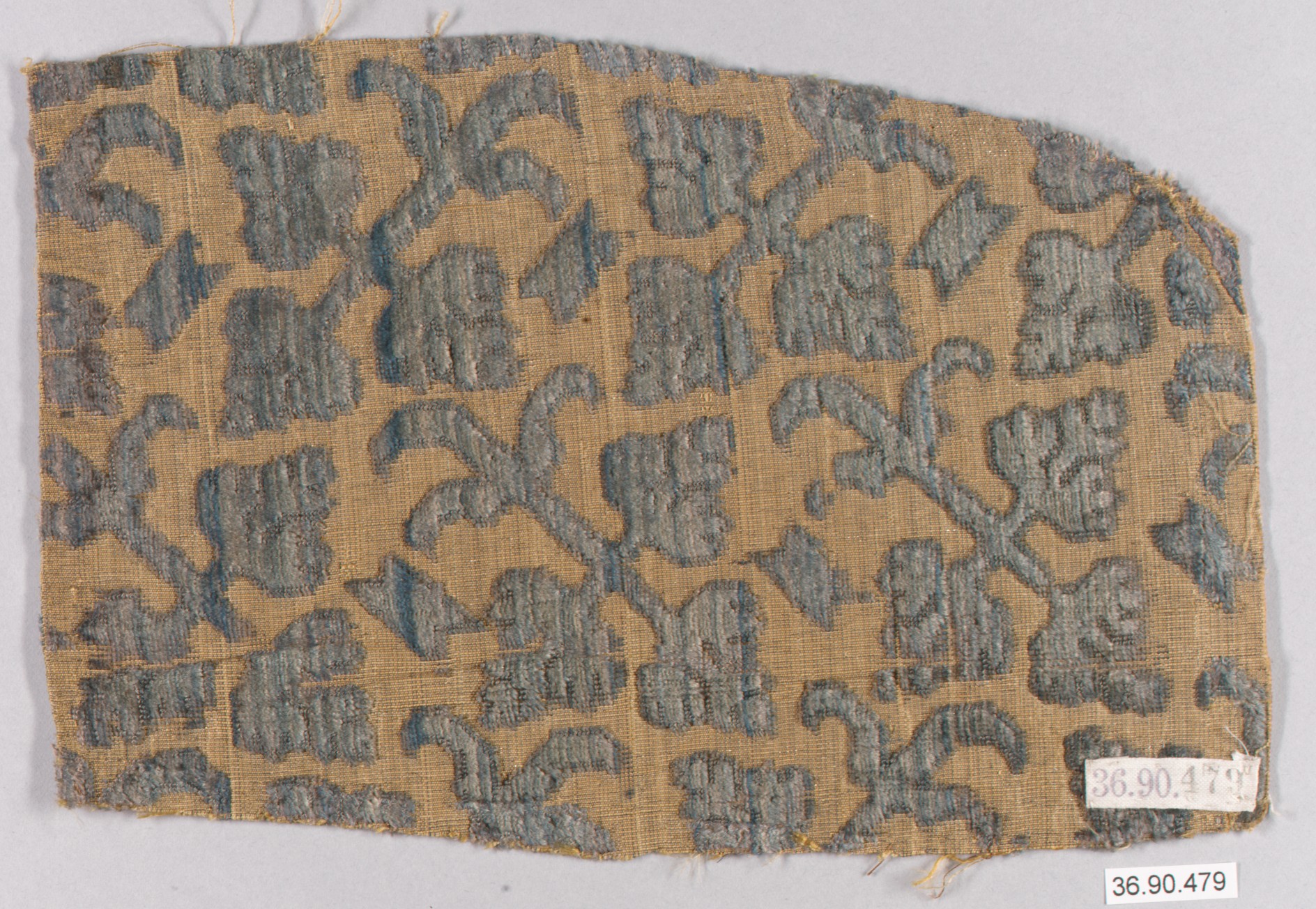
The piece’s materiality is its first act of rebellion. Silk, historically a signifier of luxury, fluidity, and the feminine, is here subjugated by metal thread, an element of engineering, strength, and the machine age. The silk—likely a charmeuse or a raw, uncalendered variant—is not draped in the traditional sense. Instead, it is structurally tensioned by the metal thread, which acts as a skeletal exoskeleton. The thread is not merely embroidered; it is woven into the silk’s very warp and weft, creating a hybrid textile that is simultaneously soft and unyielding. This is not a simple juxtaposition but a synthesis: the silk becomes a membrane stretched across a metallic framework, its movement restricted yet amplified. The metal thread, possibly a fine-gauge stainless steel or a coated copper alloy, catches light in sharp, angular reflections, while the silk absorbs it in matte, organic pools. This duality—the tension between the organic and the inorganic—becomes the garment’s core narrative, a commentary on the post-human body where flesh and technology are inseparable.
Futuristic Silhouettes: The Asymmetry of the Anthropocene
The silhouette for SS26 abandons the familiar hourglass or the boxy minimalism of previous decades. Instead, it proposes a fractured, asymmetrical architecture that mimics the instability of the Anthropocene. The garment—a hybrid of a jacket and a sculptural cape—features a single, exaggerated shoulder that rises in a cantilevered peak, supported by the metal thread’s tensile strength. The opposite side drops into a cascading, almost liquid train, where the silk’s natural drape is allowed to flow freely. This asymmetry is not arbitrary but mathematically calibrated: the left side is rigid, a fortress; the right side is fluid, a river. The waist is cinched not by a belt but by a geometric panel of metal-thread lattice that creates a negative space, a void that suggests the body is passing through a portal. The sleeves, if they can be called that, are detached, floating appendages—cuffs that hover mid-arm, held in place by invisible magnetic closures embedded in the metal threads. This silhouette rejects the static; it is designed for motion, for the body in transition, for the citizen of the Global Frontier who moves between digital and physical realms.
Structural Innovation: The Exoskeletal Frame and the Void
The true innovation lies in the garment’s internal architecture. Traditional couture relies on boning, padding, and interfacing. Here, the metal thread is used to create an internal exoskeletal frame that is both structural and aesthetic. The thread is woven into a honeycomb lattice that follows the body’s contours but does not cling. Instead, it creates a second skin of distance, a buffer zone between the wearer and the environment. This lattice is not visible from the exterior; it is layered between two sheets of silk, creating a pneumatic effect—the garment billows and deflates with the wearer’s breath, a living organism. The metal thread also enables kinetic articulation: at specific stress points—the elbows, the shoulders, the spine—the lattice is woven with a looser tension, allowing for a controlled range of motion. This is soft robotics translated into haute couture, where the garment responds to the body rather than constraining it. The back of the piece features a void—a cutout that is not a cutout but a transparent panel of metal-thread mesh, so fine it appears as a shimmering absence. This void is a structural necessity, allowing the lattice to expand and contract, and a conceptual one, a window into the garment’s inner workings.
Contextualizing the Global Frontier: A Standalone Avant-Garde Study
This piece exists within the context of the Global Frontier, a conceptual space where boundaries—geopolitical, biological, digital—are dissolved. The garment is not a costume for a specific culture but a prototype for a new species. The silk, sourced from a regenerative farm in the Mekong Delta, and the metal thread, recycled from decommissioned satellite components, are a material manifesto for sustainable futurism. The piece’s standalone status is crucial: it is not part of a collection but a singular object of study, a thesis made tangible. It challenges the notion of fashion as ephemeral; this garment is designed to degrade gracefully, with the metal thread oxidizing over time and the silk fraying into a new, chaotic beauty. It is an archaeological artifact from the future, a remnant of a civilization that merged craft with computation.
Conclusion: The Silhouette as a Philosophical Proposition
For Zoey Fashion Laboratory, this piece is not merely a garment but a philosophical proposition. Its futuristic silhouette—asymmetrical, exoskeletal, voided—is a direct response to the anxieties and possibilities of the SS26 season. It asks: What does it mean to be clothed in an era of climate collapse, digital saturation, and biological augmentation? The answer is this garment: a dialectical union of silk and metal, a structure that breathes, a form that is both armor and vulnerability. It is the definitive avant-garde study for a frontier that has no map, only vectors. The wearer is not a consumer but a participant in a speculative future, a living sculpture that exists at the intersection of the handcrafted and the engineered. In this piece, Zoey Fashion Laboratory has not just designed a garment; it has invented a new grammar of dress—one where every stitch is a sentence, every seam a statement, and every void a possibility.