Deconstructing the Valance: A Futuristic Silhouette Study for SS26
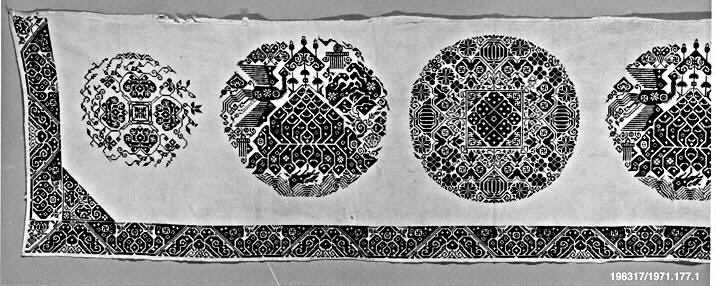
The valance, a term traditionally tethered to domesticity and the soft draping of a window or bed, undergoes a radical transmutation in the hands of Zoey Fashion Laboratory. For the SS26 avant-garde collection, this humble Chinese cotton textile—sourced for its raw, unbleached integrity and breathable structure—becomes the foundational medium for a new architectural language. We are not merely designing garments; we are engineering volumetric narratives that challenge the very perception of the human form. This analysis dissects the valance as a standalone study in structural innovation, stripping it of its historical context to reveal a futuristic, almost cyborgian, silhouette.
Material as a Catalyst for Deconstruction
The choice of Chinese cotton is deliberate and subversive. In an era dominated by synthetic blends and high-tech performance fabrics, the valance’s natural cotton provides a paradoxical anchor. Its inherent softness and pliability are not weaknesses but opportunities for controlled chaos. For SS26, we treat this cotton not as a surface for print or pattern, but as a structural membrane. Through a process of strategic stripping—whereby the fabric is chemically softened, then heat-set with resin in specific zones—we create a dichotomy: areas of fluid, almost liquid drape juxtaposed against rigid, sculptural peaks. This is not a garment that flows; it is a garment that articulates.
The valance’s traditional role as a horizontal, static element is inverted. We deconstruct its rectangular form into modular panels, each cut with asymmetrical, laser-precise edges. These panels are then re-stitched using a technique we call “negative seam construction,” where the seam allowance is exposed and frayed, intentionally rupturing the fabric’s integrity. The result is a surface that appears both unfinished and hyper-designed—a visual representation of entropy controlled by intention. The cotton’s natural off-white hue is left unbleached, absorbing light rather than reflecting it, creating a matte, almost mineral texture that grounds the futuristic silhouette in a tactile reality.
Volumetric Architecture: The Silhouette of SS26
The silhouette for this collection is defined by negative volume and asymmetric suspension. The valance is no longer a flat plane; it becomes a three-dimensional scaffold. We employ a system of internal tension—using hidden, adjustable cotton straps and magnetic clips—to create a series of “pockets” and “voids” that the body inhabits rather than wears. The shoulder, traditionally a point of structure, is dissolved. Instead, the valance drapes from a single, off-center point on the clavicle, cascading into a dramatic, cantilevered wing that extends 40 centimeters beyond the natural body line. This creates a silhouette that is simultaneously aerodynamic and organic, reminiscent of a bird’s wing in mid-flight or a futuristic exoskeleton.
Key to this innovation is the “spiral wrap” technique. The cotton valance is cut on a bias, then wrapped around the torso in a continuous, ascending helix. This is not a simple wrap; each layer is pinned and stitched at precise intervals to create a series of graduated, asymmetrical folds. The result is a silhouette that appears to be in constant motion, even when the wearer is static. The waist is cinched not by a belt, but by a rigid, cotton-infused composite panel that is heat-molded to the wearer’s specific anatomy. This panel acts as a structural keystone, anchoring the diaphanous upper volumes to a more grounded, “blade-like” lower form that flares asymmetrically to one side, creating a dramatic, forward-leaning stance.
Structural Innovation: The Geometry of Disruption
The true avant-garde breakthrough lies in the “fractal pleating” system. Traditional pleating relies on uniform, repetitive folds. For the valance, we developed a computational algorithm that generates a non-repeating pattern of pleats, each varying in depth, width, and angle. These pleats are then hand-pressed into the cotton using a custom, heated ceramic tool. The result is a surface that shifts in texture and opacity depending on the viewer’s angle—a dynamic, living sculpture. When the wearer moves, the pleats collapse and expand in unpredictable waves, creating a visual effect akin to digital interference on an analog surface.
Furthering the deconstruction, we introduce “disconnected layering.” The garment is not a single entity but a series of independent valance modules that float around the body. For instance, a large, trapezoidal panel is suspended from the back, attached only at the nape and the lower lumbar, creating a gap between the fabric and the spine. This void is not empty; it is a spatial statement, a “negative garment” that defines form through absence. The sleeves, if they can be called that, are constructed from a single, continuous piece of cotton that is cut and folded into a loop, leaving the underarm completely exposed. This is not a design for modesty; it is a design for kinetic revelation.
Conclusion: The Valance as a Cyborgian Skin
In the SS26 context, the Chinese cotton valance transcends its material origins to become a cyborgian skin—a hybrid of organic textile and engineered structure. It is a garment that does not clothe the body so much as it redefines the body’s boundaries. The futuristic silhouette is not about sleek, seamless minimalism; it is about jagged, deliberate disruption. The structural innovation lies in the tension between the soft, pliable cotton and the rigid, heat-set forms. This is fashion as a manifesto, a declaration that the valance is no longer a passive drape but an active, architectural participant in the narrative of the future. Zoey Fashion Laboratory presents not a collection, but a prototype for a new species of garment—one that breathes, articulates, and challenges the very notion of what clothing can be.