Deconstructing the Canals: Habiti delle Donne Venetiane as a Blueprint for SS26 Structural Innovation
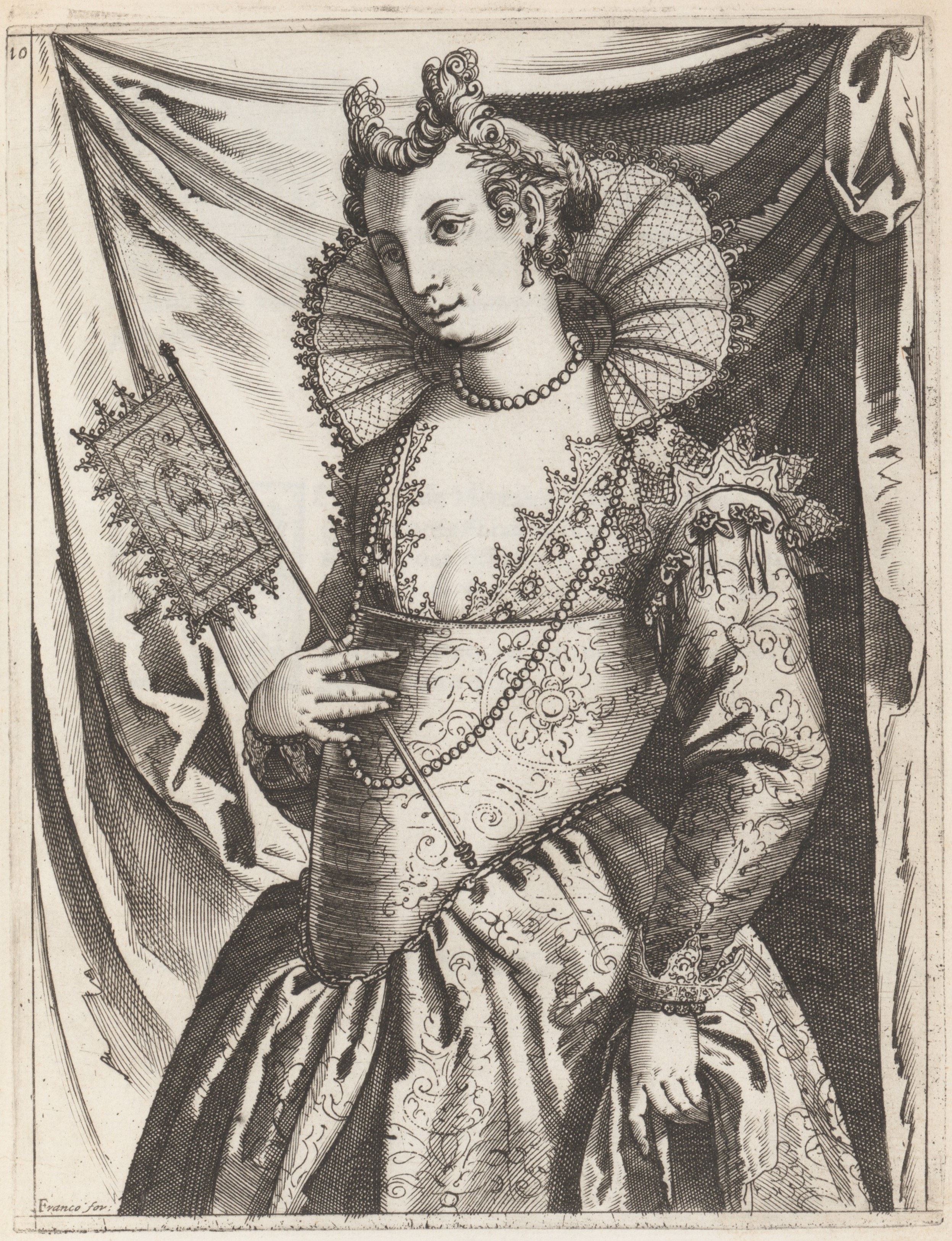
The annals of fashion history are often mined for nostalgia, but at Zoey Fashion Laboratory, we excavate for structural prophecy. The Habiti delle Donne Venetiane—those seminal 16th-century engravings and woodcuts documenting the dress of Venetian women—are not mere anthropological records. They are a manifesto of architectural extremity. For SS26, we do not look to Venice for romance; we look to its rigid, almost brutalist, silhouette logic. The woodcut’s stark line, its refusal of soft gradation, and its emphasis on planar volume become the foundational grammar for a collection that rejects fluidity in favor of controlled, futuristic tension. This is not a revival; it is a structural hijacking of a historical form for a post-humanist wardrobe.
The Woodcut as a Digital Wireframe: Reimagining the Engraving Line
The defining characteristic of the original engravings is their unforgiving line. There is no chiaroscuro, no soft drape—only the sharp, incised contour that defines the body as a series of geometric zones. In our SS26 analysis, this becomes the digital wireframe. We interpret the woodcut’s linearity not as decoration, but as exoskeletal structure. Imagine a gown where the silhouette is not sewn but laser-scored into a single sheet of recycled polymer-linen composite. The “dress” becomes a two-dimensional pattern that snaps into three-dimensional volume at the points of historical stress: the exaggerated hip roll (the faldia), the cinched waist, and the towering choppine-inspired platform. The woodcut line is now a functional seam—a hinge that allows the garment to fold flat for shipping and then lock into its architectural shape via magnetic or compression-fit joints. The futuristic silhouette is not about curves; it is about planar collision—a series of flat, engraved surfaces that intersect to create a new, angular human profile.
From Platform to Propeller: The Choppine as Kinetic Infrastructure
The Venetian choppine—the towering platform shoe that elevated (and isolated) its wearer—is our most potent silhouette catalyst. In the woodcuts, these are static monuments. For SS26, they become kinetic infrastructure. We reject the notion of a shoe as a passive base. Instead, we propose a biomechanical extension of the leg. The choppine is re-engineered as a carbon-fiber and 3D-printed titanium alloy scaffold that rises not just 20 inches, but adjusts in height via a pneumatic or memory-metal system. The wearer controls the silhouette in real-time. At rest, the platform is a severe, 18-inch block. In motion, it can tilt or articulate, transforming the gait into a mechanical procession. The woodcut’s static depiction of the Venetian woman as a tower of fabric is now literal: the garment’s hem is tethered to the platform’s edge, creating a tensioned membrane that pulls the skirt into a conical, almost aerodynamic form. This is not footwear; it is locomotive architecture.
The Faldia as a Modular Volume: Deconstructing the Hip Roll
The iconic Venetian hip roll (faldia)—that exaggerated bolster worn beneath the skirt to create an impossibly wide, egg-shaped hip—is a masterclass in artificial volume. In the woodcuts, it is a lumpen, almost grotesque protrusion. For SS26, we deconstruct its structural logic into a series of modular, inflatable or rigid-honeycomb panels. The faldia is no longer a hidden understructure; it is the primary visible architecture. We propose a skirt composed of interlocking, laser-cut wood veneer panels (a direct nod to the woodcut medium) that hinge outward from the waist. The silhouette can be reconfigured: closed for a severe, columnar line, or expanded into a geodesic dome around the hips. The materiality is key—the wood veneer is treated with a liquid-crystal coating that shifts opacity under heat or light, echoing the engraving’s stark black-and-white contrast while introducing a chromatic, futuristic surface. The faldia becomes a wearable sculpture, its volume dictated by the wearer’s spatial choices, not by historical prescription.
Gaze and Garment: The Woodcut’s Flatness as a Shield
A critical, often overlooked element of the Habiti delle Donne Venetiane is the flattening of the female form. The woodcut style, with its lack of depth, reduces the body to a symbolic outline. This is not a limitation; it is a strategic opacity. For SS26, we weaponize this flatness. Garments are designed to deny perspective. The bodice, rendered in a rigid, thermoformed bioplastic, is a single, unbroken plane. There is no bust, no waist—only a continuous, sculpted surface that deflects the gaze. The woodcut’s line becomes a literal cut—a series of sharp, non-functional slashes in the fabric that reveal not skin, but a second, mirrored surface. The wearer becomes a living engraving: a two-dimensional icon moving through a three-dimensional space. The futuristic silhouette here is one of radical abstraction, where the body is a carrier of graphic, planar information rather than a biological entity. This is couture as cognitive defense.
From Woodcut to Wearable Tech: The Silent Command of the Line
The final, most avant-garde leap is the integration of the woodcut line as a command interface. In the original prints, the engraved line is a record of a tool. For SS26, it becomes a conductor of energy. Imagine a garment where the deep, black lines of the woodcut are printed with conductive ink or embedded with thin-film photovoltaic cells. These lines are not decorative; they are functional circuits. The choppine platform harvests kinetic energy from each step, channeling it through the “engraved” lines to power micro-LEDs embedded in the faldia panels. The silhouette illuminates in response to motion. The wearer’s path through a space is traced in light, turning the garment into a dynamic, self-illuminating woodcut. The structural innovation is not in the cut alone, but in the energy architecture. The garment becomes a standalone power system, its historical silhouette now a functional grid for the future of wearable technology. The Habiti delle Donne Venetiane is no longer a relic; it is a blueprint for the sentient, sculptural wardrobe of SS26.