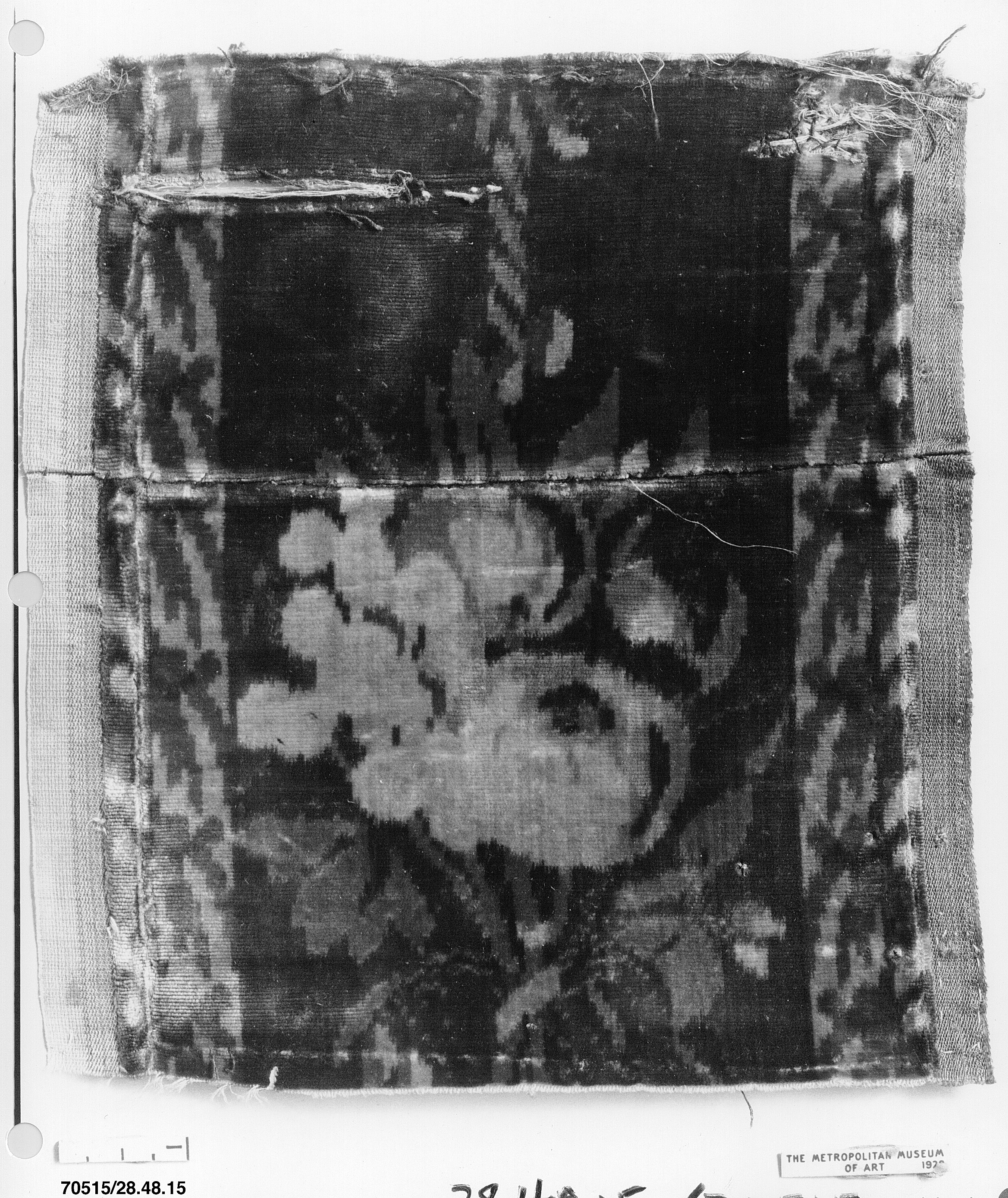
Fragment as Form: Deconstructing the Global Frontier in Silk
In the relentless pursuit of the new, the avant-garde designer must look beyond the whole and into the particle. For SS26, Zoey Fashion Laboratory presents a definitive study on the Fragment—not as a state of ruin, but as a genesis of architectural possibility. This analysis, drawn from the Global Frontier, explores how a single, ancient material—silk—can be fractured, recombined, and re-engineered to define the next epoch of futuristic silhouettes. The fragment is no longer a remnant of the past; it is a blueprint for the future.
The Semiotics of the Fragment: From Rupture to Reassembly
The traditional fashion lexicon treats the fragment as an accident—a tear, a frayed edge, an incomplete pattern. In our SS26 framework, we invert this. The fragment is the primary unit of design. It represents a conscious act of deconstruction, a refusal of seamless, monolithic forms. This is not about chaos; it is about a new order born from controlled entropy. The Global Frontier, a conceptual territory where cultural boundaries dissolve and technology redefines geography, demands garments that are modular, adaptive, and non-linear. The fragment embodies this. It speaks to the digital age's propensity for breaking down information into data packets, and then reassembling them into new, coherent structures. In silk, this takes on a profound material irony: a fabric synonymous with fluidity and continuity is now the vehicle for sharp, jagged, and discontinuous forms.
Material Alchemy: Engineering Silk for Structural Discontinuity
Silk, in its natural state, is a continuous filament of protein fiber, renowned for its drape and tensile strength. To harness the fragment, we must first denature the silk. This is achieved through a multi-stage process of chemical and mechanical intervention. The silk is treated with a proprietary resin that induces controlled brittleness along predetermined stress lines. Once cured, the fabric is laser-scored to create a grid of potential fracture points. This is not a weakening; it is a strategic empowerment. The garment can now be worn as a whole, but the wearer—or the stylist—can activate the fragment by applying tension, snapping the silk along its scored lines. The result is a garment that evolves in real-time, from a continuous sheath to a constellation of floating, interlocking panels. These fragments are then connected not by traditional seams, but by magnetic micro-links and thermo-adhesive bridges, allowing for infinite reconfiguration. The silk becomes a living, responsive material—a textile that breathes and breaks by design.
Futuristic Silhouettes: The Architecture of the Incomplete
The silhouette for SS26 is defined by negative space and suspended mass. Traditional tailoring relies on a continuous fabric envelope to define the body. Here, the body is framed by absence. Consider the Fragment Torso: a bodice constructed from a series of elongated, asymmetrical silk shards that originate at the shoulder and terminate mid-ribcage, leaving the waist and hips exposed. The shards are layered at acute angles, creating a visual and structural torque. They do not meet; they orbit the body, held in tension by a sub-structure of transparent, rigid polymer threads. The effect is that of a garment caught in the moment of disintegration, yet perfectly stable.
Another key silhouette is the Floating Hem Gown. The skirt is not a single piece but a cascade of silk fragments—each a different geometric shape (triangles, trapezoids, irregular polygons)—suspended from a high-waisted, corset-like base. These fragments are weighted at their lowest points with micro-beads of polished hematite, ensuring they hang with a deliberate, sculptural gravity. As the wearer moves, the fragments separate and collide, creating a kinetic, ever-shifting profile. This is not a dress; it is a mobile sculpture of broken light and shadow. The silhouette rejects the classical hourglass or column in favor of a fractured prism, where the body is both the core and the periphery.
Structural Innovation: The Tensile Web and the Floating Joint
To realize these silhouettes, we have developed two key structural innovations. The first is the Tensile Web. Instead of a rigid lining, the garment’s internal structure is a network of ultra-fine, high-tensile silk threads bonded with a shape-memory polymer. This web is laser-cut into a fractal pattern that mirrors the external fragment layout. It provides the necessary support to keep fragments in their intended spatial relationships while allowing for extreme flexibility and breathability. The web is visible only at the edges, where it emerges as a delicate, spider-like filigree, reinforcing the aesthetic of the fragment.
The second innovation is the Floating Joint. This is a connection point where two fragments meet but do not fuse. It consists of a small, circular neodymium magnet encased in a polished titanium housing, embedded into the silk via a heat-sealed pocket. The magnet’s polarity is calibrated to repel at close range, creating a 3-5 millimeter gap between fragments. This gap is the negative seam—a deliberate void that allows light to pass through and the skin to be glimpsed. The Floating Joint enables the garment to maintain its architectural integrity while celebrating its fragmented nature. It is a revolution in how we connect parts: not by sewing them together, but by holding them apart.
Conclusion: The Fragment as a New Whole
In this avant-garde study for SS26, the fragment is not a limitation but a liberation. By deconstructing silk and rebuilding it as a system of discrete, reconfigurable units, Zoey Fashion Laboratory challenges the very definition of a garment. The Global Frontier is a world of constant flux, and our clothing must reflect that. The Fragment Collection is a manifesto for a new kind of fashion: one that is incomplete by design, mutable by intention, and beautiful in its fractures. The future of couture lies not in the seamless, but in the articulate space between the pieces. The whole is no longer greater than the sum of its parts; the parts are the whole.