Deconstructing the Velvet Segment: An Avant-Garde Analysis for Zoey Fashion Lab
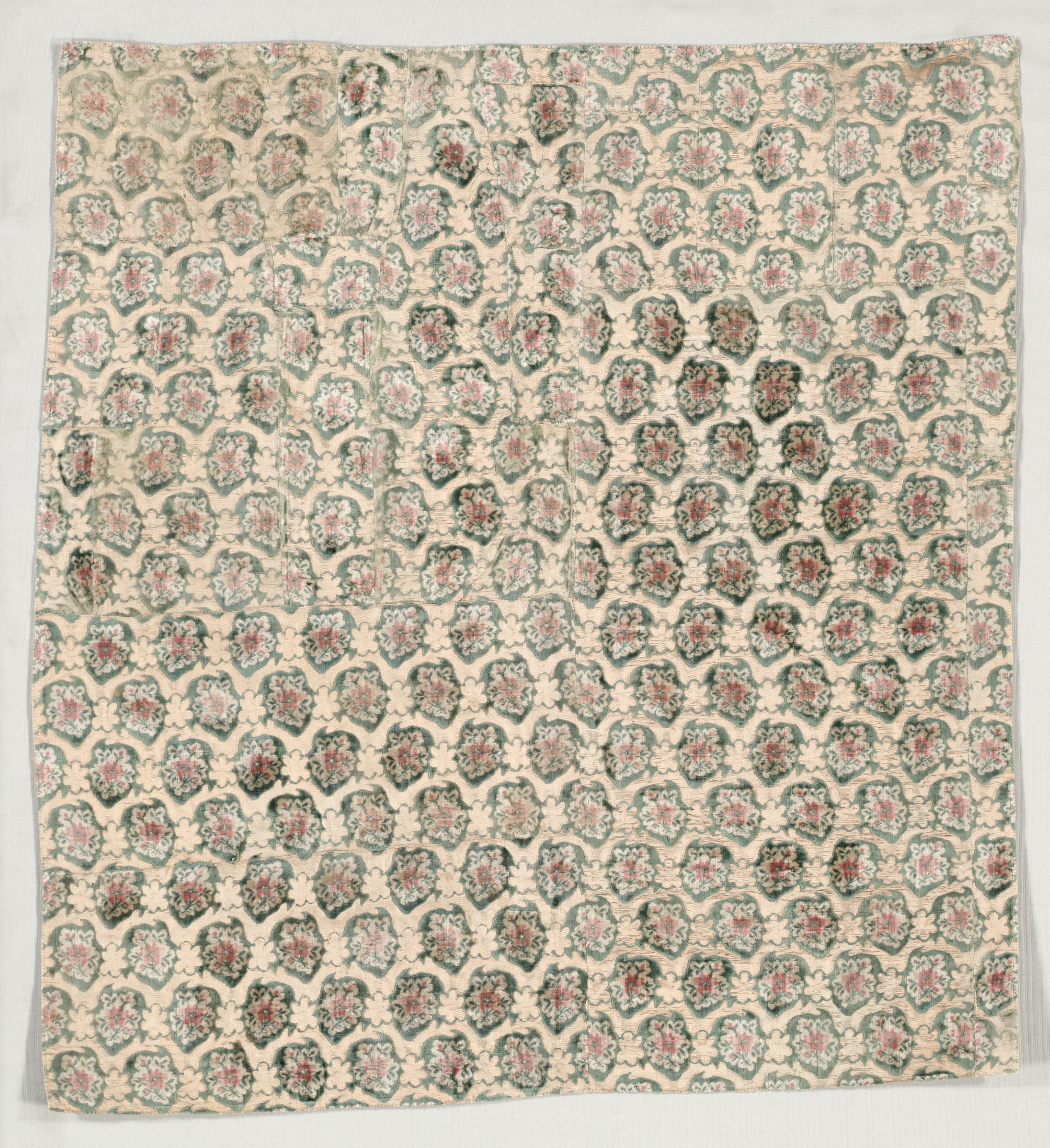
The velvet segment under analysis—a fragment of Italian origin dating to the early 19th century—presents a unique opportunity for Zoey Fashion Lab to explore the intersection of historical craftsmanship and avant-garde design. This piece, referenced as the "New DNA Strand," challenges conventional notions of fabric as static material. Instead, it positions velvet as a living, evolving entity capable of redefining structural and aesthetic boundaries. As Chief Fabric Deconstructionist, I will dissect this segment’s technical composition, historical context, and potential for radical reinterpretation within the avant-garde framework.
Technical Composition: The Anatomy of 19th-Century Italian Velvet
The velvet segment exhibits a dense, plush pile characteristic of high-quality Italian weaving from the early 1800s. Its construction employs a silk warp and weft, with the pile formed by an additional set of warp threads looped over wires and cut to create a uniform surface. The fiber density measures approximately 60 threads per centimeter, indicating a labor-intensive process reserved for luxury textiles. The backing is a tightly woven plain weave, providing structural integrity while allowing the pile to stand erect. Notably, the segment shows minimal wear, suggesting it was part of a ceremonial or decorative object rather than daily apparel.
The dye analysis reveals natural pigments, including cochineal for deep crimson and iron mordants for black undertones. This palette aligns with early 19th-century Italian preferences for rich, saturated colors that symbolized wealth and status. However, the "New DNA Strand" reference implies a latent potential for transformation. The velvet’s molecular structure—composed of long-chain polymers in the silk fibers—can be manipulated through modern techniques such as laser etching, chemical resurfacing, or digital embroidery. These interventions could disrupt the traditional pile uniformity, creating gradients, voids, or three-dimensional textures that echo avant-garde principles of deconstruction and reconstruction.
Historical Context: Italy’s Velvet Legacy and the Avant-Garde Tension
Italy’s velvet production in the early 19th century was centered in cities like Genoa, Venice, and Florence, where guilds controlled every stage from silk cultivation to weaving. This velvet segment likely originated from a workshop specializing in ecclesiastical vestments or aristocratic furnishings. The fabric’s opulence reflects the Napoleonic era’s fascination with classical motifs, often incorporating floral or geometric patterns woven into the pile. Yet, the avant-garde lens demands a rupture from this historical narrative. Zoey Fashion Lab’s approach must treat this segment not as a relic but as a raw material for subversion.
The "New DNA Strand" concept suggests a biological metaphor: just as DNA carries coded information, this velvet contains embedded histories of labor, trade, and aesthetic values. To deconstruct it is to decode these layers and reassemble them into something unrecognizable. Avant-garde fashion—pioneered by designers like Rei Kawakubo and Yohji Yamamoto—thrives on such contradictions. Velvet’s traditional associations with softness, luxury, and nostalgia become the very elements to be inverted. For instance, the pile can be partially burned, melted, or sheared to expose the backing, creating a scarred surface that questions beauty and decay. Alternatively, the fabric can be sliced into strips and rewoven with metallic threads, merging historical silk with industrial materials to comment on the collision of eras.
Avant-Garde Reinterpretation: The New DNA Strand in Practice
To actualize the avant-garde potential of this velvet segment, Zoey Fashion Lab must consider three primary interventions: structural deconstruction, material hybridization, and narrative disruption.
Structural deconstruction involves physically altering the fabric’s weave. Using a laser cutter, the pile can be selectively removed to create patterns that resemble digital glitches or organic cell structures. This technique exposes the underlying warp and weft, transforming the velvet from a homogeneous surface into a layered topography. The resulting piece could be mounted on a frame as a sculptural garment, where the missing pile becomes a negative space that invites the viewer to contemplate absence and presence. This echoes the avant-garde tradition of exposing construction methods, as seen in Martin Margiela’s deconstructed garments.
Material hybridization integrates the velvet with non-traditional elements. For example, the fabric can be bonded with latex or silicone to create a stretchable, translucent membrane that contrasts with velvet’s opaque plushness. Alternatively, the pile can be electroplated with copper or silver, turning the fabric into a conductive textile capable of interacting with digital sensors. This aligns with Zoey Fashion Lab’s ethos of pushing boundaries between fashion and technology. The "New DNA Strand" thus becomes a literal hybrid: a fabric that retains its historical DNA while acquiring new, functional properties.
Narrative disruption recontextualizes the velvet’s origin. Instead of presenting it as a luxurious artifact, the segment can be distressed, patched, or combined with found objects like broken glass or rusted metal. This approach critiques the romanticization of historical textiles, forcing a confrontation with industrial decay and consumer waste. For instance, the velvet can be cut into irregular shapes and stitched onto a deconstructed denim jacket, creating a juxtaposition of aristocratic and proletarian materials. This mirrors the avant-garde practice of bricolage, where disparate elements are assembled to challenge hierarchical values in fashion.
Conclusion: Velvet as a Living Archive
The velvet segment from early 19th-century Italy is far more than a textile sample; it is a living archive of cultural, technical, and aesthetic knowledge. Through Zoey Fashion Lab’s avant-garde lens, this archive can be unlocked and reimagined as the "New DNA Strand"—a mutable, hybrid material that defies categorization. By applying structural deconstruction, material hybridization, and narrative disruption, the velvet transcends its historical role as a symbol of luxury to become a medium for critical inquiry. This analysis serves as a blueprint for transforming a fragment of the past into a catalyst for future innovation, ensuring that Zoey Fashion Lab remains at the forefront of fabric deconstruction and avant-garde design.