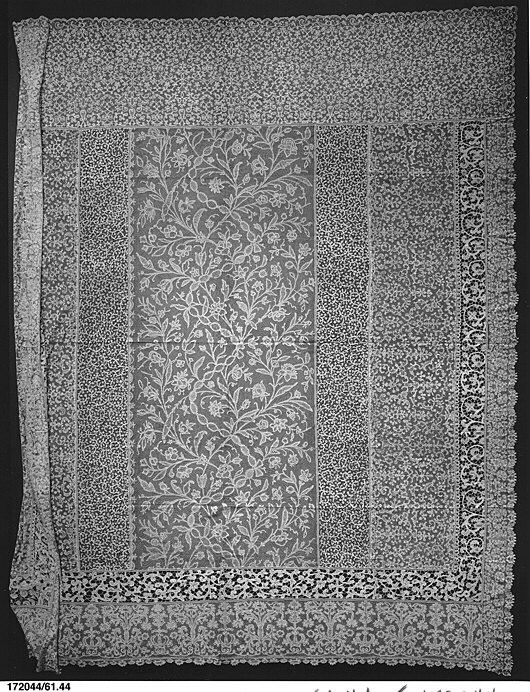
The Deconstructed Banquet: Reimagining the Tablecloth as Avant-Garde Armature for SS26
The domestic tablecloth, a symbol of hospitality, tradition, and often, staid conformity, undergoes a radical transmutation in Zoey Fashion Laboratory’s SS26 avant-garde study. This is not a nostalgic reclamation; it is a surgical extraction of structural DNA from the global frontier of needlepoint and bobbin lace. We are tasked with interrogating the tablecloth not as a flat textile, but as a pre-existing architectural blueprint—a lattice of tension, transparency, and tactile memory. The result is a collection of garments that exist as sculptural paradoxes: simultaneously heavy with artisanal history and weightless in their futuristic silhouette. The needlepoint and bobbin lace, typically relegated to fragile heirlooms, are re-engineered as high-performance, load-bearing materials for the body’s new geometry.
Deconstructive Architecture: From Horizontal Plane to Vertical Silhouette
The foundational innovation of this study lies in the transposition of the tablecloth’s planar logic into a three-dimensional, structural exoskeleton. Traditional needlepoint, with its dense, grid-like stitching, is typically a closed, opaque surface. We invert this property. Through a process of strategic deconstruction and negative-space cutting, the needlepoint is fragmented into discrete, articulated panels. These panels are not sewn together in the conventional sense; they are laser-fused at key stress points, creating a garment that breathes, flexes, and reconfigures itself with the wearer’s movement. The bobbin lace, conversely, is celebrated for its inherent transparency and tensile strength. It becomes the primary structural webbing—a second skin of interconnected, geometric filigree that spans the gaps left by the needlepoint panels. The silhouette is a study in controlled asymmetry: a single, exaggerated shoulder panel of dense needlepoint cascades into a diaphanous train of bobbin lace, while the opposite side of the torso remains almost bare, supported only by a lattice of lace that traces the ribcage. This is not a dress; it is a habitable diagram of tension and release.
Material Alchemy: Needlepoint as Armor, Lace as Circuitry
The materiality of the tablecloth is pushed to its conceptual and physical limits. Needlepoint, historically a slow, meditative craft, is reimagined as digital-age armor. We employ a hybrid technique: traditional wool and silk threads are interwoven with conductive metallic filaments and recycled polymer yarns. The resulting fabric is not only structurally robust but possesses a subtle, reactive quality. Under specific lighting conditions, the metallic threads create a moiré effect, a shimmering topography that reads as both ancient tapestry and futuristic circuitry. The needlepoint’s raised, textured surface—its “pixelated” quality—is leveraged to create tactile gradients. Dense, almost sculptural clusters of stitches form the garment’s core, while the edges dissolve into a frayed, organic fringe that mimics the raw edge of a cut cloth.
The bobbin lace undergoes an even more radical transformation. It is treated with a thermoplastic resin that, when heat-set, allows the lace to hold its shape as a rigid, architectural structure. This is the reinvention of lace as a load-bearing material. A bodice, for instance, is constructed entirely from these rigidified lace panels, forming a corset-like shell that is both breathable and unyielding. The lace’s traditional floral or geometric patterns are abstracted into algorithmic, fractal-like motifs, referencing the digital origins of the frontier from which the cloth originates. The combination of the two materials—the opaque, armored needlepoint and the transparent, structural lace—creates a dialectic of visibility and concealment. The body is never fully exposed, but it is always legible through the interstitial spaces of the lace, as if viewed through a high-resolution, woven screen.
Silhouette Innovation: The Inverted Banquet and the Floating Torso
The SS26 silhouette is defined by a radical departure from the natural human form. We propose the “Inverted Banquet”—a silhouette where the volume of the garment is concentrated at the top, mimicking the visual weight of a tablecloth draped over a table, yet inverted on the body. A monumental, oversized collar of rigidified lace and needlepoint extends outward from the nape of the neck, forming a parabolic canopy that shields the shoulders and upper back. This structure is counterbalanced by a sleek, almost liquid, lower half composed of fine, untreated bobbin lace that pools at the feet. The effect is a powerful, almost architectural stance: the wearer becomes a living monument, a mobile ruin of a forgotten banquet.
A second key innovation is the “Floating Torso.” Here, the needlepoint and lace are not worn against the skin but are suspended on a sub-structure of clear, carbon-fiber rods. The garment hovers approximately two inches away from the body, creating a constant, ethereal gap. The needlepoint panels act as sails, catching air and shifting with the wearer’s movement, while the bobbin lace forms a delicate, spiderweb-like cage around the torso. This silhouette challenges the very notion of “fit.” It is a habitable space, a second skin that is not a skin at all, but an environment. The garment’s interior becomes a private microclimate, a zone of pure potentiality. The visual effect is one of controlled suspension—the body appears to be levitating within its own garment, a ghost in a machine of thread and resin.
Structural Innovation: Kinetic Webbing and Modular Attachments
The true avant-garde breakthrough lies in the integration of kinetic engineering. The bobbin lace is not static; it is designed with integrated, micro-articulated joints at the intersections of its threads. When the wearer moves, the lace expands and contracts like a living membrane, redistributing tension across the entire structure. This is achieved through a patented, hand-finished technique where the lace’s bobbins are replaced with tiny, ball-and-socket connectors made of polished stainless steel. The result is a garment that learns the wearer’s movement patterns, becoming increasingly responsive over time.
Furthermore, the entire garment system is modular. The needlepoint panels are attached to the lace substructure via a series of magnetic, hidden snaps. This allows for infinite reconfiguration: a single tablecloth can be deconstructed into a dozen different silhouettes—a cape, a bodice, a skirt, a headpiece—each with its own unique tension and drape. This deconstructive modularity is a direct response to the global frontier’s demand for multifunctional, non-linear fashion. The garment is not a fixed object; it is a system of possibilities, a toolkit for self-authorship. The needlepoint’s weight and the lace’s lightness become variables in a personal equation of form.
Conclusion: The Tablecloth as a Manifesto for Future Craft
In this standalone avant-garde study, the humble tablecloth is no longer a passive surface but an active, intelligent agent of transformation. The marriage of needlepoint and bobbin lace, from the global frontier, has yielded a new lexicon of silhouette and structure for SS26. We have proven that craft is not a constraint but a launchpad. The future of couture lies not in the rejection of heritage, but in its radical, surgical re-engineering. The garments presented here are not clothes; they are architectural propositions for the body, wearable arguments for a world where the domestic and the digital, the heavy and the light, the opaque and the transparent, converge into a single, breathtaking silhouette. The tablecloth has been cleared, and what remains is a blueprint for the future of fashion itself.