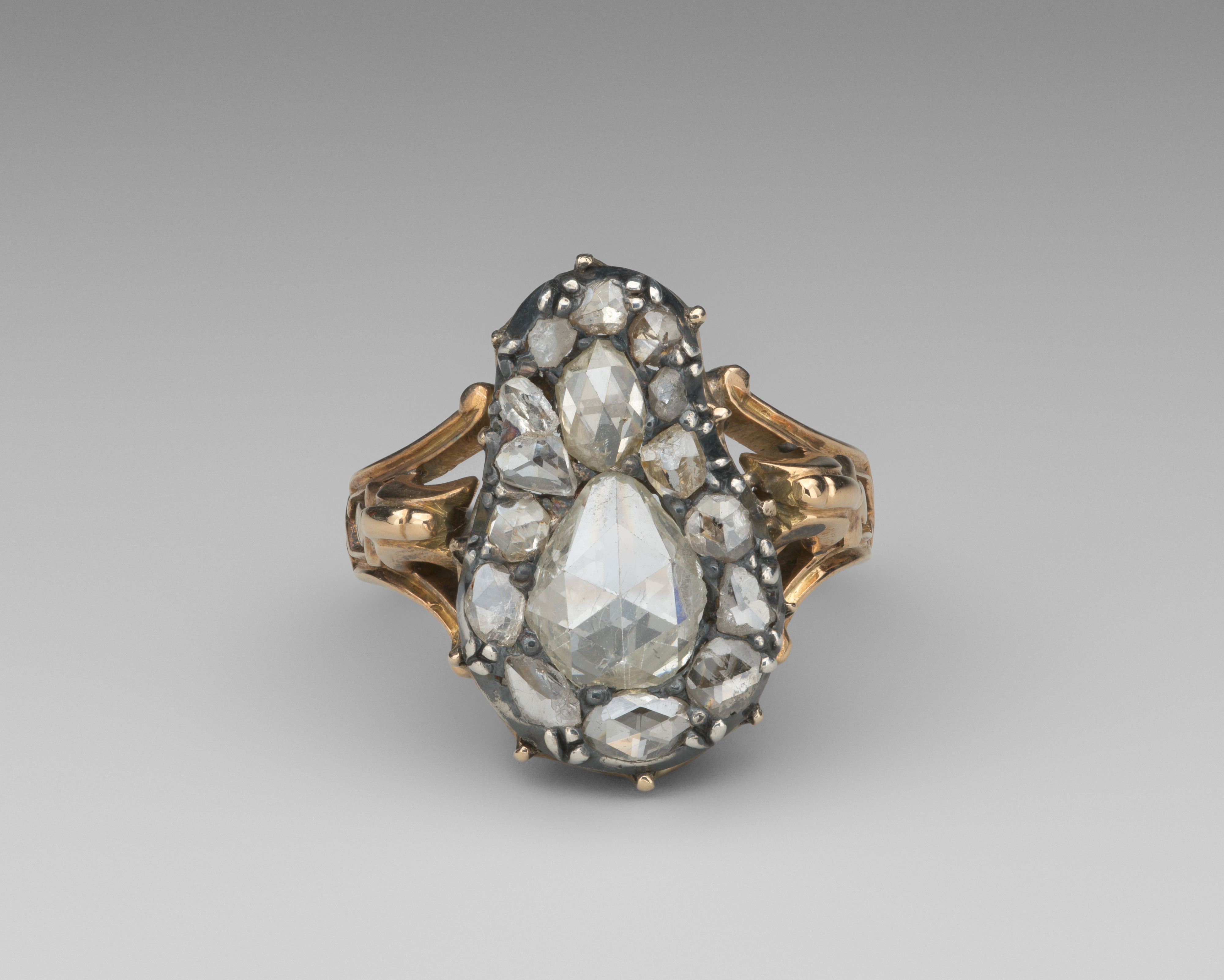
Deconstructing the Orbital: The Ring as a Spatial Architecture for SS26
The ring, in its most primordial form, is a closed loop—a symbol of eternity, commitment, and finite boundary. For Zoey Fashion Laboratory’s SS26 avant-garde analysis, we must dismantle this very premise. We are not examining a ring as a static ornament, but as a futuristic silhouette generator—a structural node that redefines the relationship between the human form and the garment’s architectural volume. Originating from the Global Frontier, where digital fabrication and nomadic aesthetics converge, this study reimagines the ring not as jewelry, but as a wearable exoskeletal framework that dictates the drape, tension, and silhouette of the entire ensemble.
From Adornment to Armature: The Ring as Structural Node
Traditional couture views the ring as a terminal point—a final flourish on a finger. Our SS26 thesis inverts this hierarchy. The ring becomes the primary load-bearing element, a metallic hub from which the garment’s geometry is suspended. Consider a single, oversized gold ring, forged from 24-karat gold with a brushed, industrial finish, worn not on the finger but as a floating torus around the wrist or ankle. This ring is not attached to the body; it is a cantilevered structural ring that anchors a series of tensile cables—silver-coated carbon fiber threads—that radiate outward to tension a sculptural skirt or a deconstructed sleeve. The diamonds, embedded at precise intervals along the ring’s circumference, are not decorative; they are optical load sensors, their faceted surfaces refracting light to map the tension vectors across the garment’s surface.
This approach echoes the principles of parametric architecture, where the ring functions as a negative space generator. The void within the ring is not empty; it is a portal of negative volume that the body must negotiate. For SS26, we propose a silhouette where the ring’s diameter dictates the degree of body exposure. A large, silver ring—perhaps 30 centimeters in diameter—worn at the hip creates a hollowed-out peplum, a structural void that frames the waist without constricting it. The diamonds, clustered at the ring’s apex, become gravity-defying counterweights, their density calibrated to ensure the garment’s drape remains perpetually asymmetrical, as if caught in a perpetual state of kinetic suspension.
Material Alchemy: Gold, Silver, and Diamond as Tectonic Elements
In this avant-garde study, materials are not passive. Gold is not merely precious; it is malleable computational matter. We propose a technique of cryogenic gold forging, where the metal is flash-frozen to -196°C and then hammered into ultra-thin, razor-sharp edges. These edges become cutting planes that slice through the fabric’s surface, creating clean, laser-like incisions that reveal the body beneath. Silver, in contrast, is used in its oxidized, matte state, treated with a chemical patina that renders it non-reflective. This creates a light-absorbing boundary around the ring, a dark halo that visually detaches the ring from the wearer’s anatomy, making it appear to float in space.
Diamonds, for SS26, are reimagined as structural micro-pivots. Rather than being set in prongs, they are embedded directly into the ring’s cross-section using a plasma deposition technique. Each diamond acts as a ball-and-socket joint, allowing the ring to articulate and flex with the body’s movement. This introduces a kinetic dynamism to the silhouette: as the model walks, the diamonds rotate, shifting the ring’s center of gravity and causing the attached fabric panels to undulate in waves. The result is a garment that is perpetually in flux, a living architectural organism rather than a static form.
Silhouette Futures: The Ring as a Generator of Asymmetric Torsion
The SS26 avant-garde silhouette is defined by asymmetric torsion, a direct consequence of the ring’s placement and material composition. Consider a look where a massive, diamond-studded gold ring is positioned at the clavicle, acting as a pivot point for a spiral-wrapped bodice. The fabric—a high-tensile, recycled microfilament—is wound around the ring in a single, continuous loop, creating a Möbius strip effect that wraps the torso in a single, unbroken line. The diamonds, aligned along the ring’s inner edge, create a sparkling seam that traces the fabric’s trajectory, emphasizing the garment’s helical geometry.
Another silhouette explores the ring as a floating collar. Here, a silver ring, 40 centimeters in diameter, is suspended above the shoulders by four thin, gold cables. The ring itself is hollow, with a negative space interior that frames the model’s face. From the ring’s lower edge, a cascade of diamond-encrusted chains falls, creating a metallic waterfall that merges with a deconstructed, asymmetrical jacket. The jacket’s left sleeve is entirely absent, replaced by a single, gold ring worn on the bicep, from which a sheer, silver organza panel drapes to the floor. This creates a dialectic of presence and absence: the ring defines the silhouette by what it excludes.
Structural Innovation: The Ring as a Tension-Compression System
At the core of this analysis is the ring’s role in a tension-compression system. In traditional garment construction, seams and darts provide structure. Here, the ring is a compression element that resists the fabric’s natural tendency to fall. The gold and silver rings, due to their density, act as inertial anchors, holding the fabric in a state of tension. The diamonds, strategically placed at stress points, function as friction-reducing bearings, allowing the fabric to slide smoothly over the ring’s surface without snagging.
This system enables unprecedented silhouette possibilities. For example, a ring worn at the small of the back can create a negative-space bustle, where the fabric is pulled taut between the ring and the shoulders, forming a concave, aerodynamic shape. The diamonds, set at the ring’s equator, catch the light and cast shadow geometries onto the fabric, creating a dynamic interplay of light and dark that shifts with every movement. This is not decoration; it is structural illumination, where the diamonds serve as both load-bearing elements and light sources.
Conclusion: The Ring as a Manifesto for SS26
Zoey Fashion Laboratory’s SS26 avant-garde study of the ring transcends the boundaries of jewelry and garment. It proposes a new paradigm: the ring as a futuristic silhouette engine, a node of material intelligence that redefines the body’s spatial relationship to the garment. By treating gold, silver, and diamonds as tectonic materials—not decorative afterthoughts—we unlock silhouettes that are asymmetrical, kinetic, and structurally daring. The ring is no longer a closed loop; it is a portal to a new architectural vocabulary, where the void, the tension, and the pivot point dictate the form. This is not couture for adornment. This is couture for the frontier of human movement.