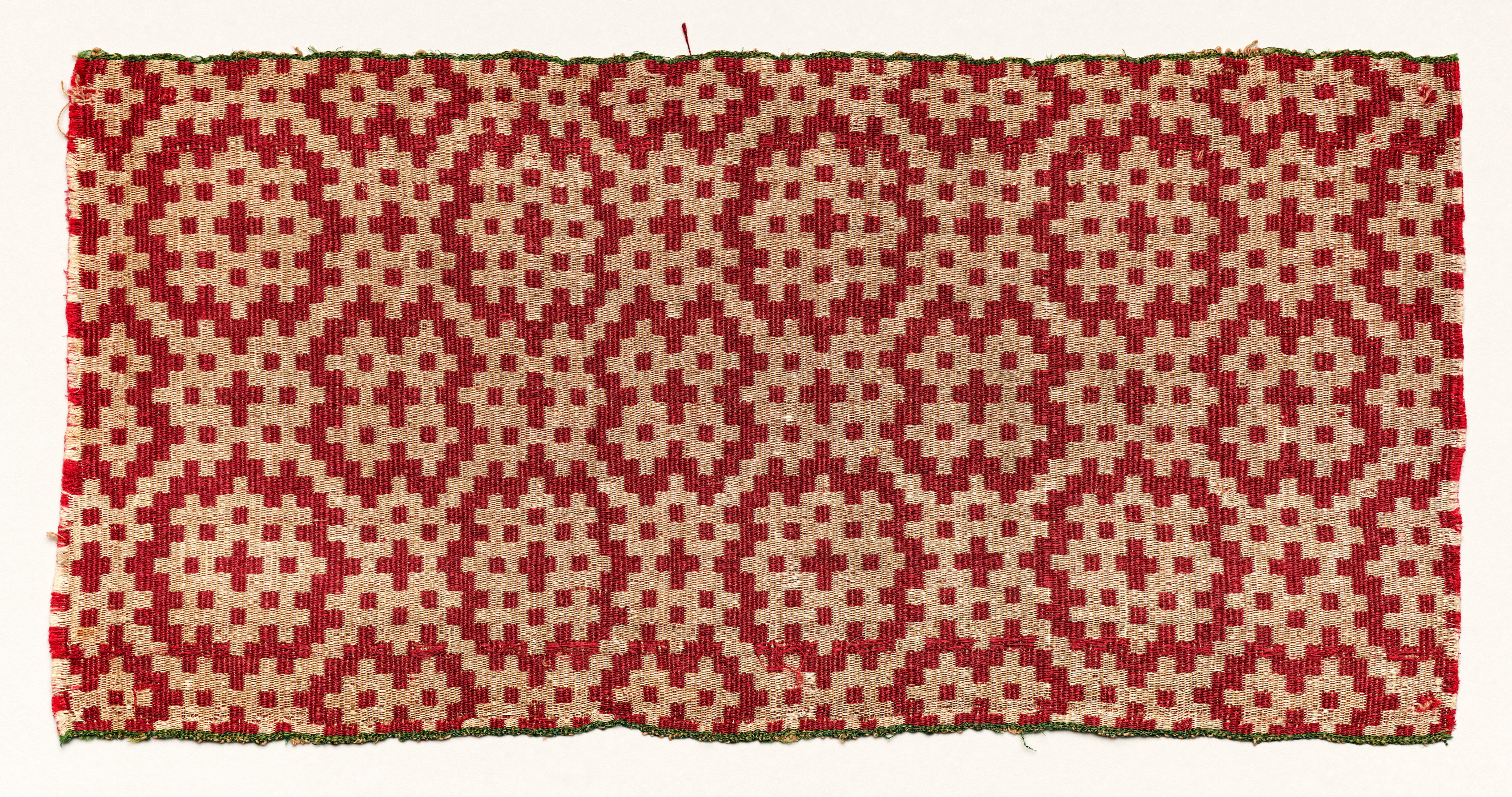
Deconstructing the Archival Fragment: A Silk Textile from Morocco
As the Chief Fabric Deconstructionist for Zoey Fashion Lab, I am tasked with excavating the narratives embedded within textile fragments. The subject of this analysis is a fragment of a furnishing textile, originating from a Moroccan weaver in North Africa. Its composition—silk and dye—is deceptively simple. Yet, within this archival fragment, referenced under the evocative title "Archive Resonance," lies a complex dialogue between the 16th-17th century and the avant-garde. This analysis will dissect the technical, cultural, and aesthetic dimensions of the fragment, proposing how its intrinsic properties can be recontextualized for a forward-thinking fashion narrative.
Technical Analysis: The Materiality of Silk and Dye
The silk substrate is the first point of deconstruction. Moroccan silk, historically sourced via trans-Saharan trade routes or produced locally in regions like Fez, is not the uniform, machine-spun filament of modern industry. Instead, it bears the irregularities of hand-reeling. The fragment shows a warp-faced weave, where the tightly packed longitudinal threads dominate the surface. This structural choice creates a stiff, almost architectural hand-feel, a deliberate departure from the fluid drape often associated with silk. The fabric’s resilience suggests its original function as a furnishing textile—a wall hanging, cushion cover, or ceremonial drape—where structural integrity was paramount.
The dye application is where the fragment reveals its most radical technical story. The colors—a deep, organic indigo blue and a fading madder red—are not perfectly saturated. Instead, they show the characteristic unevenness of natural dyeing with mordants like alum or iron. This imperfection is not a flaw but a signature of the weaver’s hand. The dye penetration is deeper in some warp threads than others, creating a subtle, moiré-like effect of light and shadow. For the avant-garde designer, this is a treasure trove. The dye’s behavior under different lighting conditions—shifting from a flat, matte finish to a subtle sheen—offers a kinetic quality that challenges static garment design.
Cultural and Historical Resonance: The 16th–17th Century Context
The fragment’s origin in the 16th to 17th century places it within a period of immense cultural confluence. Morocco, at the crossroads of sub-Saharan Africa, the Arab world, and Europe, was a hub for textile innovation. The Saadian dynasty (1549–1659) and the later Alaouite dynasty fostered a court culture that prized luxury textiles. This fragment likely belonged to a high-status domestic or religious space, where textiles served as both insulation and status symbols. The geometric motifs—faintly visible as repeating octagons and stylized arabesques—are not merely decorative. They carry symbolic weight: the octagon represents the eight gates of paradise in Islamic cosmology, while the arabesque signifies the infinite, unending nature of creation.
Yet, the fragment also bears witness to cross-cultural exchange. The use of silk, a material associated with the East, and the specific dye chemistry (indigo from West Africa, madder from the Mediterranean) indicate a globalized supply chain long before the term existed. For Zoey Fashion Lab, this fragment is a reminder that avant-garde fashion is not a break from history but a dialogue with it. The 16th–17th century Moroccan weaver was already an innovator, blending local techniques with imported materials. The fragment’s "Archive Resonance" is not a static memory but an active, vibrating call to reinterpret these global flows in a contemporary context.
Avant-Garde Recontextualization: From Furnishing to Fashion
To translate this fragment into an avant-garde fashion language, we must first deconstruct its original function. A furnishing textile is static; it adorns a space. Fashion, conversely, is kinetic; it adorns a moving body. The challenge is to preserve the fragment’s architectural weight while introducing fluidity. Here, the Zoey Fashion Lab methodology applies: we do not simply cut and sew the fragment but re-engineer its structural logic.
Proposal 1: The Deconstructed Kimono Silhouette. The warp-faced weave can be manipulated through directional cutting. By slicing the fragment along the weft (horizontal) threads and re-joining them with exposed silk organza, we create a garment that breathes. The stiff silk becomes a structural exoskeleton, while the organza allows for movement. The uneven dye patches are positioned at the shoulders and hips, creating visual anchors that draw the eye along the body’s natural lines. This silhouette rejects the soft, flowing forms of traditional Moroccan caftans in favor of a sharp, angular geometry that echoes the fragment’s original octagonal motifs.
Proposal 2: The Drape as Architectural Sculpture. The fragment’s density makes it ideal for asymmetric draping. By leaving one edge raw and frayed—exposing the individual silk filaments—we create a deliberate tension between finish and decay. The frayed edge is then weighted with small, hand-stitched brass beads, referencing the metal threads often found in Moroccan ceremonial textiles. The garment becomes a mobile sculpture: when the wearer moves, the beads catch the light, mimicking the moiré effect of the uneven dye. This is a direct homage to the fragment’s original life as a static furnishing, now reborn as a dynamic, wearable object.
Proposal 3: The Digital-Physical Hybrid. For a truly avant-garde approach, we can scan the fragment’s dye patterns and translate them into a digital print for a secondary layer. This print, rendered in neon cyan and crimson (a futurist reinterpretation of indigo and madder), is printed on a sheer, biodegradable polymer. The physical fragment is then overlaid on the digital print, creating a palimpsest effect—the ancient and the futuristic coexisting on the same body. This technique challenges the viewer to question what is "original" and what is "reproduction," a core tenet of avant-garde philosophy.
Conclusion: The Fragment as a Catalyst
This Moroccan silk fragment, with its 16th–17th century origins, is not a relic to be preserved under glass. It is a catalyst for innovation. Its technical imperfections—the uneven dye, the stiff weave, the frayed edges—are not flaws but opportunities. For Zoey Fashion Lab, the deconstruction process reveals that the avant-garde is not a rejection of the past but a radical re-engagement with it. The weaver who dyed this silk with indigo and madder was an alchemist; the designer who cuts and re-stitches it is an alchemist of a different kind. Together, they create a garment that speaks to the resonance of archives—not as static history, but as a living, breathing dialogue across centuries.