Deconstructing the Throne: The Armchair as Architectural Silhouette for SS26
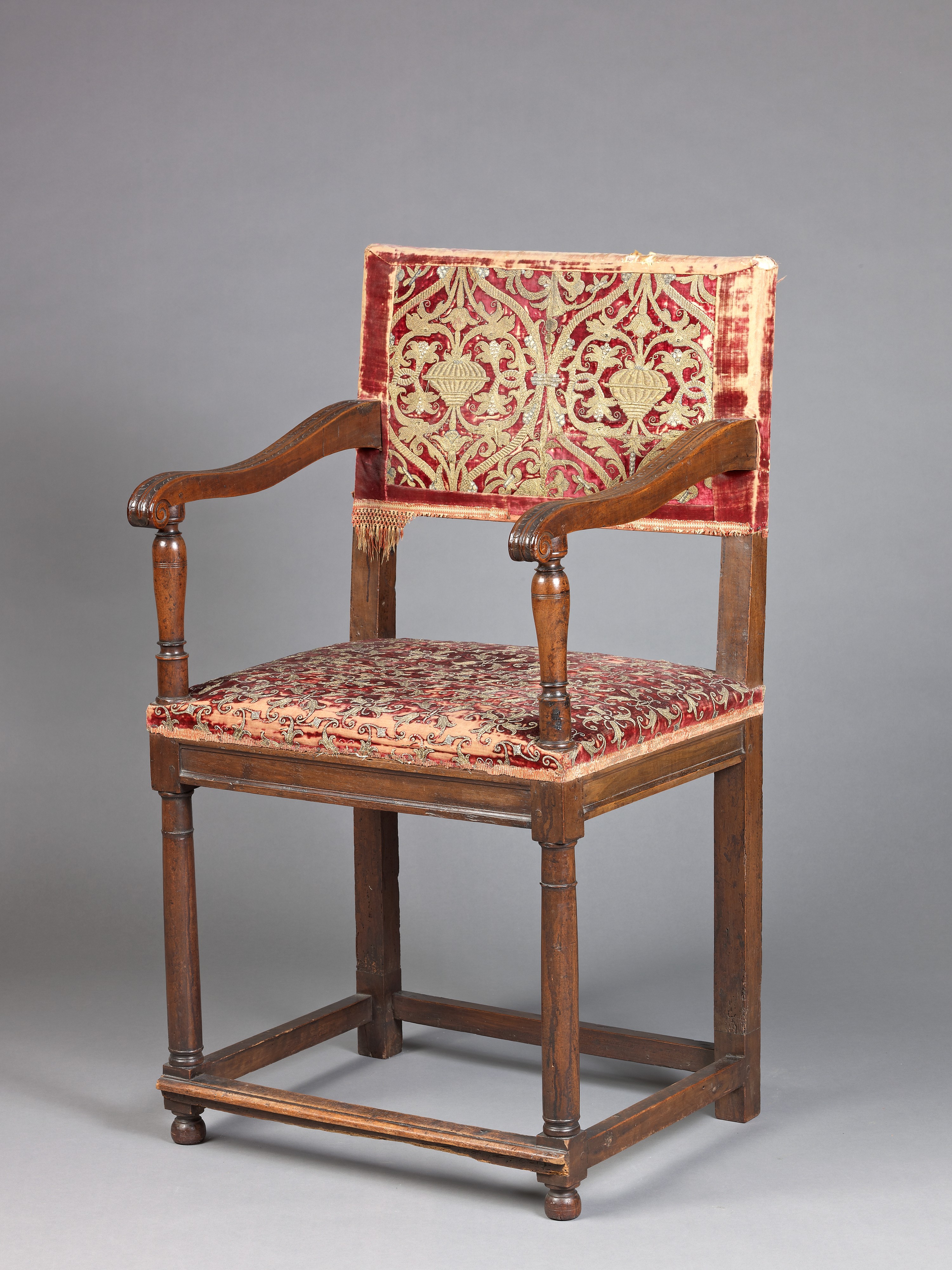
The armchair—the chaise à bras—has long been a symbol of domestic power, a static monument to comfort and lineage. Yet, within the crucible of Zoey Fashion Laboratory’s avant-garde ethos, this French and Italian artifact is not a relic but a blueprint. Its carved walnut frame, its upholstered fragments of silk and gilt-metal embroidery, its brocatelle and knotted fringe—these are not materials of a bygone era. They are the raw data for a radical new taxonomy of the body. For SS26, we are not merely referencing the armchair; we are metabolizing its structural logic into a wearable, futuristic silhouette that challenges the very definition of garment architecture.
The Skeletal Frame: Walnut as Wearable Armature
The armchair’s foundational element is its walnut structure—carved, turned, and rigid. In our deconstructive analysis, this frame becomes the exoskeleton of the garment. We reject the soft, draping fabrics of conventional couture in favor of a structural exoskeleton that mimics the chair’s load-bearing logic. Imagine a jacket whose shoulders are not padded but articulated, with turned wooden elements—lacquered in matte black or fossilized ivory—that echo the chair’s armrests and back legs. The silhouette is sharp, almost architectural, with the wearer’s torso becoming the “seat” of the design. The walnut’s grain is translated into laser-cut leather or bio-resin panels that are riveted together, creating a visceral tension between rigidity and movement. This is not a garment that flows; it is a garment that stands, commanding space as the armchair commands a room.
Fragmentary Upholstery: The Poetics of Dislocation
The original armchair’s upholstery—a patchwork of silk, gilt-metal embroidery, and brocatelle—is a study in accumulated luxury. For SS26, we weaponize this fragmentation. The fragmentary aesthetic becomes a core design principle: garments are assembled from non-sequential panels of opulent textiles, each one a relic of a different historical moment. A bodice might feature a section of 18th-century French silk, adjacent to a piece of Italian brocatelle, all stitched with gilt-metal thread that catches the light like armor. The knotted silk fringe is not a trim; it is a structural element, suspended from the hem or the collar like a deconstructed curtain, creating a sense of unfinished architecture. This dislocation forces the viewer to question the garment’s origin: Is it a ruin? A prototype? A future artifact unearthed from a digital archive? The silhouette is deliberately asymmetrical, with one shoulder heavily upholstered and the other left bare, exposing the walnut-like frame beneath.
Futuristic Silhouettes: The Armchair as Second Skin
The armchair’s silhouette—a high back, wide arms, a deep seat—is a form that cradles and constrains. In our interpretation, this becomes a womb-like encapsulation of the body. For SS26, we propose a series of “chair-back” gowns and jackets where the rear of the garment rises dramatically above the head, mimicking the chair’s backrest. This is not a cape or a train; it is a rigid, cantilevered structure that extends upward, supported by internal boning or carbon fiber. The arms of the garment are similarly exaggerated, with sleeves that balloon outward like the chair’s armrests, then taper sharply at the wrist. The result is a silhouette that is simultaneously protective and confrontational—a portable throne that isolates the wearer in a bubble of opulent power.
Structural Innovation: The Load-Bearing Seam
Traditional couture relies on seams that follow the body’s contours. The armchair, however, demands a new seam language. We introduce the load-bearing seam, where the garment’s structure is not hidden but celebrated. These seams are reinforced with walnut-dyed lacquer or metallic thread, echoing the chair’s turned legs. They act as visible joints, connecting the garment’s disparate panels like the mortise and tenon joints of a fine piece of furniture. The knotted fringe is repurposed as a tensile element, pulling the fabric taut across the body’s curves. The result is a garment that feels built rather than sewn, each piece a careful balance of tension and release. The silhouette shifts from static to dynamic, as the wearer’s movement activates the structure, causing the fringe to sway and the panels to shift.
Material Alchemy: From Brocatelle to Bio-Fabric
The armchair’s materials—silk, gilt metal, brocatelle—are historically precious, but for SS26, we subject them to a futuristic alchemy. Silk is treated with a resin that gives it the sheen of polished walnut, while gilt-metal threads are woven into conductive fibers that can change color with body heat. Brocatelle is deconstructed into its constituent threads and re-woven into a lattice that resembles the chair’s carved wood. The knotted fringe is reinterpreted as a series of micro-chains, each link a tiny wooden bead. This is not a nostalgic revival; it is a techno-baroque synthesis, where the past is not preserved but mutated into a new material reality. The silhouette is thus a hybrid: part historical artifact, part speculative future, challenging the linear narrative of fashion history.
The Avant-Garde Standalone: A Study in Power and Isolation
This analysis is not a collection; it is a singular study—a meditation on how a single object can generate a new language of silhouette and structure. The armchair, in its original context, was a seat of authority. Our SS26 interpretation amplifies that authority into a wearable statement of isolation and power. The wearer becomes a living monument, a throne that moves, a fragment of history that refuses to be static. The futuristic silhouette is not about speed or efficiency; it is about presence. Each garment is a conversation between the weight of the past and the lightness of the future, between the rigidity of wood and the fluidity of silk. For Zoey Fashion Laboratory, the armchair is not a source of inspiration—it is a collaborator, demanding that we rethink the body’s relationship with space, structure, and time.
In the end, the chaise à bras is no longer a chair. It is a manifesto. And for SS26, it will be worn.