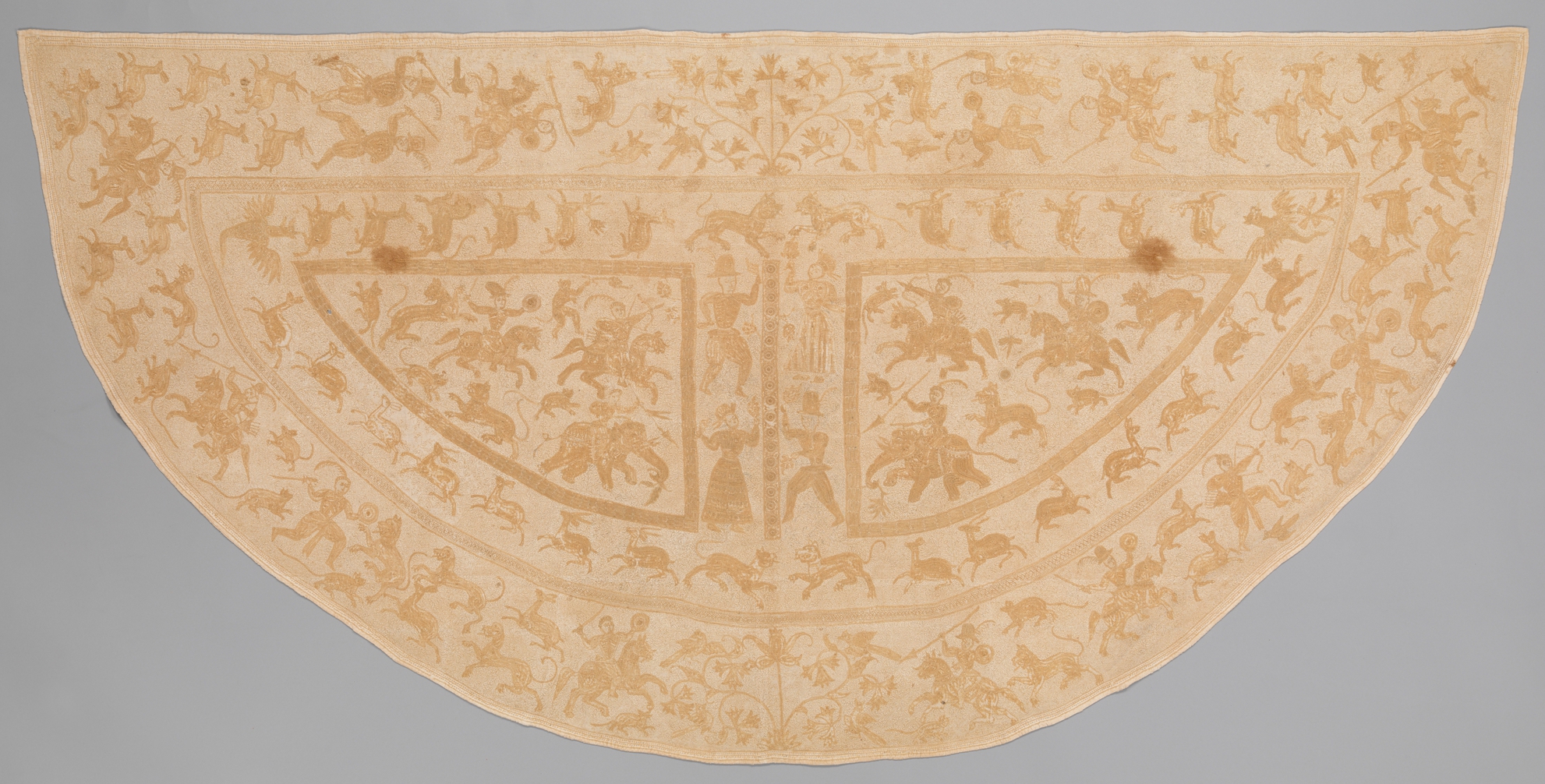
The Cope Reconfigured: An Avant-Garde Analysis for SS26
The cope, historically a liturgical vestment signifying authority and ceremonial grandeur, undergoes a radical recontextualization in Zoey Fashion Laboratory’s SS26 collection. This is not a garment of religious deference but a manifesto of deconstructive futurism—a silhouette that embraces the dialectic between weight and weightlessness, tradition and transformation. Sourced from the Global Frontier, a conceptual territory where cultural boundaries dissolve into hybrid innovation, this cope is crafted from cotton, a humble yet resilient substrate, then elevated through intricate embroidery in tasar or muga silk. These indigenous Indian silks, known for their raw, organic luster and tensile strength, introduce a paradoxical texture: the matte finish of cotton contrasts with the subtle sheen of wild silk, creating a visual and tactile dissonance that defines the piece’s structural identity.
The SS26 season demands a rethinking of volume as a dynamic, architectural force. Here, the cope is not a passive drape but an active spatial intervention. The garment’s silhouette is engineered to suggest a futuristic exoskeleton—a second skin that both protects and exposes. The cotton base provides a breathable, almost industrial canvas, while the tasar or muga embroidery forms intricate, biomorphic patterns that mimic organic growth or digital circuitry. This is a deliberate subversion: the cope’s traditional flowing lines are bisected by asymmetrical seams, strategic cutouts, and reinforced panels that create a rigid, almost armored quality. The hem, typically a soft cascade, is here sharpened into a geometric arc, suggesting motion arrested in time—a garment that lives in the liminal space between stasis and flight.
Material Alchemy: Cotton Meets Wild Silk
The choice of cotton as the primary material is a radical departure from the cope’s opulent historical precedents (velvet, brocade, gold thread). Cotton, in the context of avant-garde couture, is a material of democratic subversion—it is accessible, humble, yet capable of extreme structural manipulation. For SS26, the cotton is treated with a subtle, non-toxic resin finish that enhances its rigidity without compromising breathability. This allows the cope to hold its futuristic silhouette—shoulder points that extend like architectural cantilevers, a back that curves into a protective shell—while remaining wearable. The embroidery in tasar or muga silk introduces a counterpoint of luxury. Tasar silk, with its coarse, earthy texture, and muga silk, prized for its golden sheen and durability, are not used for surface decoration alone. Instead, they are woven into the fabric’s structure, creating raised, three-dimensional motifs that function as structural ribs. These motifs—abstracted forms inspired by satellite imagery, neural networks, and desert topography—are strategically placed to reinforce stress points: the shoulders, the collar, the spine. The result is a garment that feels both organic and engineered, a fusion of natural fibers and algorithmic design.
Silhouette as Narrative: The Futuristic Cope
The cope’s silhouette for SS26 is a study in controlled chaos. The front remains relatively clean, with a deep V-neckline that exposes the collarbone and sternum—a vulnerable, human element against the garment’s protective exterior. The back, however, is where the structural innovation unfolds. A dramatic, asymmetrical cape extends from the left shoulder, sweeping down to the floor in a cascade of cotton and silk. This cape is not a single piece but a series of overlapping, modular panels, each embroidered with a different pattern in tasar or muga. The panels are connected by invisible magnetic closures, allowing the wearer to reconfigure the silhouette—from a full, voluminous drape to a streamlined, almost architectural cocoon. This modularity is key to the avant-garde ethos: the garment is not static but adaptive, responding to the wearer’s movement and environment. The sleeves, if present, are cutaway and reimagined as detachable sleeves that can be worn as separate accessories—a nod to deconstructive aesthetics that blur the line between garment and object.
The hemline is another site of innovation. Instead of a continuous curve, the cope’s hem is fractured into sharp, geometric fragments that suggest digital pixels or shattered glass. This is achieved through precise laser-cutting of the cotton, followed by hand-stitched reinforcement with muga silk thread. The fragments are slightly raised, creating a dynamic interplay of light and shadow as the wearer moves. This effect is amplified by the natural luster of the silk, which catches light differently than the matte cotton, creating a shimmering, almost holographic quality. The overall silhouette is one of controlled tension—a garment that appears to be in a state of perpetual becoming, neither fully draped nor fully structured.
Structural Innovation: Engineering the Future
Beyond silhouette, the cope’s structural innovation lies in its integration of traditional craftsmanship with futuristic construction techniques. The embroidery is not merely decorative but serves as a form of tensile architecture. The tasar and muga silk threads, known for their strength, are used to create a latticework that distributes the garment’s weight evenly across the shoulders and back. This eliminates the need for heavy internal boning or padding, allowing the cope to maintain its dramatic shape without sacrificing comfort. The cotton base is reinforced with a lightweight, flexible mesh made from recycled polyester—a nod to sustainability—that provides a subtle, almost invisible support structure.
The closure system is also reimagined. Traditional copes use a single clasp or brooch at the neck. Here, the front is left open, with the garment held in place by a series of concealed magnetic strips along the interior seams. This creates a seamless, uninterrupted visual line—a futuristic aesthetic that prioritizes clean geometry. The magnets are strong enough to secure the garment during movement but allow for easy removal, reflecting the avant-garde principle of wearability as a form of agency. The collar, typically a stiff, upright band, is here softened into a fluid, asymmetrical cowl that can be adjusted to frame the face or fall loose over the shoulders. This cowl is embroidered in a dense, almost tactile pattern of muga silk, creating a focal point that draws the eye upward, emphasizing the neck and jawline.
Contextualizing the Cope: SS26 and the Global Frontier
In the broader context of SS26, the cope stands as a statement against the commodification of fashion. It is not a trend piece but a study in material and form—a garment that demands contemplation. The Global Frontier origin is not a geographic location but a conceptual space where traditional craft meets digital fabrication. The use of tasar and muga silk, both deeply rooted in Indian artisanal traditions, is a deliberate choice to honor heritage while propelling it into the future. The embroidery techniques—hand-done by master artisans—are documented and digitized, creating a blueprint for future iterations. This is a garment that exists in multiple temporalities: the ancient, the present, and the speculative.
Ultimately, this cope is a manifesto for SS26. It argues that fashion can be both protective and expressive, rooted in history yet unbound by it. The cotton and silk become metaphors for resilience and beauty, the silhouette a map of possibility. In a season defined by uncertainty, the cope offers a new kind of armor—not for battle, but for becoming. It is a garment that does not simply clothe the body but redefines its relationship to space, time, and self. This is the definitive avant-garde: a garment that is never finished, always evolving, and forever ahead of its time.