The Fragment as a Totalizing Gesture: Deconstructing the Global Frontier for SS26
The avant-garde imperative is not merely to innovate but to interrogate the very syntax of fashion. For the SS26 season, Zoey Fashion Laboratory presents a definitive study on the Fragment, a concept that transcends mere deconstruction to become a generative principle of structural innovation. This analysis dissects the fragment not as a remnant of a lost whole, but as a self-sufficient architectural unit, a cellular module from which a new, futuristic silhouette can be cultivated. The chosen material—embroidered net—and the conceptual origin—the Global Frontier—converge to produce a collection that is both a critique of territoriality and a blueprint for a post-geographic aesthetic.
I. The Fragment as a Spatial Strategy: Beyond Deconstruction
Traditional deconstruction in fashion often implies a violent act of tearing or revealing. The Zoey Laboratory approach for SS26 reframes this. The Fragment is not the result of destruction but the primary unit of construction. Each embroidered net panel is a self-contained world, a micro-territory of stitch and void. The embroidered net itself is a paradox: it is simultaneously a surface and an absence, a solid lattice of thread and a transparent field of space. This duality is the foundation of the new silhouette.
The structural innovation lies in the non-linear assembly. Instead of a continuous fabric draped over a body, the garment is built from overlapping, floating, and cantilevered fragments. These fragments are not sewn together in a traditional seam; they are connected via magnetic couplings, tensioned wire frames, and micro-laser-welded junctions that are invisible to the naked eye. The result is a silhouette that appears to be in a state of perpetual becoming—a frozen moment of assembly where the fragments hover just millimeters from the skin, creating a negative space that is as expressive as the embroidered surface itself.
This spatial strategy directly responds to the Global Frontier origin. The frontier is not a line but a zone of encounter, a place where fragments of different cultures, technologies, and ecologies collide. The garments mimic this: each embroidered panel is sourced from distinct global traditions—a Japanese sashiko grid, a Peruvian arpillera narrative, a French broderie anglaise floral—but they are abstracted and recombined into a single, futuristic syntax. The fragment thus becomes a cartographic tool, mapping a new world order where borders are porous and identity is assembled, not inherited.
II. Material Logic: The Embroidered Net as Structural Membrane
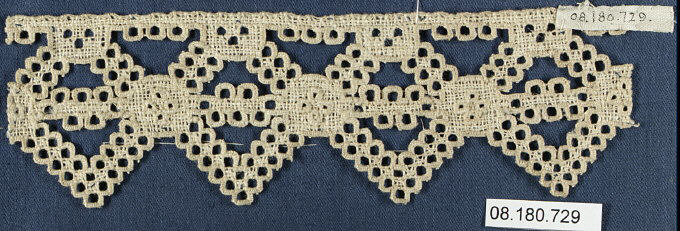
The choice of embroidered net is not aesthetic but functional. In the context of SS26, the net is re-engineered as a load-bearing membrane. Traditional embroidery is decorative; here, it is structural. The threads are not merely applied to a base fabric; they are the fabric. Using a proprietary technique developed in the Zoey Laboratory, the embroidery is executed on a dissolvable base, leaving a freestanding lattice of thread that possesses tensile strength and elasticity.
This creates a hierarchical surface where the density of embroidery varies across the garment. In zones requiring structure—the shoulders, the hip, the collar—the embroidery is dense, almost opaque, forming a rigid exoskeleton. In zones demanding fluidity—the sleeves, the hem—the embroidery becomes sparse, allowing the net to drape and flutter like a second skin. This gradient of density is the architectural innovation: the garment is not cut and sewn; it is grown and programmed. The embroidered net is a single, continuous surface that transitions from solid to void, from armor to air.
Furthermore, the net’s transparency is leveraged for optical layering. Multiple fragments of embroidered net are worn in succession, their patterns overlapping to create moiré effects and shifting depths. A single fragment may reveal a bare shoulder; two fragments create an optical illusion of a third pattern; three fragments produce a dense, almost metallic-looking surface. The wearer becomes a living interference pattern, a dynamic visual field that changes with every movement. This is the ultimate expression of the Global Frontier: a body that is not a fixed entity but a composite of overlapping signals and influences.
III. The Futuristic Silhouette: Asymmetry, Cantilever, and Negative Space
The SS26 silhouette is defined by three principles: asymmetrical equilibrium, cantilevered volumes, and the primacy of negative space. The fragment, by its nature, resists symmetry. The garments are built around a single, dominant fragment that serves as the visual anchor—a massive, embroidered shoulder piece that extends into a wing-like cantilever, or a hip fragment that juts outward like a geological outcrop. The rest of the garment is composed of smaller, orbiting fragments that balance this asymmetry not through mirroring but through counterweight and tension.
The cantilevered volume is the most radical structural innovation. Using the tensile strength of the embroidered net, fragments are extended away from the body without visible support. A sleeve may detach entirely from the torso, connected only by a single, rigid embroidered strut. A skirt may flare into a cone that hovers an inch above the legs, held in place by a spiral of tensioned threads. This creates a silhouette that is aerodynamic and extraterrestrial, as if the body is generating its own gravitational field.
Negative space is not a void but a positive element. The gaps between fragments are as carefully designed as the fragments themselves. A garment may consist of a high embroidered collar, a floating panel over the chest, and a detached sleeve—leaving the entire torso and back exposed, yet the eye reads the ensemble as a complete, coherent form. This is the Gestalt of the fragment: the mind fills the gaps, creating a more powerful, more dynamic image than any continuous fabric could provide.
IV. Conclusion: The Fragment as a Manifesto for SS26
The Fragment for SS26 is not a stylistic choice but a philosophical position. It rejects the monolithic, the seamless, and the finished. It embraces the provisional, the provisional, and the generative. The embroidered net is the perfect vehicle for this vision, offering a material that is both structural and ethereal, local and global. The Global Frontier origin is not a theme but a methodology: the garments are assembled from the fragments of a world in flux, a world where the only constant is movement and recombination.
For Zoey Fashion Laboratory, this collection is a definitive statement: the future of couture is not about covering the body but about framing it, not about hiding the fragment but about celebrating its potential. The body becomes a living architecture, a site of continuous construction where each fragment is a question, a possibility, and a promise. The SS26 silhouette is not a shape but an event—a moment of pure, structural poetry. This is the avant-garde imperative, realized through the logic of the fragment.