Deconstructing the Feline Pendant: An Avant-Garde Analysis of Pre-Columbian Gold
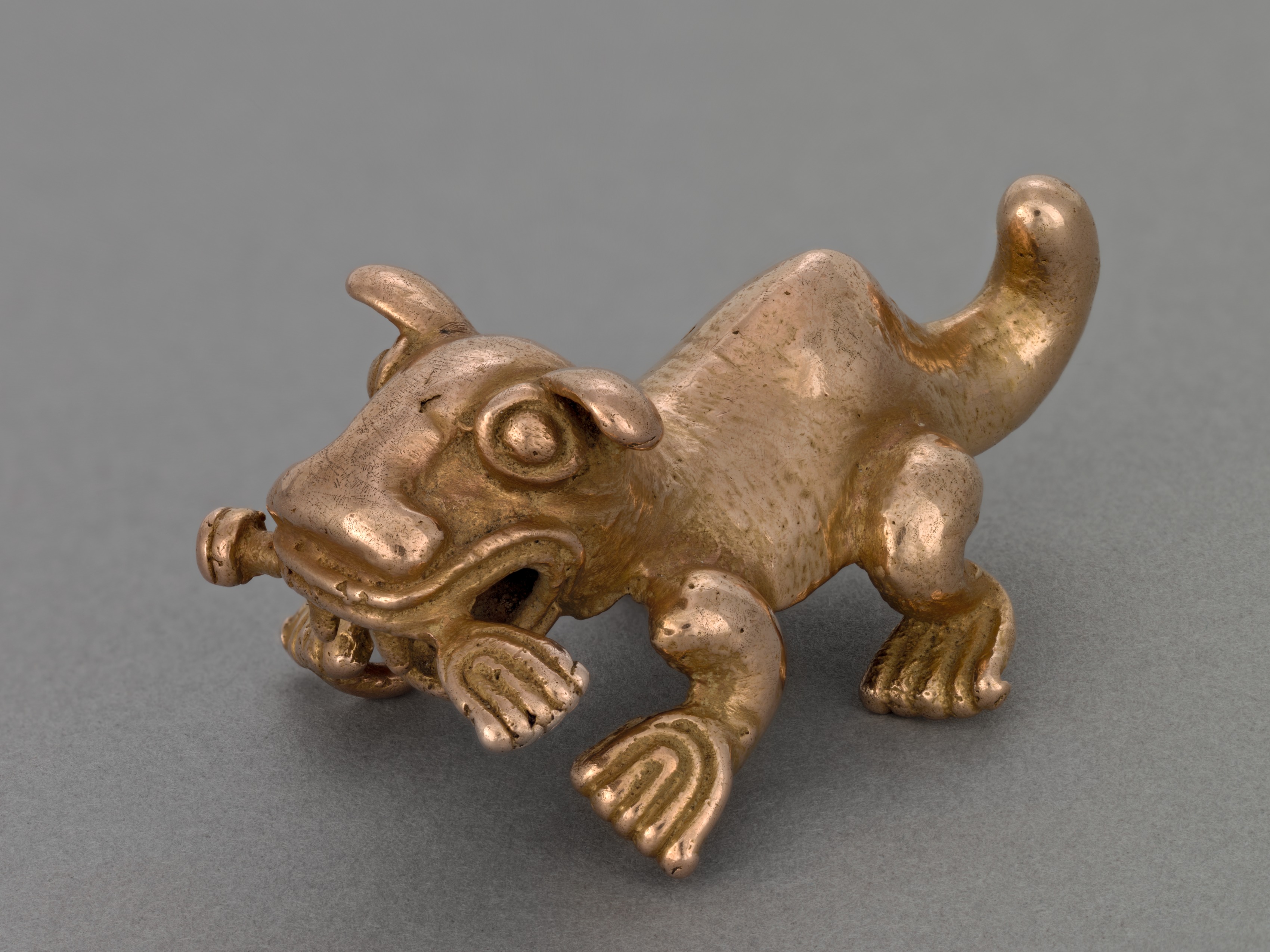
At Zoey Fashion Lab, we operate at the intersection of archaeological reverence and radical futurism. Our mission is not merely to study artifacts, but to deconstruct their material and symbolic DNA, extracting the blueprints for a new aesthetic language. In this analysis, we turn our attention to a singular object: a gold feline pendant from the Isthmian Region, specifically the Veraguas-Chiriquí style of Panama and Costa Rica, dating from the 11th to the 16th century. This piece, cast in gold and bearing the weight of centuries, is not a relic of a bygone era. It is a resonant archive of power, transformation, and material alchemy—a perfect progenitor for our avant-garde design philosophy.
Material Alchemy: Gold as a Conduit of Light and Power
The choice of gold in this pendant is far from decorative. In the pre-Columbian Isthmian worldview, gold—or tumbaga, often an alloy of gold and copper—was not a currency but a sacred substance linked to the sun, fertility, and the divine breath of life. The casting technique, likely lost-wax, allowed for an incredible degree of precision and plasticity. The gold was melted, poured into a mold shaped by a wax model, and then revealed in its final form. This process is, in itself, a metaphor for creation and destruction—a theme central to the avant-garde.
For Zoey Fashion Lab, this material alchemy translates into a design principle of transmutation. We see the pendant’s gold not as a static metal, but as a frozen moment of solar energy. In our collections, we reinterpret this through liquid metallic finishes, iridescent coatings, and materials that shift color under different light. The pendant’s surface, with its subtle variations from casting, becomes a blueprint for texture: we explore crushed metallic foils, hand-hammered metal appliqués, and digitally printed metallic gradients that mimic the organic, uneven glow of ancient gold. The pendant teaches us that luxury is not about perfection, but about the palpable trace of the maker’s hand and the earth’s elements.
Iconographic Deconstruction: The Feline as a Liminal Being
The Jaguar Spirit: Between Worlds
The feline form—most likely a jaguar or ocelot—is the central motif. In Veraguas-Chiriquí cosmology, the jaguar was not merely an animal; it was a shapeshifter, a guardian of the underworld, and a symbol of shamanic power. The pendant’s design often depicts the feline in a crouched, alert posture, with exaggerated features: large, hollow eyes, a snarling mouth, and a prominent tail. These are not naturalistic proportions; they are mnemonic devices for spiritual power. The hollow eyes, for instance, were likely inlaid with resin or shell, creating a gaze that was both present and otherworldly.
In our avant-garde framework, we deconstruct this iconography to explore the concept of the liminal being—the entity that exists between human, animal, and machine. The feline pendant becomes a prototype for our Hybrid Identity Series. We translate the crouched posture into sculptural shoulder pieces that mimic feline musculature, using carbon fiber and molded silicone to create a second skin. The hollow eyes inspire asymmetrical eyewear with mirrored or LED-embedded lenses, suggesting a gaze that sees beyond the visible spectrum. The snarling mouth becomes a motif for zipper pulls and clasps, transforming aggression into a functional, aesthetic statement. The pendant teaches us that adornment is a tool for transformation, not mere decoration.
Structural Resonance: The Cast Form as a Blueprint for Drape and Volume
The casting technique of the pendant creates a unique structural vocabulary. Unlike sheet metal work, cast gold has a density and volumetric presence. The feline body is not flat; it has a rounded, almost sculptural belly, and the limbs are articulated in three dimensions. This is a monolithic form that defies gravity, a solid mass that hangs with a specific weight and balance. For Zoey Fashion Lab, this translates into a design language of architectural draping and volumetric construction.
We reinterpret the pendant’s solidity through heavy, bonded fabrics, molded leather, and 3D-printed polymer structures that create similar mass without sacrificing movement. The pendant’s central hole, often used for stringing, becomes a design element: negative space as a structural anchor. In our garments, we create cutouts, keyholes, and strategic reveals that mimic this principle, allowing the body to become the “string” that activates the form. The pendant’s weight distribution informs our approach to asymmetric hemlines and counterbalanced silhouettes, where a heavy shoulder piece is offset by a lighter, flowing panel. The cast form teaches us that volume is a narrative tool, and that weight can be a form of presence.
Archive Resonance: Mirror and Stone
The reference to the Archive Resonance—a mirror with split-leaf motifs on one side and a relief narrative on a sarcophagus on the other—provides a crucial conceptual bridge. The feline pendant, like this mirror, exists in a dual state of reflection and narration. The pendant’s polished gold surface reflects the wearer and the environment, while its iconography tells a story of power and spirituality. This duality is the core of our avant-garde practice: the garment as both a mirror of the self and a narrative of the collective.
We apply this principle by creating garments with reversible or transformable elements. One side might feature a high-shine, reflective surface that interacts with light and the viewer, while the other reveals a textured, narrative surface—perhaps embroidered with abstracted feline motifs or digital prints of pre-Columbian patterns. The pendant’s tactile and visual dichotomy inspires us to explore contrasting textures: liquid satin against raw linen, polished metal against matte neoprene. The archive resonance teaches us that every object has a hidden side, and that true avant-garde design reveals both.
Conclusion: The Pendant as a Prototype for the Future
The Veraguas-Chiriquí feline pendant is not a historical artifact to be preserved in a glass case. For Zoey Fashion Lab, it is a living prototype—a source code for a new aesthetic that honors the past while radically reimagining the future. Its gold teaches us about material alchemy and the sacredness of light. Its feline iconography deconstructs the boundaries between human, animal, and spirit. Its cast form provides a blueprint for volume and weight. And its archive resonance reminds us that every design is a mirror and a story.
In our upcoming collection, we will channel this pendant through sculptural gold-plated harnesses, jaguar-print digital jacquards, and asymmetric silhouettes that echo the pendant’s crouched power. We will not simply replicate its form; we will deconstruct its essence, extracting the principles of transformation, liminality, and material resonance that make it a timeless piece of wearable technology. The feline pendant is not a relic. It is a message from the past, decoded for the future, and at Zoey Fashion Lab, we are the deconstructionists who will translate it into a new language of avant-garde fashion.